Pages

Showing posts with label Banned books. Show all posts

Thursday, June 16, 2016

The Freedom to Read: The history of ALA's vital statement on intellectual freedom

March 15, 2016

US President Dwight D. Eisenhower (left) and Dartmouth President John Sloan Dickey at the Dartmouth College commencement, June 14, 1953. Courtesy of Dartmouth College Library   

“Don’t join the book burners,” President Dwight D. Eisenhower implored Dartmouth College graduates on June 14, 1953. “Don’t be afraid to go to your library and read every book as long as any document does not offend your own ideas of decency.”

Eisenhower’s words shocked many because they constituted his first public challenge to McCarthyism—an ethos enveloping the country at the time and fed by Senator Joseph McCarthy (R-Wis.), who inferred communist conspiracies everywhere in American culture, including books on the shelves of 194 information libraries that the US State Department operated in 61 foreign countries.

Like-minded individuals also saw communist threats in the images on the covers of magazines, paperbacks, and comics that were stacked face-out on newsstand racks across the country. The US House of Representatives even set up a Select Committee on Current Pornographic Materials to investigate the publishers. Outside Washington, the National Organization for Decent Literature (NODL) sponsored by the Roman Catholic Church issued monthly lists of condemned titles that local parishioners used to police newsstands (and, on occasion, local public library shelves). Owners who passed muster received NODL seals of approval to display in their windows; sales at newsstands that did not display a seal invariably suffered. Read more...

Monday, August 31, 2015

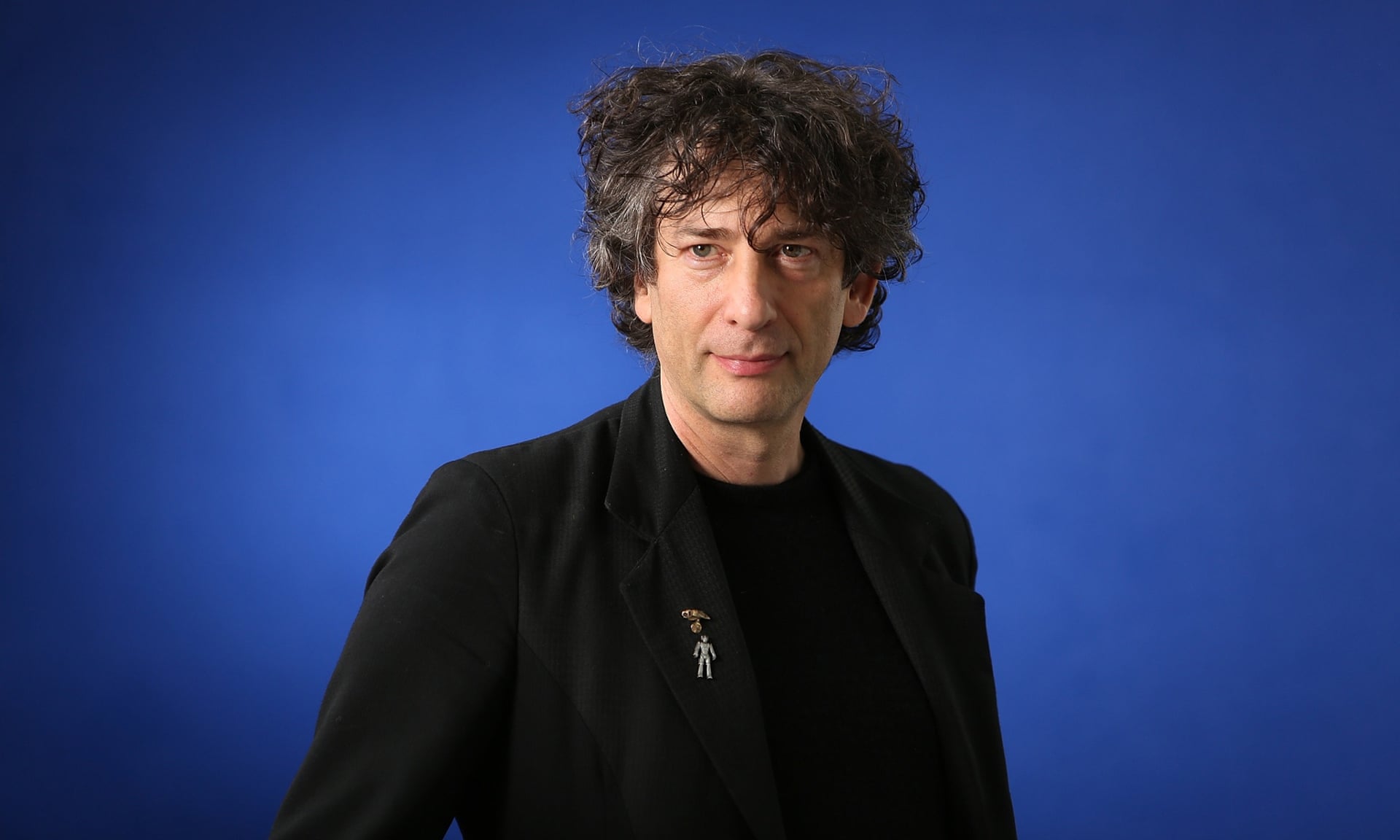
Neil Gaiman: 'my parents didn’t have any kind of rules about what I couldn’t read'

Do you remember reading any books as a child that were in some way disapproved of or forbidden? If yes, did they traumatise you for life, or did the subversive element make them more enjoyable?

I was really lucky in that my parents definitely didn’t seem to have any kind of rules about what I couldn’t read. And that was wonderful, because it meant that whatever was on the shelves, if it was interesting, I could pick it up and I was allowed to read it.


Read more: http://www.theguardian.com/childrens-books-site/2015/aug/29/neil-gaiman-banned-books-censorship-interview?CMP=fb_us

Tuesday, July 21, 2015

Adults Are More Likely To Believe There Are Books That Should Be Banned Than Movies, Television Shows, or Video Games

Percentage who feel some books should be banned has increased 10 points since 2011; Three in ten Americans are more likely to read a book if it’s banned

08:00 AM EDT Jul 8, 2015 


NEW YORK, N.Y. – In just four years, the percentage of Americans who believe there are any books that should be banned has increased by more than half: 28% believe this to be the case today, vs. 18% in 2011.  One-fourth (24%) are unsure, which leaves nearly half of Americans convinced that no books should be banned completely (48%).
  • Politically speaking, Republicans are nearly twice as likely as Democrats or Independents to believe there are any books that should be banned completely (42% vs. 23% & 22%, respectively).  
  • In addition, adults who have completed high school or less  are more likely than those with higher levels of education to believe there are any books that should be banned (33%, vs. 25% some college, 24% college grad, 23% post grad).
These are some of the results of The Harris Poll® of 2,244 U.S. adults surveyed online and in English between March 11 and 16, 2015.
“The things they're doing and saying in films right now just shouldn't be allowed.”  ― Mae West
When asked to consider other types of media, adults are less likely to say there are any movies, television programs, or video games which should be banned completely. Only 16% of Americans each believe there are any movies or television programs that should be banned completely, and one fourth say the same about video games (24%).  In light of this, perhaps it’s not surprising that seven in ten adults believe a rating system (similar to that used for movies) should be applied to books (71%).
Similar to books, Republicans are more likely than Democrats or Independents to believe there’s ever a call for outright bans in each of these categories.
  • Movies: 24% Republicans vs. 15% Democrats & 12% Independents
  • Television: 23% Republicans vs. 16% Democrats & 12% Independents
  • Video games: 32% Republicans vs. 23% Democrats & 20% Independents
  • Read more...


Monday, November 3, 2014

Poverty and class: the latest themes to enter the US banned-books debate | Mary O’Hara | Society | The Guardian


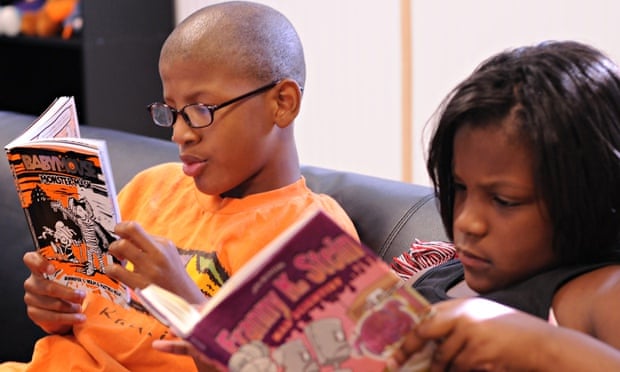
Young readers in Florida enjoy the freedom to choose their library
books, but campaigners are attempting to restrict content that deals
with the challenges of low income. Photograph: Paul Hennessy/Polaris 
Late last month, for the 32nd year in a row, Banned Books Week was marked across the US. Spearheaded by the American Library Association’s (ALA) Office for Intellectual Freedom,
the annual salute to the freedom to read has become a fixture. It aims
to counterbalance perennial challenges to the content of books and
efforts to get them banned, usually from schools and libraries.

The ALA collects information on which books are objected to and
reports on prominent recurring themes that tend to generate moral or
ideological indignation. Subjects such as religion, race, gender, sexuality and allegations of sexually explicit content or offensive language frequently top the list. Read article...

Monday, December 19, 2011

Not Worried About Circulation | all these birds with teeth: this is not about science.

Not Worried About Circulation | all these birds with teeth: this is not about science.


The shocking truth about print books: 49% of our stacks has never circulated since 1996. #academiclibraries #printbooks
 
This tweet came through the other day, and frankly it didn’t bother me the way it used to. It leans on a little bit by Raganathan’s first law, which is “Books are for use.” If they’re not being used, then why keep them? I like to make the argument that we can’t always anticipate how things will be used by others. Consider Mendelssohn’s “rediscovery” of Bach. Books are not just for current use, but they easily translate into future use. [For more, please click the headline above.]


Enhanced by Zemanta