Pages

Showing posts with label information literacy. Show all posts

Tuesday, August 8, 2017

8 Ways to Become a Library Catalog Power User

Library Catalog | Public Libraries | How-to | Info Lit


This is a guest post from Abby Hargreaves. Abby is a New Hampshire native living and working as a Children’s Librarian in Washington, D.C. She fulfills the gamut of the librarian stereotype with a love of cats, coffee, and crocheting (and she likes a good run of alliteration). Her favorite color is yellow.


Sample Catalog Record
By Tomwsulcer (Own work) [CC0], via Wikimedia Commons
Whether you’re searching your local library catalog from home or looking for items while in-house, you’re probably overlooking some cool features in your library catalog. When I’m working the reference desk at the library and a visitor asks about the availability of materials on a particular topic, one of my favorite things to do is show them some tricks so they walk away not only with what they need, but with a solid grasp on how to make the catalog work for them in the future. 

Libraries use different software systems, so all of these features might not be available at your local library. Librarians and administrative teams often appreciate feedback on catalog systems, however, so if you see something you like, talk to your librarian about adding it. Read more...

Thursday, February 16, 2017

Fake news is real

Fake news | Information literacy |Panel discussion


Fake news is real: Fake news. You’ve heard about it, consumed it, probably even believed it — at least on occasion. But what is it? Why does it exist? How do we combat it and why can’t it just go away? USC Times invited two faculty members and an alumnus who serves as the attorney for the South Carolina Press Association to discuss one of the most vexing of 21st century media problems — the rampant spread of fake news, clickbait profiteering and outright propaganda.


Read more...

Wednesday, February 15, 2017

Real News/Fake News: About Fake News: Finding Real News/Detecting Fake News | LibGuide

Fake news | Information literacy | Journalism | Social media

What is fake news?


Wikipedia defines fake news as:  “Fake news is a type of hoax or deliberate spread of misinformation in social media or traditional news media with the intent to mislead in order to gain financially or politically.”  

Fake news websites ... deliberately publish hoaxes, propaganda, and disinformation — using social media to drive web traffic and amplify their effect.”
Fake news takes all forms - print, online, podcasts, YouTube videos, radio shows, images - any format that can convey information can convey disinformation. Read more...

Wednesday, February 1, 2017

IFLA-L] How to Spot Fake News - IFLA in the post-truth society


 Information Literacy | Fact-checking |Critical Thinking | Media literacy


IFLA-L] How to Spot Fake News - IFLA in the post-truth society

How To Spot Fake News

With Wikipedia’s #1lib1ref (One Librarian, One Reference) campaign going on – the theme of last week being fake news – IFLA posted an How to Spot Fake News infographic on facebook and twitter. We also published a blog about the topic, exploring some of the ways libraries help battle alternative facts and fake news.


Discussions about fake news has led to a new focus on media literacy more broadly, and the role of libraries and other education institutions in providing this. When Oxford Dictionaries announce post-truth is Word of the Year 2016, we as librarians realise action is needed to educate and advocate for critical thinking – a crucial skill when navigating the information society.

The fake news infographic shows eight simple steps (based on FactCheck.org’s 2016 article How to Spot Fake News) to discover the verifiability of a given news-piece in front of you. Download, print, translate, and share – at home, at your library, in your local community, and in social media networks. The more we crowdsource or wisdom, the wiser the world becomes.
If you want to make a translation of the infographic to your language,  please contact Karolina Andersdotter or Evgeni Hristov at IFLA Headquarters for an editable version of the infographic. We currently have translations in these languages pending, soon to be published on the IFLA website: Spanish, Dutch, Hungarian, Swedish, Finnish – do feel free to add to this list! :-)

Cheers,

Karolina Andersdotter
Policy and Advocacy Assistant, IFLA
IFLA Headquarters
P.O. Box 95312
2509 CH The Hague
Netherlands

Tel. 00 31 (0)70 314 0756

Thursday, September 22, 2016

Ten Ways U.S. Librarians Can Inform the American Electorate by Kathy Dempsey

Advocacy and Activism

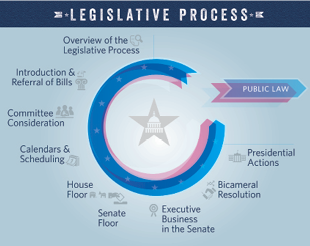
This poster is available at www.congress.gov, along

with nine short videos that explain each of the steps.


It’s no secret that the American political landscape has grown more divided in recent years. The conservative right has been fracturing since the emergence of the Tea Party. The liberal left hasn’t been as internally divided, but that’s changing now since the Democratic field has officially been narrowed to just two presidential candidates.

As I write this article on Presidents Day in February, it’s impossible to escape the presidential primaries, since debates seem to be on TV every week and since they’re covered in the media daily. Misinformation is everywhere. It’s hard to know what to believe. This is where librarians come in.
I realize that many of you happily avoid bringing politics into your work. After all, you’re supposed to be unbiased, right? And you can’t afford to alienate anyone. You probably have your hands full doing your regular duties of promoting good searching and wise information usage. You’re also tasked with doing outreach, increasing library awareness and use, and even “building community.” So why would you want to get involved in politics? Because those tasks can relate directly to elections.

I see a huge place for librarians in the American political process. Think about it: You’re the people most qualified to fight misinformation and guide the electorate to vetted research sources. One way to reach out to people who don’t normally use libraries and to build awareness of why they still matter is to become the center for the most trustworthy data. And when trying to build community, you need a topic that affects and interests everyone, something to bring them together in discussion.
In this especially contentious election year, U.S. voters desperately need to be able to separate fact from fiction in order to make well-informed choices in the primaries and in the November election. Why not prove your value by becoming the top place in your community for fact-finding and discourse? You can save people time by pointing them to good resources, by helping them understand differing viewpoints, and by offering an unbiased, safe place to learn. Here are 10 specific ways that you can do that, in any type of library, without taking sides.

1. Create a portal of voting information. You can find much of what you need by linking to local, state, and federal sites. Include information on voter registration (try www.usa.gov/register-to-vote): links that are specific to your state, application deadlines, locations and hours of polling places, etc. Be sure to offer info on absentee ballots, especially if you’re in a university library, where many young people may be living on campus, outside of their home voting districts. This is the least you can do to inform the electorate.Read more...

Wednesday, January 28, 2015

5 Things That People Don’t Realize their Librarians Do | INALJ

by Rebecca Tischler, Head Editor, INALJ Tennessee


5 Things That People Don’t Realize their Librarians Do

rebeccatischlerMany
people still have the stereotypical image of a librarian stuck in their
head: an older kind of frumpy woman wearing glasses on a chain, her
hair up in a bun, shushing people with one hand while stamping books
with the other. Many of my Jr. High classmates predicted that I was
going to be a librarian because I liked to read, and, during those
years, I was very quiet and wore glasses. I still love to read and
always have something to read, but since I’m much more comfortable with
myself, I don’t know if people would still say that I look like a
librarian. Ironically, I did become a librarian, but for completely
different reasons (part of it is the sheer variety involved in the
profession).


As a librarian, we help to teach people how to become self-sufficient
on the computer, find the answer to patron’s questions (no offense
Google, but while you may come back with a million answers, we
librarians come back with the right
answer), develop graphic designs for advertisement, act as a social
media managers, handle reader’s advisory, teach information literacy
classes, act as storytellers, and teach children, to name just a few of
our duties. We wear many many caps. Read more....

Tuesday, September 23, 2014

Don't overlook your school librarian, they're the unsung heroes of literacy | Teacher Network | Guardian Professional

School
librarians are depressingly underused, argues Sally Dring. Many
teachers would be amazed at how much support they can give them and
their students.


Library book checkout card

‘Many school librarians are seen purely as minders of a spare IT suite or as date label stampers.’ Photograph: Alamy

When talking about teaching and learning, most people don’t
immediately think of librarians. But in a school where the librarian or
learning resource centre manager is valued and properly made use of, we
can teach important skills.


Librarians are in the privileged position of being able to work with
teachers across all subjects and students of all ages, observing the
inner workings of a school from a slight distance.


One thing I’ve noticed is that the belief that students are adept at
using the latest technology to find the information they need is simply
not true. Students turn up in the library with the ubiquitous task of
researching a topic and they don’t know where to start. Usually they
head to Google, which takes them straight to Wikipedia (it’s top of the
list so it doesn’t take much effort). Wikipedia is handy if you know how
to use it properly, but many students need this explaining to them.
Should they choose to go to university, a Wikipedia footnote will not be
acceptable.


A librarian’s area of expertise is in information management and we
try to make the process of finding information easier for our students
and staff by providing relevant, reliable resources to support the areas
they are studying or teaching. We teach information literacy – finding,
assessing, evaluating, using and referencing information. We can also
share this knowledge with teachers if it’s needed, especially since some
find learning how to use new technology, or keeping up with the latest
programmes and websites, very difficult. Read more....

Tuesday, February 11, 2014

Why’d Middle States Go and Do That?

Those of us who work for colleges and universities in the
mid-Atlantic region were taken by surprise when the word suddenly spread
that a draft revision of the Characteristics of Excellence,
the primary set of standards for higher education accreditation
published by the Middle States Commission on Higher Education (MSCHE)
now omitted any reference to the library or information literacy as a
learning outcome. The surprise was followed by shock for good reason.


MSCHE has been a good friend to academic librarians. It was an early
adopter of specific language in its standards addressing information
literacy as a desired learning outcome. This was a departure from
earlier standards that only spoke mostly to the physical qualities of
the academic library (e.g., Did it have adequate study carrels? Were the
hours adequate for the institution? Were there librarians available to
provide research help?). When the 2002 edition of the MSCHE standards
were adopted it was a quantum leap ahead for information literacy in
higher education. Read more...
Enhanced by Zemanta

Thursday, March 14, 2013

Event - Webinar: Librarianship as an "Avocational Vocation" - Advice for new professionals METRO [Free]

Speaker Char Booth

Riser, devoted oceanite, and advocate of radical neutrality, Char Booth explores the integration of education, research, technology, and design in libraries. Char is the Instruction Services Manager and E-Learning Librarian at the Claremont Colleges, and is on the faculty of the ACRL Information Literacy Immersion Institute. An ALA Emerging Leader and Library Journal Mover and Shaker, Char blogs at info-mational and tweets at @charbooth. Her publications include Reflective Teaching, Effective Learning: Instructional Literacy for Library Educators (ALA Editions, 2011) and Informing Innovation: Tracking Student Interest in Emerging Library Technologies (ACRL, 2009). Char received a BA in History from Reed College in 2001; an MSIS from the UT Austin School of Information in 2005, and a Master of Computer Education and Technology from Ohio University in 2008.

In this second installment of the METRO / ACRL/NY New Professionals Series, Char Booth, Instruction Services Manager and E-Learning Librarian at the Claremont Colleges, converses with Jason Kucsma, Executive Director of the Metropolitan New York Library Council.

This webinar will focus on building a solid reputation through writing, publishing, and public presentations. Char has published and presented on many topics, including library instruction, the future of access, and using technology to facilitate a positive library experience. Please join us to hear from Char on these subjects and more.

Who should attend:

Librarians new to the field, LIS students, and anyone interested in learning more about the future of librarianship. Read more and register...
Enhanced by Zemanta

Thursday, July 26, 2012

The Benefits of Faculty-Librarian Collaborations | Faculty Focus

The Benefits of Faculty-Librarian Collaborations | Faculty Focus

By: in Instructional Design July 16, 2012

Community College instructors have a great deal to teach: study skills, a college orientation to education, and the actual course information for their discipline. They also know that their students must be information literate, must know how to find supplementary information for each course, how to use information effectively, and how to credit their sources appropriately. In this regard, Washington State Community and Technical Colleges have been working under an LSTA grant on Information Literacy from 2008-2012 (Washington). Lower Columbia College libraries have been using the grant to integrate librarians or library tutorials into face-to-face and online classes, thereby offering information literacy instruction to students without increasing the teaching load of the discipline instructors. When incorporated with research assignments, this instruction, along with embedded librarians, facilitates both student learning and faculty grading of assignments. Read more...

Andrea Gillaspy-Steinhilper is a reference librarian at Lower Columbia College.
References:
Business Administration subject guide.” (rev. 2011) Lower Columbia College Library Services. Retrieved May 2012 from http://lowercolumbia.edu/nr/exeres/9CC35863-7A1D-4F77-88D0-6E2E2F083DC9.
“Determining the level of scholarship, authorship, and audience of an article.” (2011). Lower Columbia College Library Services. Retrieved 29 June 2012 from https://lstahighlights.files.wordpress.com/2012/06/ppt_scholarly_v_popular.pdf.
GillaspySteinhilper, A. (Winter 2012). “Cancer and genetic mutations.” Tegrity Recording. Lower Columbia College Library Services. Retrieved 11 May 2012 from https://tegr.it/y/aom1.
Washington State Community and Technology Colleges LSTA Grant 2008-2012. (25 April 2012). Retrieved 11 May 2012 from http://informationliteracywactc.pbworks.com/w/page/19923193/FrontPage.
Add Comment
Enhanced by Zemanta