Pages

Showing posts with label History. Show all posts

Thursday, March 29, 2018

Cooking the Books with Yotam and Nigella [Podcast with transcript]

Food | Cookbooks | Podcast

Who first started collecting recipes into cookbooks? Do cookbooks have a future in a world full of online recipes? And can cookbooks tell us anything about what people are actually eating, or are they simply aspirational food porn? This episode, we explore the past, present, and future of cookbooks, from cuneiform tablets to Hail Marys, with the help of two of our favorite cookbooks authors—and Gastropod fans—Nigella Lawson and Yotam Ottolenghi.
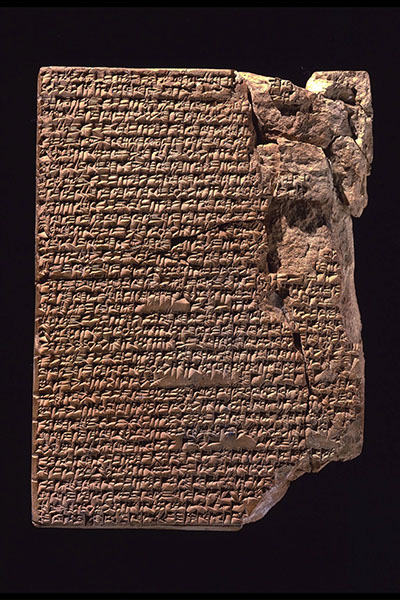
The oldest known culinary recipes. YBC 4644 from the Old Babylonian Period, ca. 1750 BC, via Yale University Library.

According to Henry Notaker, journalist and author of A History of Cookbooks: From Kitchen to Page Over Seven Centuries, the first cookbook that archaeologists have discovered is 3,700 years old. It consists of 35 recipes written on clay tablets, and its recipes are thought to have been intended for gods rather than humans. Still, it demonstrates that humans have been collecting cooking instructions for millennia. A few things have remained the same for much of the cookbook's history: they are still anthologies of imaginary meals, often fueled more by aspiration and desire than the reality of what's for dinner, and they still promise an almost alchemical transformation of raw ingredients into status and well-being.

Others aspects of today's cookbooks are much more recent. Such seemingly essential formatting elements as a separate ingredients list only became standard relatively recently. Meanwhile, the content, authorship, and user base of cookbooks have shifted dramatically in response to technological innovation and social change. Notaker points to the first German recipe to include bananas as a sign that the exotic fruit was becoming available in Europe: published in 1913, it recommends frying the fruit with marjoram, like a sausage. (The recipe was literally titled "banana sausage.") Meanwhile, Megan Elias, author of Food on the Page: Cookbooks and American Culture, traces the introduction of refrigeration and mass transportation through the strawberry's rise to glory in early twentieth-century recipes. Finally, in a world where more recipes are published online everyday than anyone could hope to cook in a week, we ask: what is the role of the cookbook today—and what might it become in the future? Listen in this episode for more of the surprising story of cookbooks, including men in drag and Norwegian drinking songs, as well as cookbook authors Nigella Lawson and Yotam Ottolenghi's tales of writing their very first cookbooks.

Episode Notes

Yotam Ottolenghi

Yotam Ottolenghi is an Israeli-British chef and restaurateur, and the author of many of our favorite cookbooks, including, most recently, Sweet: Desserts from London's Ottolenghi.

Nigella Lawson

Nigella Lawson is a British food writer and T.V. personality, and the author of our other favorite cookbooks, including, most recently, At My Table: A Celebration of Home Cooking.

Henry Notaker and A History of Cookbooks

Henry Notaker is a Norwegian journalist and author of A History of Cookbooks: From Kitchen to Page Over Seven Centuries.

The First Recipe Book

Tablets YBC 4644, YBC 8958, and YBC 4648 together contain 35 recipes from ancient Mesopotamia. According to Henry Notaker, they form the earliest "cookbook" yet discovered, though they consist primarily of lists of ingredients and are thought to be instructions for dishes to be served in religious ceremonies, rather than for dinner. In 1995, French historian Jean Bottéro published translations of the recipes in a book titled Textes Culinaires Mésopotamiens; journalist Laura Kelley published her interpretations online here, if you'd like to have a go at preparing them yourself.

Link to podcast:

Wednesday, November 11, 2015

VHP at 15: Collections over the Years (Experiences War: Stories from the Veterans History Project(Library of Congress: loc.gov)

The Library of Congress' Veterans History Project is a great project and a wonderful way to honor those who have served. This Veterans Day, take some time to read their stories or consider helping to record the story of the veteran in your life.
Jump to Page Content The Library of CongressVeterans History Project Home  
VHP at 15: Collections Over the Years
In 2015, the Veterans History Project celebrates fifteen years of collecting the stories of America's war veterans. To commemorate the occasion, here we highlight 15 different collections, donated to us during the first five, ten, and fifteen years of VHP's existence. While these collections vary widely in scope, each fulfills VHP's mission of capturing the stories of veterans in their own words. Whether they were submitted to us in the early days of the project, or later on, these fifteen collections represent a mere fraction of the over 99,000 collections in the Veterans History Project archive--all of which communicate the experience of war.
Five Years (montage image)Five Years
2000-2005
Image: Robert E. CassidyRobert E. Cassidy 
ARMY
Korean War

Audio Interview
Image: Thomas J. Hudner, Jr.Thomas J. Hudner, Jr.
NAVY
Korean War
Vietnam War 


Video and Audio Interviews, Photos
Image: Herman F. MonoscheinHerman F. Monoschein
AIR FORCE
World War II
Korean War 


Video Interview
Image: Martha Settle PutneyMartha Settle Putney
WAAC
World War II

Video Interview
Image: Gary L. VillerealGary L. Villereal
ARMY
Vietnam War

Video Interview
Ten Years (montage image)Ten Years
2005-2010
Image: Felmers O. ChaneyFelmers O. Chaney
ARMY
World War II

Video Interviews
Image: James E. FrolkingJames E. Frolking
ARMY AIR CORPS
World War II

Audio Interview, Memoir, Photos, Personal Correspondence
Image: James Noburu MihoJames Noboru Miho
ARMY
Korean War

Video Interviews
Image: Bernadette P. MillerBernadette P. Miller
ARMY
Vietnam War

Video Interview, Photos
Image: Lucius Byron NashLucius Byron Nash
NAVY
World War I

Photos, Official Documents, Personal Correspondence
Fifteen Years (montage image)Fifteen Years
2010-2015
Image: Rollins EdwardsRollins Edwards
ARMY
World War II

Audio Interview
Image: Adam Jordan HoltAdam Jordan Holt 
ARMY
Iraq War

Audio Interview
Image: Kurt Chew-Een LeeKurt Chew-Een Lee 
MARINE CORPS
World War II, Korean War, Vietnam War

Video Interview, Official Documents
Image: Elisa RaneyElisa Raney
NAVY
Iraq War

Video Interview, Photos
Image: Edwin TrawczynskiEdwin Trawczynski
ARMY
Vietnam War

Memoir, Photos, Personal Corredspondence
More Stories...

  Other Collections of Interest:

  Search the Veterans Database:

  View ALL Stories:

 The Library of Congress            Legal | External Link Disclaimer
  October 28, 2015
Veterans History Project Home
Contact Us

http://www.loc.gov/vets/stories/ex-war-15years.html?loclr=twloc

Wednesday, October 24, 2012

Why Teachers Are (And Aren’t) Using Educational Video Games | Edudemic

Why Teachers Are (And Aren’t) Using Educational Video Games | Edudemic: Why Teachers Are (And Aren’t) Using Educational Video Games


One of the more popular trends these days has been the influx of video games into education. They provide a user experience that’s familiar to most students, interactive, and usually quite fun. So it’s win-win, right?
See Also: The Powerful Role of Video Games In Learning
Not quite. A new infographic from Online Courses spells why teachers are (and aren’t) using video games in the classroom. The visual also breaks down key statistics you should know about. Here’s some of the key bits I found particularly interesting:

Key Takeaways

  • 18% of teachers use games in class on a daily basis.
  • 70% of young people think playing video games could be good for kids.
  • 95% of teachers use digital games that were created specifically for educational use.
  • A key benefit of video games is they break down tasks and allow learners to control their learning experience.
  • 70% of teachers say using educational video games increase student engagement
  • A key concern is that students may forget what they learn while playing video games.
  • Teachers say some parents likely don’t want their kids playing video games at school since they play at home already.
Enhanced by Zemanta

Wednesday, January 11, 2012

The Future of History Is on Facebook

The Future of History Is on Facebook

When University of Nevada librarian Donnelyn Curtis set up fictitious Facebook accounts for two students from the 1910s, she was just trying to help local history become “a little more relevant” for students. But the profiles have gone viral, and become a celebrated example of the historical opportunities provided by social media. [To read more, please click on the headlines above.]
Enhanced by Zemanta

Monday, December 19, 2011

Book burning - Wikipedia, the free encyclopedia

Book burning -

Books burned by the Nazis, on display at Yad Vashem


Book burning, biblioclasm or libricide is the practice of destroying, often ceremoniously, books or other written material and media. In modern times, other forms of media, such as phonograph records, video tapes, and CDs have also been ceremoniously burned, torched, or shredded. The practice, usually carried out in public, is generally motivated by moral, religious, or political objections to the material.
Some particular cases of book burning are long and traumatically remembered - because the books destroyed were irreplaceable and their loss constituted a severe damage to cultural heritage, and/or because this instance of book burning has become emblematic of a harsh and oppressive regime. Such were the destruction of the Library of Alexandria, the obliteration of the Library of Baghdad, the burning of books and burying of scholars under China's Qin Dynasty, the destruction of Aztec codices by Spanish conquistadors and priests, and the Nazi book burnings of Jewish literature.
Although one motivation for book burning may be censorship, it is in most cases an act of displaying severe displeasure, hatred, or contempt for the book's contents or author, or to attract attention for the outrage perceived by those who highly appreciate the book and its content. For example, the burning of Beatles records after a remark by John Lennon concerning Jesus Christ, the destruction of the Sarajevo National Library, and the 2010 Qur'an-burning controversy.

From Wikipedia.  For full article, please click headline above.
Enhanced by Zemanta