Pages

Showing posts with label Libraries. Show all posts

Tuesday, April 2, 2019

7 unexpected things that libraries offer besides books

Public libraries | Services | Access | Advocacy


April 1, 2019 | the conversation 

by

Research Associate Professor and Associate Research Director for the Center for Technology in Government, University at Albany, State University of New York

Disclosure statement

Mila Gascó-Hernández receives funding from The Institute of Museums and Library Services. This article is the result of the IMLS-funded project " Enabling Smart, Inclusive, and Connected Communities: The Role of Public Libraries", where she serves as the PI.
Local libraries are often thought of as places to check out books or engage in some silent reading. But libraries offer so much more than just what can be found on their shelves or done in hushed tones.
And, in some instances, libraries have become places to make some noise.

From laptops and 3D laser printers, libraries today are providing the public with access to new technologies and education. In our research project on public libraries in smart communities, in which I serve as the principal investigator, we found that a public library serves as an anchor institution for these communities. It is a role libraries can be expected to fullfil even more in the future as technology continues to evolve in new and fascinating ways.

Here are seven examples from throughout the country of libraries offering more than books.

Robots

The Westport Free Library in Westport, Connecticut – population of roughly 28,000 – has a Robot Open Lab where the public can learn how to program robots to respond to simple commands, catch and kick a small soccer ball and even dance. The library’s two robots, Vincent and Nancy, autonomous, programmable humanoid robots, arrived in September 2014. Since then, more than 2,000 people have learned how to program them. Read more...
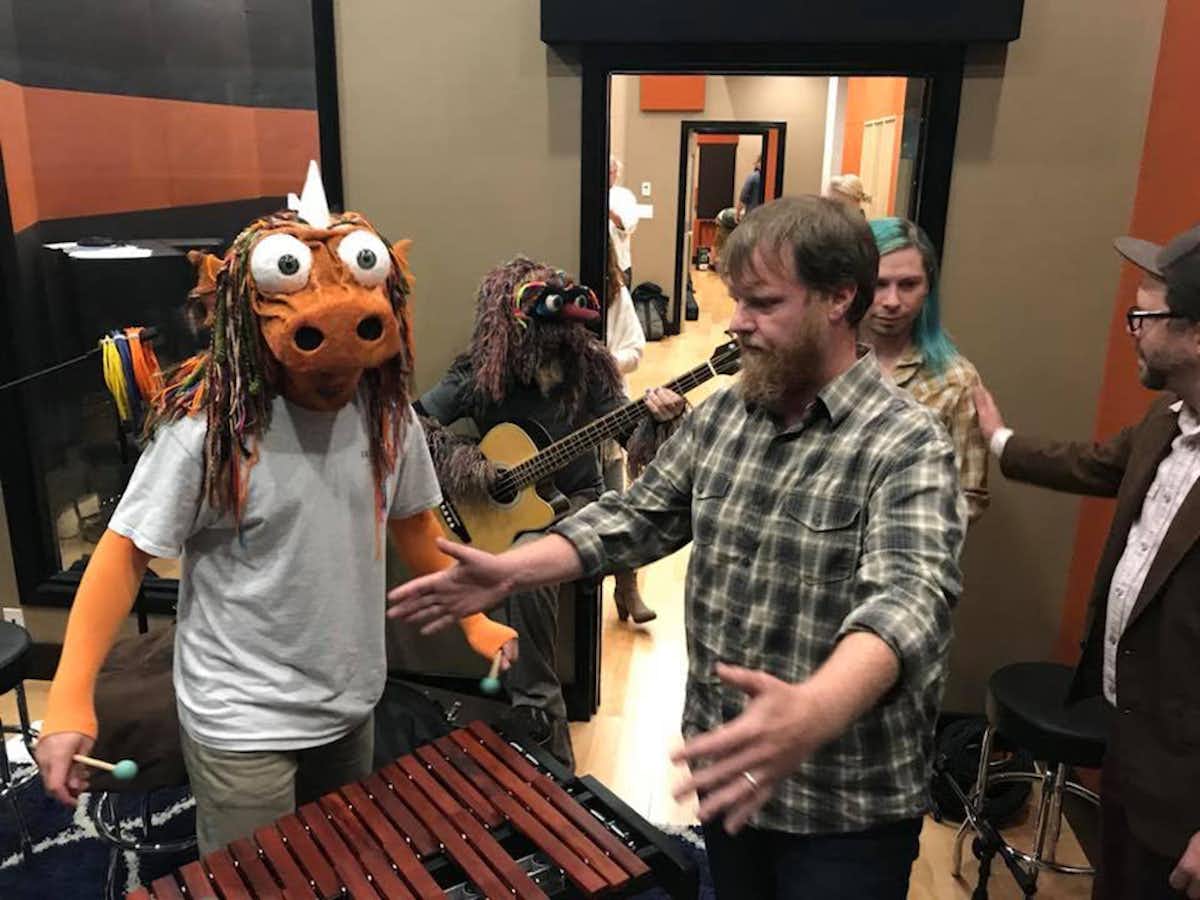
 

Members of a band record music at a Chattanooga public library. Author provided.

Tuesday, August 8, 2017

8 Ways to Become a Library Catalog Power User

Library Catalog | Public Libraries | How-to | Info Lit


This is a guest post from Abby Hargreaves. Abby is a New Hampshire native living and working as a Children’s Librarian in Washington, D.C. She fulfills the gamut of the librarian stereotype with a love of cats, coffee, and crocheting (and she likes a good run of alliteration). Her favorite color is yellow.


Sample Catalog Record
By Tomwsulcer (Own work) [CC0], via Wikimedia Commons
Whether you’re searching your local library catalog from home or looking for items while in-house, you’re probably overlooking some cool features in your library catalog. When I’m working the reference desk at the library and a visitor asks about the availability of materials on a particular topic, one of my favorite things to do is show them some tricks so they walk away not only with what they need, but with a solid grasp on how to make the catalog work for them in the future. 

Libraries use different software systems, so all of these features might not be available at your local library. Librarians and administrative teams often appreciate feedback on catalog systems, however, so if you see something you like, talk to your librarian about adding it. Read more...

Wednesday, June 14, 2017

The Hidden Treasures in Italian Libraries

Libraries | Italy | Librariana

In Florence, Rome and beyond, these buildings are a feast not only for book lovers, but for art and architecture enthusiasts as well.

Monday, May 15, 2017

Argentina's page turner: How a Canadian author became the leader of a library revolution

Libraries | Alberto Manguel | Culture

The National Library of Argentina sits at the epicentre of the country's cultural life. So when government officials appointed Alberto Manguel – native son and longtime Canadian anthologist – to radically rethink the institution, pushback from the intellectual elite was all but certain. Stephanie Nolen reports on an irascible scribe's rocky tenure

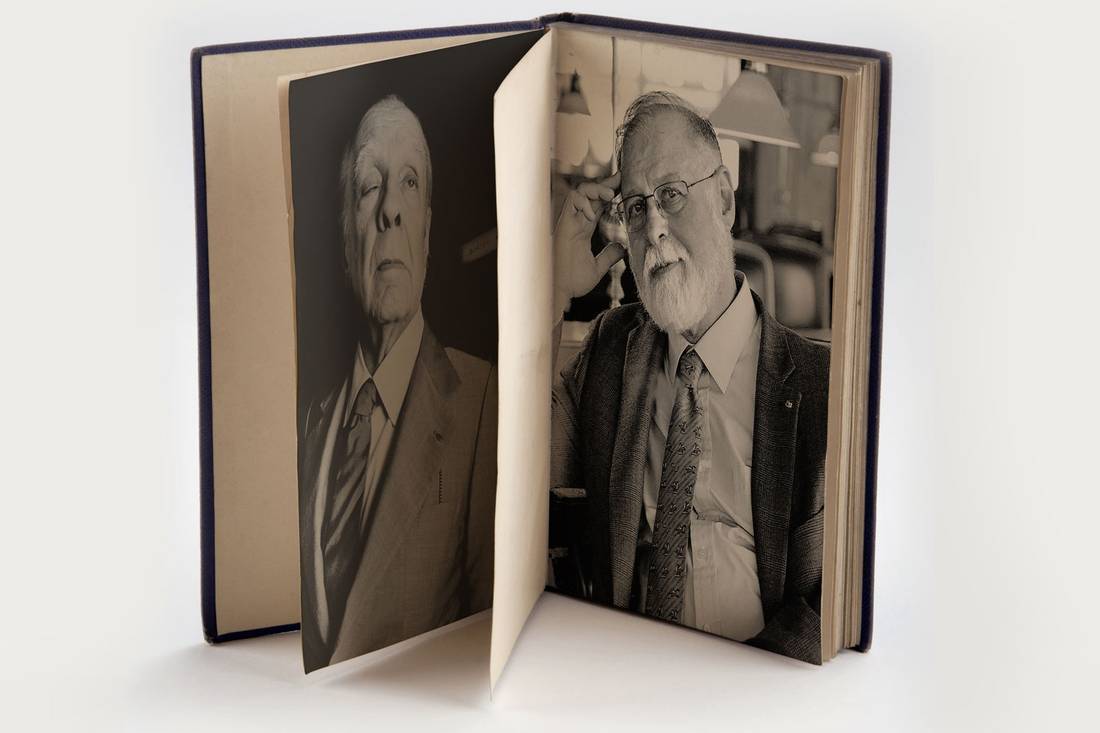
A few years after Jorge Luis Borges, left, ended his tenure as head of Argentina’s National Library, he began a friendship with Alberto Manguel, right, then a teenager in Buenos Aires. Argentina’s greatest writer was, by that time, blind, and invited the young Mr. Manguel to come home and read aloud to him, which Mr. Manguel went on to do many times over the next few years. Now, Mr. Manguel has taken Mr. Borges’s former role at the library.


Alberto Manguel is harried. A stream of wealthy Argentines, all stiletto heels and elegant umbrellas, is leaving his office in the National Library; he hopes to cultivate them as donors, and ushers them to the door with awkward pleasantries. A line of employees with requests waits in the hall, hoping to catch him. An assistant brandishes a clipboard thick with demands: There is a committee, but there is also a meeting, he is expected imminently at a luncheon, and there's this journalist, and – "I've abandoned my previous persona: I detested nothing more than lunches and cocktails and meetings and groups of more than three people," Mr. Manguel says with a sigh and a valiant attempt at a smile, when he has retreated back behind the office door. "And I'm spending my life doing this."

Back in December of 2015, Mr. Manguel was living in New York and teaching at Columbia and Princeton; he opened his e-mail one day to find a startling request from a stranger. The newly appointed Minister of Culture for Argentina was wondering if Mr. Manguel would consider returning to the country where he was born – and which he left 50 years ago – to serve as director of the storied National Library. Mr. Manguel says he assumed at first it was a joke – "What next, being Pope?"Read more...

Monday, April 24, 2017

Tips for Donating Old Books Without Being A Jerk | by Peter Derk 03-27-2017

Books | Libraries | Donations


I work at two places that accept donations of used books: a library and a bookstore that serves as a front for a non-profit. Okay, the bookstore funds the non-profit. It’s not a “front.” But “front” sounds more crime-y and thrilling.

When spring rolls around, both places are inundated with book donations. Especially now that we’ve all learned the life-saving magic of throwing away a bunch of our bullshit. (Thanks a lot, Marie Kondo. I’ll curse your name as I succumb to the sentient pile of dust mites that comes in with the 150th box of books from someone’s attic).

Donating books is a great thing to do. Most of the time.

The thing is, it can be a big help, it can make your space more calming, but you can also create more work for an organization you set out to help. If you donate books without taking a couple steps first, you can do more harm than good. Which is sort of fun in its own way, and if you wanted to be the Joker, the “let the world burn” person of your local library, I guess this is a relatively good option.

But if you really want to tidy up your life while also benefiting a local organization, here are some steps. Read more...


Thursday, February 23, 2017

'Not Sitting Quietly Anymore': How Librarians Are Fighting Trump | by Arianna Rebolini

Librarians | Activism | Social justice

February 20, 2017

Photo by B. Harvey via Stocksy  

Though some people may think the job involves more shushing than rallying, many librarians consider "making America read again" to be a radical political proposition. 

When Audrey Lorberfeld woke up in her Brooklyn apartment on Saturday, January 28, she was, like much of the country, angry. In the first week of his presidency, Donald Trump had already signed executive orders reinstating an expanded global gag rule, calling for the construction of a border wall between the United States and Mexico, reopening the possibility of the Dakota Access pipeline, and, on Friday, January 27, barring any travelers into the US from seven Muslim-majority countries.

Within hours of the order's signing, two Iraqis who'd flown into JFK—53-year-old Hameed Khalid Darweesh, arriving from Iraq, and 33-year-old Haider Sameer Abdulkhaleq Alshawi, arriving from Sweden—were detained. Overnight, while lawyers representing the two refugees worked to file a suit for their release, news of their detention spread, and by 11 AM on Saturday, organizations like the New York Immigration Coalition (NYIC) had put out a call for protesters outside JFK's Terminal 4.
Read more...


Tuesday, February 14, 2017

Why these librarians are protesting Trump’s executive orders | Elizabeth Flock

Activism | Access | Fake news | Immigration Ban

February 13, 2017

A “Libraries Are For Everyone” poster in Arabic. Credit: Rebecca McCorkindale

“Libraries Are For Everyone.” That’s the message of a series of images created by Rebecca McCorkindale in the days after President Donald Trump announced the temporary travel ban on seven Muslim-majority countries. She never expected her signs of inclusion to go further than a handful of libraries. 

But by the time she’d woken up the following day, she had received messages from librarians across the world wanting their languages represented. And libraries across the country — in Illinois, Minnesota, California, Virginia — had begun putting up the images as posters, along with displays about books on Islam, empathy and being a good neighbor. 

McCorkindale, who is assistant library director and creative director at the Gretna, Nebraska, public library, said she created the images because she believes librarians can and should be activists.
“Libraries are the heart of a community, for anyone and everyone that lives there, regardless of their background,” she said. “And so we strongly believe that libraries are not neutral. We stand up for human rights.”

She is not the only one. Since Mr. Trump took office a little more than three weeks ago, a vocal and growing number of librarians across the country have begun to take a more politically active stance.
Read more...

Thursday, July 28, 2016

Syria's secret library by Mike Thomson, BBC News

28 July 2016

MALEK  
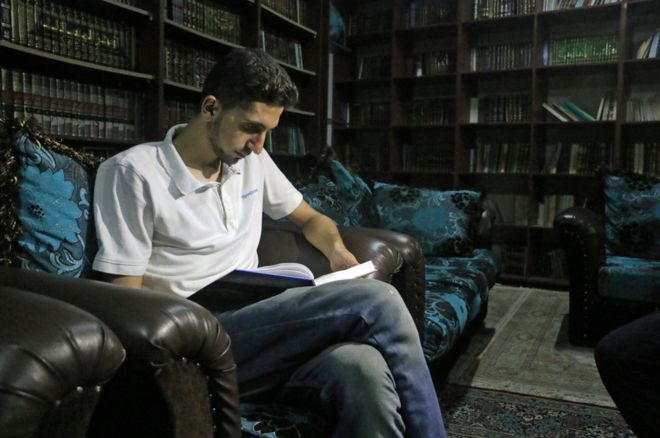
When a place has been besieged for years and hunger stalks the streets, you might have thought people would have little interest in books. But enthusiasts have stocked an underground library in Syria with volumes rescued from bombed buildings - and users dodge shells and bullets to reach it.

Down a flight of steep steps, as far as it's possible to go from the flying shrapnel, shelling and snipers' bullets above, is a large dimly lit room. Buried beneath a bomb-damaged building, it's home to a secret library that provides learning, hope and inspiration to many in the besieged Damascus suburb of Darayya.

"We saw that it was vital to create a new library so that we could continue our education. We put it in the basement to help stop it being destroyed by shells and bombs like so many other buildings here," says Anas Ahmad, a former civil engineering student who was one of the founders. Read more...

Wednesday, June 8, 2016

Borrowing a tune: Vancouver Library launches musical instrument lending program by Denise Ryan

Vancouver Public Library's Sandra Singh with the musical instruments that are now available as part of the library's new musical lending program. Mark van Manen / PNG
Starting Tuesday, dozens of musical instruments, including  guitars, ukuleles, banjos, keyboards, xylophones and drums, will be available free to anyone with a library card as the Vancouver Public Library launches an innovative new lending program. The launch, fittingly, will be a musical event jam packed with talent, including Jacob Hoggard of Hedley, Mother Mother, Ryan & Molly Guldemond, as well as students from the Sarah McLachlan School of Music.

The program was the brainchild of Vancouver’s own Shaw Saltzberg of NextStage Entertainment, who, after a career repping global stars such as Diana Krall, Michael Bublé, Elvis Costello and McLachlan, started thinking about how he could bring his love of music to the wider community.

“I wanted to focus on things that would have a real social impact,” he said.

Read more...
  

Wednesday, June 1, 2016

More than just books, libraries act as equalizers By Craig and Marc Kielburger

A student enters a library. (Peter Macdiarmid/Getty Images)             
If you want to rile up a Canadian, threaten to take away their library.

Craig got his first taste of activism speaking out to save our local library. We've noticed ever since then that when provinces and cities experience a budget crunch, libraries are often first on the chopping block. Yet invariably, citizens rise up to protect them from extinction.

Newfoundland's plan to shutter more than half its public libraries sparked a recent protest by thousands at the provincial legislature. Comedian and commentator Rick Mercer lambasted the government with one of his trademark rants.

When the town council of McNab-Braeside, a rural community near Ottawa, decided to cancel an arrangement that gave residents free access to the library in the neighbouring town of Arnprior, almost a third of the entire township signed a petition in protest. Then they voted out all five councillors in the next election.

In the age of e-readers, search engines, and Wikipedia, why do Canadians still cling so tenaciously to these seemingly archaic institutions? Because libraries are so much more than just repositories for books.  Read more...http://www.lfpress.com/2016/05/27/more-than-just-books-libraries-act-as-equalizers

Tuesday, May 10, 2016

5 Famous British TV Writers On How Libraries Influenced Their Lives

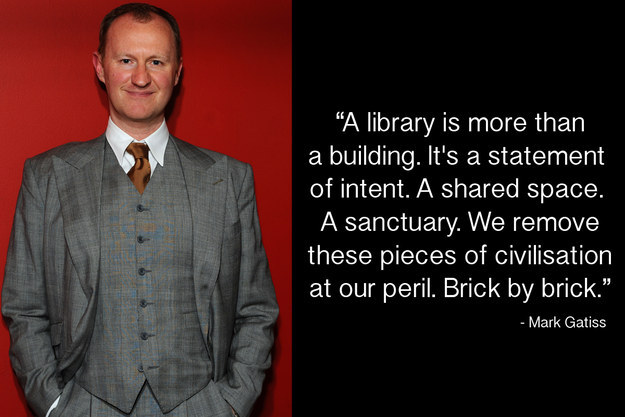
Following the closure of 10 libraries in Lambeth in London, Russell T Davies, Mark Gatiss, Peter Bowker, Sarah Phelps, and Jack Thorne spoke to BuzzFeed News about why they need to protected across the rest of the UK.
Moving “south of the river” after spending 15 years as a Hackney resident was tumult enough, so you can imagine my irritation when, upon my arrival in Lambeth, south London, I discovered that the council in its wisdom was closing 10 libraries – including my local one, the Carnegie Library.
The Carnegie Library was closed at the end of April, with the council promising that it will reopen in 2017 as “a healthy living centre with a self-service neighbourhood library”. For 10 days the library was occupied by protestors upset at the move. They left the building peacefully, and the gates of the Carnegie Library are now locked shut. Behind those gates, books lie unread and stories go untold.
The closure is a tragedy and it’s one that got me thinking what the world – individuals and communities – would be without libraries and what libraries mean to people. So I asked five of the best TV writers in Britain to lend their voices to the anti-closure campaign (#DefendTheTen) and write about what libraries meant and mean to them.

Mark Gatiss (SherlockDoctor WhoAn Adventure in Space and TimeThe League of Gentlemen)

Mark Gatiss (Sherlock, Doctor Who, An Adventure in Space and Time, The League of Gentlemen)
Anthony Harvey / Getty Images and Scott Bryan / BuzzFeed
Read more...

Wednesday, May 4, 2016

Has the library outlived its usefulness in the age of Internet? You’d be surprised by Donald A. Barclay

April 28, 2016 6.09am EDT
U.S. institutions of higher education and U.S. local governments are under extraordinary pressure to cut costs and eliminate from institutional or governmental ledgers any expenses whose absence would cause little or no pain.
In this political climate, academic and public libraries may be in danger. The existence of vast amounts of information – a lot of it free – on the Internet might suggest that the library has outlived its usefulness.
But has it? The numbers tell a very different story.
In spite of the findings of a survey in which Americans say they are using public libraries less, the usage numbers reported by libraries indicate the opposite. Read more...
Libraries are no longer cold, forbidding spaces. Howard County Library System FollowCC BY-NC-ND

Tuesday, April 5, 2016

8 Librarians Who Lend Out More Than Books by Michele Debszak

Libraries would be nothing without the librarians who run them. Most of us know them as the people who check out our books or help us navigate the Dewey Decimal System, but not all librarians are limited to working with the printed word. Whether they’re lending out ties or larger-than-life puppets, these are the heroic men and women behind some of the world’s most unique library collections.

1. LAUREN COMITO // THE TIE-BRARY

Libraries offer tremendous resources to people searching for employment, but that could all be for nothing without a proper interview outfit to wear. In Queens, New York, library members can check out a tie with interview tips and tie-tying instructions printed inside the box it comes in. Queens librarian Lauren Comito launched the “tie-brary” as one of her many initiatives dedicated to providing services to the borough’s homeless population. After foundingWhereinQueens.org, a website that directs users to career services and other resources in the area, she realized that some of her patrons didn’t own a tie or even know they should be wearing one to interviews. She met this need by building the racks to hold a library of ties herself. read more...
IMAGE CREDIT: 
ISTOCK

Wednesday, March 30, 2016

THE NECESSITY OF EXTREMISM IN LIBRARY ADVOCACY AND POLITICAL OUTREACH by pcsweeney March 30, 2016

1104-1dl4j10
Exploring_ExtremismThis is a post that I’ve been working in various forms for about 3 years. There’s a lot of background and explanation here and I’ll even cite my sources where I can. Essentially, I’m going to make the claim that advocacy and politics in America has been hijacked by a sadly necessary extremism and that for libraries to continue to exist as we know them we need to get on board with the rhetoric. If we don’t learn to start to talk about libraries in a severely emotionally meaningful way that engages and activates our most impassioned supporters, libraries will be next on chopping block. We can’t allow this to happen because libraries are one of the few truly great institutions to come out of the American Government.
Before I really get into this, I’d like to point out that this is not a partisan issue. I have seen these tactics in use by every political party. I’d also like to point out that I’m a pretty hardcore moderate and I have a strong and healthy distrust of both progressive and conservative parties as well as low faith in both the government and corporate power structures. I’m going to do my best to pull examples from as many different arenas as possible for a fair and balanced discussion of the issue that should make everyone equally angry.
This all begins with my own blog and why I essentially stopped blogging. The truth is that I was frustrated about what kinds of posts got the most hits. A few years ago I realized that the posts that “did the best” were ones that were inherently mean spirited or controversial for their extreme views. For example, I wrote a post about Second Life that was intentionally mean spirited and to this day it is my most read piece. The thing to realize about this post is that I never really said anything important. There was nothing in there that would move anything forward. Libraries were already dropping Second Life and by the time I wrote the piece the virtual landscape was already a ghost town. On the other hand, I wrote a number of other posts that I think were more important but didn’t have anywhere as close to the same level of emotional reactions, emotion, or rhetoric and they were hardly read at all.  Read more...

Thursday, March 10, 2016

Meet 9-Year-Old Muskaan Who Runs A Library In Bhopal To Educate Other Kids In Her Slum HuffPost India | By Adrija Bose

POOR KIDS INDIA BOOKS

They say a pen is mightier than a sword. Ask 9-year-old Muskaan Ahirwar, and she will agree. Like all other 9-year-olds, Muskaan goes to school, is curious about new things and loves playing in her free time.
The class 3 student from Bhopal also runs a library for other kids.
In Bhopal, in a slum area in Arera Hills, right behind the Rajya Siksha Kendra (State Educational Center), the 9-year-old runs a library--Bal Pustakalay, reports Times Of India.
Everyday, after returning from school, at about 4 in evening, Muskan sets up the library for slum children outside her house. The students eagerly wait for her to open the library and as soon as she does they surround her to listen to her stories and read their books.
"We play here, learn hear and read lot of books about freedom fighters and great Indian kings and many others," one enthusiastic reader told TOI. Read more...

Thursday, February 4, 2016

The loss of libraries is another surefire way to entrench inequality Mary O'Hara Mary O'Hara

 ‘Having a library within walking distance of home was a way for a young girl from a poor background to access the same breadth of reading material as anyone else.’ Photograph: Getty Images

As someone who grew up in a home without books, no spare cash to buy them and no tradition of reading bedtime stories, my local library offered something unique and indispensable. It’s hard to think of anything that brought me more joy as a primary school-aged child than walking back from the Falls Road library in west Belfast with a bundle of books.

Having a library within walking distance of home was a way for a young girl from a poor background to access the same breadth of reading material as anyone else – at no expense. It stripped away at least some of the disadvantage that came with being from a low-income family. So every time I hear of another library closure – and there were more than 100 last year alone in Scotland, Wales and England, according to official figures – it hits a nerve. The loss of libraries is simply another surefire way to entrench inequality.
From providing books for people of all ages and backgrounds, to kids clubs and hubs for older people, to computer terminals that those with no access to the internet can use to find job vacancies, libraries are about as democratic and diverse as is possible to imagine. When properly funded and resourced they are educational and social anchors in communities everywhere. Yet, despite knowing all this, in the past five years the relentless funding constraints placed on local authorities have seen library budgets slashed by an astounding amount.  Read more...


Wednesday, February 3, 2016

February, 2016 is...Library Lovers Month


Stop hugging that library. No wait, my mistake, I forgot that it’s Library Lovers Month – and it seems to have come at just the right time as many local libraries are struggling during the economic downturn.


So why love your local library? Libraries are a sanctuary away from the hustle and bustle of everyday life; they offer security and peace and quiet. They are also a place where you can focus surrounded by likeminded people with the desire to acquire knowledge.
It’s important to understand that not everything is available on the internet (yet), libraries can have vast digital stores of qualitative and quantitative information escaping from opinion led snippets and snapshots from online. There may be some crossover of information but in most cases libraries are a much more economically viable solution when looking for information than the internet.
Love your library for what it is, a community meeting place or treasure trove of ideas. Why not push against the declining attendance of libraries and go and learn something new that will expand your knowledge of who you are, of where you live or what you do?ou live or what you do?

Thursday, December 31, 2015

Locked away: Egypt’s forgotten Jewish literary heritage

Inside a library of a synagogue in downtown Cairo, hundreds of Judaic books dating from the medieval ages to 20th century are shelved, unread and un-indexed.
Despite a center dedicated to their preservation, government ministries have stalled, eschewing responsibility for what would be an expensive project to review and record the manuscripts digitally.
Cultural history
Some of the shelved books date back to 17th and 18th centuries, while others are kept inside closed glass boxes, Hebrew Language professor at Ain Shams University Mohamed Hosni told The Cairo Post.
“The books are very important and rare. Some books are hand-written while others were donated by dignitaries,” Hosni added, “There are some books [so fragile they] cannot be touched lest they deteriorate.”
The Jewish Heritage Library in Egypt was established inside Cairo‘s Shaar Hashamayim Synagogue by the Jewish Community Council of Cairo in cooperation with Israeli Academic Center in Cairo during the tenure of former President Hosni Mubarak and was inaugurated on Oct. 25, 1988.
Most Egyptian Jews left the country in the 1950s, and of those who remained, the majority officially converted to Christianity or Islam. There less than 20 self-identified Jews estimated to remain in Egypt.
Head of Jewish Community of Egypt Magda Haroun has previously expressed her concerns over neglecting the library’s archeological and old books and rolls without digitizing and documentation.

Monday, December 21, 2015

Yes, Chief Justice Roberts, a prison library can be a ‘very good library

 
Valerie Schultz works as a library technical assistant for the California Department of Corrections and Rehabilitation.
Chief Justice John Roberts in Washington in 2013. (Win McNamee/Getty Images)

Chief Justice John G. Roberts Jr., I’m surprised at you. Didn’t your mother raise you better than to insult whole groups of people?
For those who are wondering, I’m talking about a remark the chief justice made last month during oral arguments in Bruce v. Samuels, a dispute about federal prisoners paying legal fees. Here I quote from Amy Howe of SCOTUSblog: When reminded that prisons maintain libraries, “Roberts then shot back, presumably sarcastically, ‘I’m sure they are very good libraries, too.’ ”
I run a library at a state prison for men in California, and I can attest that it is indeed a “very good library.” My library is tasked with assuring that inmates have access to the courts because, although they are convicted criminals, they retain certain civil and human rights. We provide them with access to legal forms, typewriters, law books and computers that can be used to research case law and the myriad rules of the courts, as well as a daily legal newspaper. We make available typing paper, numbered pleading paper and envelopes for filing court documents. We make the required number of copies of outgoing legal work. We weigh documents to determine the number of stamps needed for mailing. In short, we have everything that an inmate acting as his own lawyer needs to bring his concern to the attention of the appropriate court. Read more...

Thursday, November 12, 2015

Libraries are changing international development By Jacob Brogan


Mmankgodi Community Library in Botswana, where the Gates Foundation has helped create library services designed to encourage small business development.


This article is part of Future Tense, a collaboration among Arizona State UniversityNew America, and Slate. On Thursday, Nov. 12, Future Tense will host an event in Washington, D.C., on the future of the library. For more information and to RSVP, visit the New America website.
Discussions of the future of libraries are often surprisingly nostalgic endeavors, producing laments for vanished card catalogs or shrinking book stacks rather than visions of what might be. Even at their most hopeful, such conversations sometimes lose track of the pragmatic functions that libraries serve. Imagined as unchanging archives, libraries become mere monuments to our analog past. But envisioning them as purely digital spaces also misses the mark, capturing neither what they can be nor the way their patrons use them.
According to a recent report by the Pew Research Center, low-income and minority Americans are far more likely than others to assert that they would be negatively affected if their local library closed. The survey suggests that this has much, or more, to do with access to computers and the Internet—which is critical for job searchers and entrepreneurs—as it does with the opportunity to check out books. Public libraries aren’t just educational destinations; they also provide access to economic opportunities available through few other venues.  Read more...