Pages

Showing posts with label Public Libraries. Show all posts

Monday, December 18, 2017

What public libraries will lose without net neutrality

Net neutrality | Public Libraries | Access 

A Q&A with NYPL president Tony Marx and associate director of information policy Greg Cram 

 By


The FCC will vote on a measure today that would repeal net neutrality and pave the way for the end of the free, open internet as we’ve always known it. Librarians aren't happy about it.
Yesterday, The Verge published an op-ed written by the heads of the New York Public Library, the Brooklyn Library, and the Queens Library systems, which called the measure “appalling,” and argued that the end of an open internet would contribute to inequality of education and opportunity, widening “the already yawning digital divide.” Later, in a phone call, the New York Public Library’s CEO and president Anthony Marx and associate director of information policy Greg Cram broke the issue down further, explaining exactly which library resources an open internet protects, who would be hurt the most by net neutrality’s rollback, and why handing the internet to ISPs could threaten the basic foundation of American democracy. 

This interview has been edited for clarity and length.

What stake do public libraries have in this issue? 

Greg Cram: So, for fiscal year 2017 [the New York Public Library] provided 3.1 million computer sessions — and that’s sessions across all of the branches — using 4,700 computers. And in addition to that, we provided 3 million wireless sessions. For the first quarter of fiscal year 2018 we had 16.2 million pageviews on our digital collections.

Anthony Marx: That gives us a little bit of the sense of the scale of how much of the library goes across wires, and the simple fact is that the poorest of New York rely on the library as the only place they can go and get free use of computers and free Wi-Fi. It’s one of the reasons why the library is the most visited civic institution in New York. We have also, in recent years, been lending people what we call hot spots, which are Wi-Fi boxes they can take home, typically for a year. That gives them digital access at home — broadband access — which something like 2 million New Yorkers can’t afford and don’t have. We’re still doing thousands of those. We’d like to do more and we’re exploring how to do more, because in this day and age, if you don’t have internet access that works and goes fast enough, you can’t do your homework, you can’t do research, you can’t apply for jobs, you can’t find jobs. 

Thursday, October 19, 2017

New York City’s Libraries Will Forgive All Children’s Fines

Public libraries | Fines | Borrowing privileges

The Hamilton Grange branch of the New York Public Library, where about half of children have their borrowing privileges suspended because of unpaid fines. An amnesty at the city’s libraries will allow all children to check out books again. Credit David Dee Delgado for The New York Times


Library books are free, until they aren’t: Patrons who rack up $15 in late fees at the city’s public libraries are blocked from taking out more books until the fine is paid.

Among those with suspended privileges are 160,000 children, most of them from the city’s poorest neighborhoods, who cannot afford to pay.

“Learning is a right. Reading brings you to new worlds,” said Octavia Loving, a 17-year-old student at Special Music High School, as she stood amid the stacks at Countee Cullen Library in Harlem, one of the neighborhoods with the highest concentration of children with blocked cards, according to library officials. “They shouldn’t block us from reading because of money.”

On Thursday, the city’s three library systems — the New York Public Library, which serves Manhattan, the Bronx and Staten Island; the Queens Library; and the Brooklyn Public Library — will forgive all fines for children 17 and under and unblock their cards. The one-time amnesty is being underwritten by the JPB Foundation, a philanthropy that supports civic causes, which will make up $2.25 million of the shortfall in revenue from the forgiven fines.

The amnesty “is a dramatic way to message to kids and young adults that we want you back, and we want you reading,” said Anthony W. Marx, the president of the New York Public Library. The forgiveness is not conditional on returning any overdue books or DVDs. “We want you to be responsible, but we don’t want to penalize you just because you are too poor to pay the fines.” Read more...


Wednesday, August 9, 2017

Save your local! Should volunteers help keep our public libraries open?

Public libraries | UK | Volunteers

Alison Flood  | Tuesday 8 August 2017

Kensal Rise Library in London, where volunteers have set up a community library. Photograph: Martin Godwin for the Guardian    
Readers checking a book out of the village library might not immediately notice much of a difference, but Congresbury is the latest public library to haven been handed over “to the community”. You may be used to libraries being run by volunteers – maybe your local is – but this structure is relatively new. Over the last decade, as many libraries began closing across the UK due to swingeing cuts to local authority funding by central government – 121 libraries closed last year alone – some have instead been handed over by councils to the community to run.

Since librarian Ian Anstice began charting the cuts to UK libraries on his campaigning website Public Libraries News in 2010, 500 of the UK’s 3,850 remaining libraries have now been taken over, at least in part, by volunteers. “I’ve been looking at the count going up steadily for the last few years,” says Anstice. “In 2010, there were a handful – perhaps 10 in the whole country. So this is quite a staggering change.”  Read more:

Thursday, August 3, 2017

Anyone With A Library Card Can Now Stream Thousands Of Feature Films, Including The Criterion Collection

Public libraries | NYPL | Streaming media

Vivre Sa Vie, 1962


In July, LAist announced that you could stream hundreds of movies from the Criterion Collection for free if you had a Los Angeles Public Library card. We immediately reached out to the New York Public Library inquiring about our own hidden benefits as library card holders, and at the time they did not offer access to Kanopy's streaming service, which the LAPL uses. But lo and behold, they have now decided to add it (you're welcome?)—starting Friday August 4th, anyone with a library card (both NYPL and Brooklyn Public Library) will have access to hundreds of movies. Here's what you need to know....

Don't have a library card? You can get one instantly through the NYPL's SimplyE app; that card will get you immediate access to hundreds of thousands of NYPL e-books, but for physical materials and any other databases (like Kanopy), you will need to go to a branch, and "upgrade" your e-card to a full access library card.
More information on getting a NYPL card can be found here; and more on getting a BPL card can be found here.

Tuesday, July 25, 2017

4 important things users want from a library (and how to offer them)

Public Libraries | Library Services | Phone Reference


Sometimes, there is a big imbalance between what the users wish to have in a library and what they really get. As Mick Fortune mentions in our previous post, for many years libraries measured their success primarily by footfall and they only focused on that. Only in the last few years, libraries have really started focusing on getting to know their users better. Even so, all the studies, such as those made by The Pew Internet, Carnegie UK Trust, Museums Libraries & Archives UK, etc. end up showing the same results.


In the following blog posts, we’re going to explore the various things users want from a library and suggest a few ways how libraries can set this right. In this first post, we will focus on the 4 most important things users want from a library.


1. A good range of books

Read article 


Thursday, June 22, 2017

Horse-Riding Librarians Were the Great Depression’s Bookmobiles

Mobile libraries | Public libraries | Great Depression

smithsonian.com

During the Great Depression, a New Deal program brought books to Kentuckians living in remote areas
A Pack Horse librarian returning over the mountain side for a new supply of books (Part of Goodman-Paxton Photographic Collection, Kentucky Digital Library)

Their horses splashed through iced-over creeks. Librarians rode up into the Kentucky mountains, their saddlebags stuffed with books, doling out reading material to isolated rural people. The Great Depression had plunged the nation into poverty, and Kentucky—a poor state made even poorer by a paralyzed national economy—was among the hardest hit.

The Pack Horse Library initiative, which sent librarians deep into Appalachia, was one of the New Deal’s most unique plans. The project, as implemented by the Works Progress Administration (WPA), distributed reading material to the people who lived in the craggy, 10,000-square-mile portion of eastern Kentucky. The state already trailed its neighbors in electricity and highways. And during the Depression, food, education and economic opportunity were even scarcer for Appalachians.

They also lacked books: In 1930, up to 31 percent of people in eastern Kentucky couldn’t read. Residents wanted to learn, notes historian Donald C. Boyd. Coal and railroads, poised to industrialize eastern Kentucky, loomed large in the minds of many Appalachians who were ready to take part in the hoped prosperity that would bring. "Workers viewed the sudden economic changes as a threat to their survival and literacy as a means of escape from a vicious economic trap," writes Boyd. 


Read more:http://www.smithsonianmag.com/history/horse-riding-librarians-were-great-depression-bookmobiles-180963786/

Wednesday, June 21, 2017

Saving Lives in the Stacks: How libraries are handling the opioid crisis

Public libraries | Safety | Health

June 21, 2017


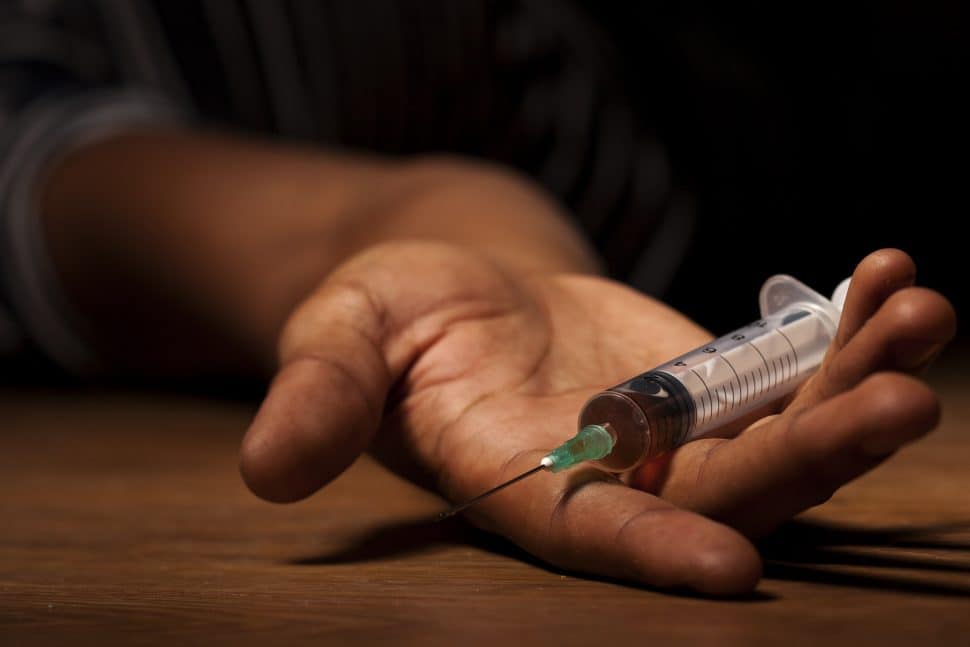
On June 1, the Philadelphia Inquirer broke the news that the Free Library of Philadelphia’s McPherson Square Branch had a serious problem with opioid use among patrons. By June 3, everybody from the Washington Post to National Public Radio (NPR) had picked up the story.

“As this nation’s opioid crisis has exploded, the staff at the public library … have become first responders,” NPR’s Scott Simon told listeners. “And I gather the librarians there have been obliged to become involved in a way that—well, become involved in a way librarians aren’t usually asked to become involved.”

What Simon didn’t say—but what librarians far and wide know—is that the McPherson Square branch is just one of many American libraries struggling with opioid-related issues such as discarded, contaminated needles; drug use in the library itself; and even on-site overdoses and fatalities. Libraries from California to Colorado, Pennsylvania to Missouri, are finding themselves on the front lines of a battle they never anticipated fighting.

Of course, opiate use isn’t limited to libraries. Neither is anyone claiming that the problem is more severe in libraries than it is anywhere else. Still, the fact that libraries are open to all, offer relative anonymity, and generally allow patrons to stay as long as they like make them uniquely vulnerable to those seeking a place to use drugs.

“It’s just like: What is going on? How can we stem this tide?” says Kim Fender, director of the Public Library of Cincinnati and Hamilton County (PLCH).
Read more...

Thursday, June 8, 2017

Announcing #SubwayLibrary: Free E-Books for Your Commute | NYPL Blog

E-Books | NYPL |MTA


by Gwen Glazer. Librarian, Readers Services
June 8, 2017


We're excited to announce the launch of Subway Library, a new initiative between The New York Public Library, Brooklyn Public Library, and Queens Library, the MTA, and Transit Wireless that provides subway riders in New York City with free access to hundreds of e-books, excerpts, and short stories—all ready to read on the train.

As part of the Subway Library celebration, don't miss the specially wrapped "Library Train," with the interior designed to look like NYPL's Rose Main Reading Room! The train will alternate running on the E and F lines, running through Brooklyn, Manhattan, and Queens.

How to Access the Subway Library

To access the Subway Library, MTA customers in underground subway stations can connect to the free TransitWirelessWiFi through their network settings and click on the SubwayLibrary.com prompt to start reading from a large selection of titles for all ages. The site was developed with the same technology we used to create our free SimplyE e-reader app. Read more...

Wednesday, June 7, 2017

San Diego librarians receive Mental Health First Aid training | incl. VIDEO

Mental Health | Homelessness | Public Libraries

BY: Amanda Brandeis


Most of the librarians have been trained in traditional first aid, but they will soon learn how to address the hidden wounds.


[Please click here to view video.]


 SAN DIEGO (KGTV) - The job description of a librarian goes far beyond recommending books and organizing shelves -- they're often the first responders when someone needs help in the library.

"I think there's a misperception of what librarians would be. Everybody has a bun in their hair and a pocket pen protector," said Joe Miesner, access services librarian at San Diego Central Library.

Miesner has been working at San Diego libraries for 26 years. He and his colleagues say they got into the field to help the community.

"We're a great community link where everybody is welcome," said Miesner.

Most of the librarians have been trained in traditional first aid, but they will soon learn how to address the hidden wounds.

Staff with the San Diego Public Library are taking part in the Mental Health First Aid course, learning skills to provide initial help and support to someone who may be developing a mental health issue or substance abuse problem or experiencing a crisis. Read more...