Academic cybrarian, bibliophile & culturista. Mentor to library school (LIS) students and graduates. Advocate for all libraries and their users. [Fmr. Organizer, NY Librarians Meetup]
Historically,
public libraries were established for the creation of an enlightened
citizenry and for the purposes of disseminating and archiving knowledge.
Contemporary libraries have shifted in focus and exhibit multiple
functions and purposes, including leisure and entertainment. This is
evident in not only the content of their collections, but also in the
order and display of collections. This also speaks to issues of power
and knowledge: the power inherent in curation and display of knowledge,
and the ability to influence which books are borrowed and read. How do
librarians decide which classification system to use? How easy is it for
serendipitous discovery? The way books are shelved and displayed affect
how readers can find them; a library is not simply a collection of
books, but a collection of books ordered in such a way that items can be
found.Read more...
On August 21, all of North America will be given the opportunity to view
one of nature’s most awe-inspiring sights—a solar eclipse. While from
our offices here in New York we’ll only see a partial eclipse, we’re
still celebrating this celestial event with a list of some of our
favorite “sun” and “moon” books!
From the author of THE PARIS WIFE, a historical novel about a woman
ahead of her time. Following her untraditional childhood in Kenya, Beryl
Markham defies gender norms to ultimately become a record-setting
aviator, all while caught up in a passionate love triangle with safari
hunter Denys Finch Hatton and Karen Blixen.
This is a guest post from Abby Hargreaves. Abby is a New
Hampshire native living and working as a Children’s Librarian in
Washington, D.C. She fulfills the gamut of the librarian stereotype with
a love of cats, coffee, and crocheting (and she likes a good run of
alliteration). Her favorite color is yellow.
By Tomwsulcer (Own work) [CC0], via Wikimedia Commons
Whether you’re searching your local
library catalog from home or looking for items while in-house, you’re
probably overlooking some cool features in your library catalog. When
I’m working the reference desk at the library and a visitor asks about
the availability of materials on a particular topic, one of my favorite
things to do is show them some tricks so they walk away not only with
what they need, but with a solid grasp on how to make the catalog work
for them in the future. Libraries
use different software systems, so all of these features might not be
available at your local library. Librarians and administrative teams
often appreciate feedback on catalog systems, however, so if you see
something you like, talk to your librarian about adding it. Read more...
A class at Public School 682, the Academy of Talented Scholars, in Brooklyn.Credit
Joshua Bright for The New York Times
“You’re
the children’s books editor?” Someone has said this to me, usually with
a smile, at least once a week in the almost three years I’ve been at
The New York Times. “What a cool job!” is the subtext. But lurking in
the background are almost always other questions, sometimes more
pressing ones about kids’ reading in general. “What should my second
grader be reading?” a colleague asked the other day, adding, “She’s
obsessed with the books in that series with the different flower
fairies, and I can’t get her interested in anything else.” A neighbor
recently approached me with a worried look and said, “My 10-year-old
will only read graphic novels. What should I do?”
Clearly, there’s a lot of uncertainty out there among parents when it comes to children’s books,
and also an earnest desire to make the right choices and do the right
thing. Parents realize the stakes are high, and childhood passes
quickly.
So
when the Guides team approached Pamela Paul, the editor of the Book
Review, about writing a guide to raising readers, and she asked if I was
interested, I jumped at the chance. (Find it here.)
Much
of what I do every day is sift through new books, deciding which ones
we should assign for review, or which ones might make for a good feature
story. I try to balance for different ages, different genres and books
by authors from a variety of backgrounds. There’s always the thrill of
discovering a book I can’t wait to tell our readers about. Read more...
From
the moment you’re expecting your first child, you are bombarded with
messages about the importance of reading. For good reason: The benefits
of reading at every stage of a child’s development are well documented.
Happily, raising a reader is fun, rewarding and relatively easy.
When you purchase a recommended book through our site, we earn an affiliate commission.
Start Them Early
First, Reacquaint Yourself With Reading
If
you’ve let reading slide to the margins of your life, now is the time
to bring it back. Make the space, and time, for books you read for
yourself, and books you read with your child. If you want to raise a reader, be a reader.
Baby Books Are a Necessity
You
may think you’re off the hook with books until your baby is at least
vertical, but not so. Even newborns benefit from the experience of
hearing stories (and they can’t complain about your taste in books). So
take advantage. Here’s how: Read more...
The National Library of Argentina sits at the epicentre of the country's
cultural life. So when government officials appointed Alberto Manguel –
native son and longtime Canadian anthologist – to radically rethink the
institution, pushback from the intellectual elite was all but certain. Stephanie Nolen reports on an irascible scribe's rocky tenure
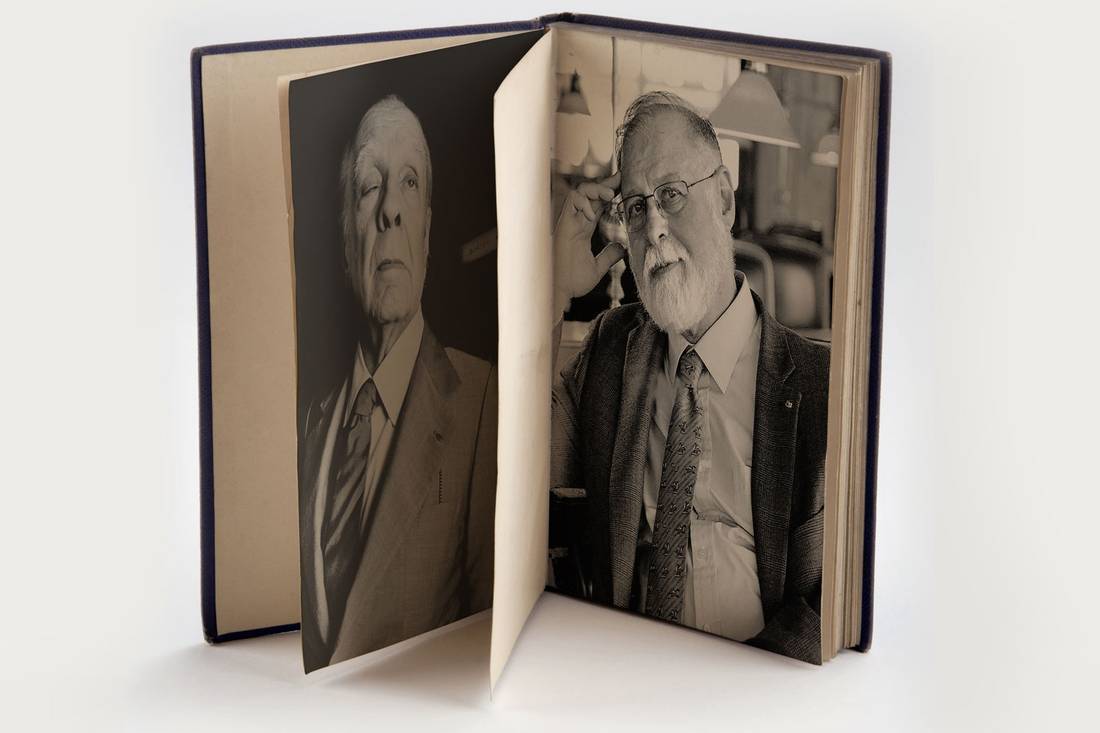
A few years after Jorge Luis Borges, left, ended his tenure as head of
Argentina’s National Library, he began a friendship with Alberto
Manguel, right, then a teenager in Buenos Aires. Argentina’s greatest
writer was, by that time, blind, and invited the young Mr. Manguel to
come home and read aloud to him, which Mr. Manguel went on to do many
times over the next few years. Now, Mr. Manguel has taken Mr. Borges’s
former role at the library.
PHOTO ILLUSTRATION: BRYAN GEE/THE GLOBE AND MAIL IMAGES: GETTY IMAGES; HORACIO PAONE FOR THE GLOBE AND MAIL
May 12, 2017
Alberto Manguel is harried. A stream of
wealthy Argentines, all stiletto heels and elegant umbrellas, is leaving
his office in the National Library; he hopes to cultivate them as
donors, and ushers them to the door with awkward pleasantries. A line of
employees with requests waits in the hall, hoping to catch him. An
assistant brandishes a clipboard thick with demands: There is a
committee, but there is also a meeting, he is expected imminently at a
luncheon, and there's this journalist, and – "I've abandoned my previous
persona: I detested nothing more than lunches and cocktails and
meetings and groups of more than three people," Mr. Manguel says with a
sigh and a valiant attempt at a smile, when he has retreated back behind
the office door. "And I'm spending my life doing this."
Back
in December of 2015, Mr. Manguel was living in New York and teaching at
Columbia and Princeton; he opened his e-mail one day to find a
startling request from a stranger. The newly appointed Minister of
Culture for Argentina was wondering if Mr. Manguel would consider
returning to the country where he was born – and which he left 50 years
ago – to serve as director of the storied National Library. Mr. Manguel
says he assumed at first it was a joke – "What next, being Pope?"Read more...
Reading: pretty good, apparentlyCredit:
Danny Lawson/PA Wire Does reading books make you a nicer person? Or are nicer people more likely to be drawn to reading?
A recent study by researchers at Kingston University found that
people who read works of fiction tend to be kinder and more empathetic.
"Exposure to fiction relates to a
range of empathetic abilities," said researchers, who addressed
the British Psychological Society conference in Brighton last week.Read more...
A year ago, 12-year-old Aisha Esbhani,
sitting in her home in Karachi, Pakistan, looked up at her bookshelf and
realized that it was filled almost entirely with books by North
American and British authors. Dissatisfied, Esbhani set herself a
major challenge: to read a book from every country in the world, “as
well as some extra territories.” To get help, she started a Facebook page for her project, and sent out a call for recommendations.
Not a usual project for a teenager, perhaps. When I asked Esbhani how
she became such an avid reader, she told me that as a child, her mother
would buy her books like Beauty and the Beast and Cinderella—but while she loved the movies, “the books never really caught my interest. Then, my brother gave me A Series of Unfortunate Events by Lemony Snicket. That series began my reading journey!” Well, I’m sure she’s not alone in that regard. Read more...
I work at two places that accept donations of used books: a library and
a bookstore that serves as a front for a non-profit. Okay, the
bookstore funds the non-profit. It’s not a “front.” But “front” sounds more crime-y and thrilling.
When spring rolls around, both places are inundated with book
donations. Especially now that we’ve all learned the life-saving magic
of throwing away a bunch of our bullshit. (Thanks a lot, Marie Kondo.
I’ll curse your name as I succumb to the sentient pile of dust mites
that comes in with the 150th box of books from someone’s attic).
Donating books is a great thing to do. Most of the time.
The thing is, it can be a big help, it can make your space more
calming, but you can also create more work for an organization you set
out to help. If you donate books without taking a couple steps first,
you can do more harm than good. Which is sort of fun in its own way, and
if you wanted to be the Joker, the “let the world burn” person of your
local library, I guess this is a relatively good option.
But if you really want to tidy up your life while also benefiting a local organization, here are some steps.Read more...
It’s always an intellectual mistake to assume that the thing you love the most might be the exception. I remember listening to a public-radio conversation a few years ago in which two people debated the necessity and romance of record stores (a very large and storied one in NYC had just closed) and thinking, Well, of course record stores are going to close, it’s sad but it’s the way of the world, and feeling kind of smug about it because I don’t frequent record stores. And then realizing a moment later that in two, or five, or maybe ten years time—or maybe sooner—I could be listening to two people on the radio having this exact same wistful conversation about bookstores.
I didn’t feel so smug after that.
Bookstores are a sacred space for me and books are hallowed objects. I’ve worked in two of the former and owned and treasured an innumerable number of the latter. (I honestly don’t know the number of books I currently own; I do know that when my wife and I moved most recently, our moving company charged us extra afterward because we’d seriously underestimated the number of boxes of books.) My first and favorite activity in any new city is to locate and visit the best bookstore; I literally Google the city’s name and “best bookstore” and see what comes up. This almost never fails to lead me not only to a great bookstore but to the best, most interesting neighborhood in town. Read more...
Book lists | American writers | American literature
by Melia Robinson
George R.R. Martin, whose book saga was adapted for "Game of Thrones," was born and raised in New Jersey.Kevin Winter / Getty
First, we looked coast to coast to find the most famous book set in every state. Now we're hitting the books to discover the most famous author from every state.
Not all the choices were cut and dry. To qualify for
this list, the famed authors had to be born in their respective states,
but not necessarily live out their years there.
We considered the authors' fame in terms of ubiquity, acclaim, and
financial success — and awarded bonus points if the author showed state
pride by setting their works there.
Melissa Stanger contributed reporting on a previous version of this post. Read more...
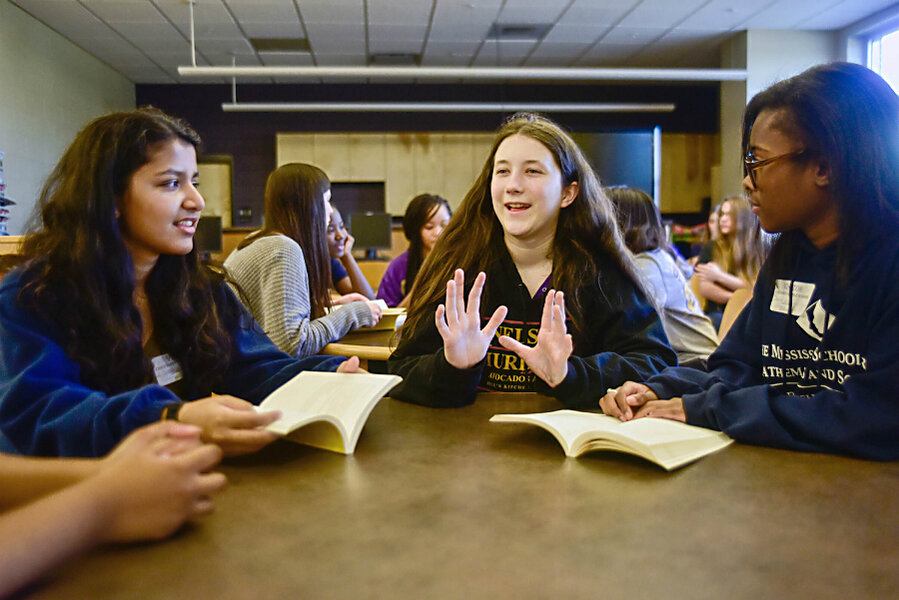
Columbus, Miss.—Four years
ago, eighth graders Wrishija Roy, Laurel Yarborough and Damare Baker
all read "Fat Chance" by Leslea Newman in a girls' book club at Columbus
Middle School run by Emma Thompson, then a senior at the Mississippi
School for Mathematics and Science.
Now MSMS seniors themselves,
they're back at the middle school reading the same novel, which tells
the story of a girl with an eating disorder. This time, though, they are
leading the book club.
"It's been nice to give back to the girls
because I know how helpful it was for me," Yarborough said. "And I just
hope I'm having the same effect."
The
Women Influencing Lives Through Literature – or WILL – program is
Thompson's brainchild. She wanted a way to mentor younger girls using
literature.Read more....
Books | International Women's Day | Reader's advisory | Women writers
by Gwen Glazer, Librarian, Readers Services, NYPL
For over a century, International Women's Day
has been observed on March 8 — and this year, we've compiled 365 books
by women authors from across the globe to keep the celebration going all
year long.
This list includes a vast range of women authors, and we hope you
find some old favorites and some new discoveries. And we hope that
readers can draw strength and inspiration from these 365 books — and the
women who wrote them — in the year ahead.
And if you've ever heard someone say they “just couldn't find” a
great woman author to read, now you have not one, but 365 suggestions.
Earlier this week, actor Matt McGorry gave a shout out to Michelle Alexander’s powerful book on mass incarceration, The New Jim Crow. “I’m embarrassed that I didn’t come across the information in this book sooner,” McGorry wrote on Facebook.
“But that’s white privilege for ya... Burning crosses and racial slurs
are not the only types of racism affecting people of color. And we owe
it to our black and brown brothers and sisters to understand this.”
The “Orange is the New Black” star’s post has gained him plenty of
praise for actively trying to educate himself on issues regarding race,
but it also serves as a powerful example to other white people and
allies on how, sometimes, one of the best ways to better understand
racism is to just pick up a book.
In the spirit of this, we’ve compiled a list of books that every white person and ally should read right now, and have included some of each book’s most powerful passages: Read more...
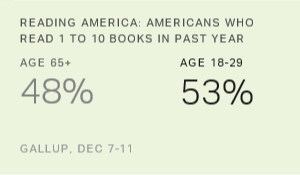
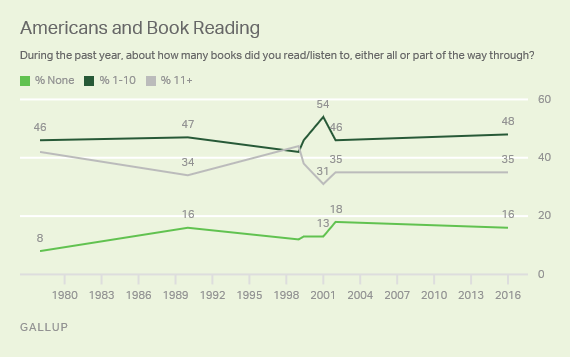
35% say they read more than 11 books in the past year
53% of young adults read between one and 10 books in the past year
73% prefer printed books to e-readers or audio books
WASHINGTON, D.C. -- Despite the abundance of digital diversions vying for their time and attention, most Americans are still reading books. In fact, they are consuming books at nearly the same rate that they were when Gallup last asked this question in 2002 -- before smartphones, Facebook or Twitter became ubiquitous. More than one in three (35%) appear to be heavy readers, reading 11 or more books in the past year, while close to half (48%) read between one and 10 and just 16% read none.
Internet Truth Debunked: INTERNET LISTS DEBUNKED - Surprising Book Facts:A pretty infographic showing with statistics to remind you how society
is just getting stupider will always get a lot of reshares. Maybe
people are getting stupider, because they accept statistics on pretty
infographics as true...
The infographic was created by Rob Brewer in in 2012, later realising the errors in the original he created a new one:
Since the new one are far less surprising and far less emotive than the original, guess which one still gets shared around?
Rob Brewer notes where the original statistics come from and why he now
thinks they're dubious on the page above. Here's an more detailed look
at it from a link on his page.
The stats come from a speech given by Jenkins in 2003, so wherever
possible, 2002 statistics are used below. It's important to note that
however accurate the statistics in the speech, the speech was to
industry people about the industry. Read more...
The internet stole the monopoly on knowledge but it can’t recreate a sense of place. Revival is possible
‘The library must rediscover its specialness. This must lie in
exploiting the strength of the post-digital age, the ‘age of live’.’
Illustration: Ellie Foreman
Public
libraries have had another bad year. They are like churches and local
railways. People like having them around, and are angry if they close.
But as for using them, well, there is so little time these days.
The admirable children’s laureate (and cartoonist) Chris Riddell said during the latest campaign
for libraries in November that, “if nurtured by government, they have
the ability to transform lives. We must all raise our voices to defend
them.”
But what sort of library are we defending? I’m not sure the fault in
this lies with that easy target, the government, nor even in the
once-gloomy fate of the book. Last week I was in my excellent local
library and it was near empty. The adjacent Waterstones was bursting at
the seams. I know it was Christmas, but something tells me there is a
problem with libraries, not with books. When an institution needs a
luvvie-march to survive, it looks doomed.
I was a library addict
Bibliotherapists recommend tomes they think can help what ails you; finding calm in ‘The Old Man and the Sea’
By
Sarah Sloat
Dutch novelist Mano Bouzamour at the Frankfurt Book Fair.
Photo:
Sarah Sloat
FRANKFURT—Depressed? Over-the-counter remedies abound, though some are hard to swallow. The 272-page “City of Thieves” by David Benioff, for example.
It is one palliative prescribed by Mano Bouzamour
at the recent Frankfurt Book Fair, where he sat at a desk sporting a
white doctor’s coat and stethoscope. The Dutch novelist, who has no
medical license, was serving as a “book doctor.” After brief
consultations with people who lined up in the cold drizzle outside a
pop-up clinic, he pulled out a prescription pad and scribbled titles to
alleviate readers’ woes.
Shauna Rose and her son,
Nicholai, 4, visited the children’s section of the Barnes & Noble in
the Bronx on Wednesday. She says they go there every day after school
and read the picture book “I Need My Monster.”Credit
Amir Levy for The New York Times
Every day after school, 4-year-old Nicholai Rose demands that his mother take him first to the park then to the Barnes & Noble
in the Baychester neighborhood of the Bronx. There, they snuggle in a
corner in the children’s section and, each time, read “I Need My
Monster,” his favorite picture book.
In
a few months their ritual will end — permanently — when the store
closes for good, leaving the Bronx, a borough with nearly 1.5 million
people, without one general-interest bookstore. For residents, the
closing carries a painful sting the borough knows too well, of being
long underserved and overlooked, which persists even as the Bronx is
experiencing a renaissance.
“How
am I going to tell him that the bookstore is going?” said Nicholai’s
mother, Shauna Rose, 29, as she sat in the store on Wednesday, the
monster book on her lap. “And there’s nothing else.”
With 50,000 titles in its inventory, the Barnes & Noble opened in the Bronx in 1999. Two years ago, it nearly closed
after the landlord sought to raise the rent. But it remained open after
a public outcry, and after elected officials stepped in to assist in
the rent negotiations. It has withstood the economic crunch that shut
down smaller bookshops in the borough over the years. While there are a
few bookstores in the Bronx attached to various universities and some
stores that sell religious texts, the Barnes & Noble remains the
last of its kind, until it closes in January, because of a rent
increase. It will replaced by a Saks Off 5th store. Read more...