Pages

Showing posts with label Children's literature. Show all posts

Tuesday, July 11, 2017

Want to Raise Your Child to Love Reading? Read These Secrets

Children's books | Literacy | Reading


A class at Public School 682, the Academy of Talented Scholars, in Brooklyn. Credit Joshua Bright for The New York Times

“You’re the children’s books editor?” Someone has said this to me, usually with a smile, at least once a week in the almost three years I’ve been at The New York Times. “What a cool job!” is the subtext. But lurking in the background are almost always other questions, sometimes more pressing ones about kids’ reading in general. “What should my second grader be reading?” a colleague asked the other day, adding, “She’s obsessed with the books in that series with the different flower fairies, and I can’t get her interested in anything else.” A neighbor recently approached me with a worried look and said, “My 10-year-old will only read graphic novels. What should I do?”

Clearly, there’s a lot of uncertainty out there among parents when it comes to children’s books, and also an earnest desire to make the right choices and do the right thing. Parents realize the stakes are high, and childhood passes quickly.

So when the Guides team approached Pamela Paul, the editor of the Book Review, about writing a guide to raising readers, and she asked if I was interested, I jumped at the chance. (Find it here.)

Much of what I do every day is sift through new books, deciding which ones we should assign for review, or which ones might make for a good feature story. I try to balance for different ages, different genres and books by authors from a variety of backgrounds. There’s always the thrill of discovering a book I can’t wait to tell our readers about. Read more...

Monday, June 26, 2017

Enter an Archive of 6,000 Historical Children’s Books, All Digitized and Free to Read Online

Archives | Books | e-books | Children's literature

August 30, 2016


We can learn much about how a historical period viewed the abilities of its children by studying its children's literature. Occupying a space somewhere between the purely didactic and the nonsensical, most children’s books published in the past few hundred years have attempted to find a line between the two poles, seeking a balance between entertainment and instruction. However, that line seems to move closer to one pole or another depending on the prevailing cultural sentiments of the time. And the very fact that children’s books were hardly published at all before the early 18th century tells us a lot about when and how modern ideas of childhood as a separate category of existence began. Read more...

Wednesday, February 8, 2017

Want to Raise Successful Kids? Neuroscience Says Read to Them Like This (but Most Parents Don't)

Reading | Literacy | Parenting | Children's Literature

Read to young children in this way, and they'll develop greater intellectual empathy -- and become more successful.

By Bill Murphy Jr.

CREDIT: Getty Images  
If you're like most parents, you'll do just about anything you can to increase the odds that your kids will be successful.

So, what if I were to tell you there's a simple thing you can to do to make it more likely that they'll be successful in life -- specifically by increasing the likelihood that they'll learn to read other people, and even predict how they'll react?

What's more, while this parenting practice might be a bit more time-consuming than some alternatives, it can also be a lot of fun and increase your bond with your children.

We're talking about the way that parents read to their young kids. Neuroscientists say there's a trick that can make the daily bedtime ritual (one my wife and I enjoy with our daughter, and that you might well enjoy with your kids, too) far more effective and beneficial.
Here's the background -- plus how it works and why:

First off, of course, read to your kids. 

Read more...

Thursday, November 3, 2016

Outrage in Bronx as Barnes & Noble Is Set to Close

Books & Bookstores

By SARAH MASLIN NIR NOV. 2, 2016


Shauna Rose and her son, Nicholai, 4, visited the children’s section of the Barnes & Noble in the Bronx on Wednesday. She says they go there every day after school and read the picture book “I Need My Monster.” Credit Amir Levy for The New York Times

Every day after school, 4-year-old Nicholai Rose demands that his mother take him first to the park then to the Barnes & Noble in the Baychester neighborhood of the Bronx. There, they snuggle in a corner in the children’s section and, each time, read “I Need My Monster,” his favorite picture book.
In a few months their ritual will end — permanently — when the store closes for good, leaving the Bronx, a borough with nearly 1.5 million people, without one general-interest bookstore. For residents, the closing carries a painful sting the borough knows too well, of being long underserved and overlooked, which persists even as the Bronx is experiencing a renaissance.

“How am I going to tell him that the bookstore is going?” said Nicholai’s mother, Shauna Rose, 29, as she sat in the store on Wednesday, the monster book on her lap. “And there’s nothing else.”

With 50,000 titles in its inventory, the Barnes & Noble opened in the Bronx in 1999. Two years ago, it nearly closed after the landlord sought to raise the rent. But it remained open after a public outcry, and after elected officials stepped in to assist in the rent negotiations. It has withstood the economic crunch that shut down smaller bookshops in the borough over the years. While there are a few bookstores in the Bronx attached to various universities and some stores that sell religious texts, the Barnes & Noble remains the last of its kind, until it closes in January, because of a rent increase. It will replaced by a Saks Off 5th store. Read more...

Wednesday, October 5, 2016

How Banning Books Marginalizes Children by Paul Ringel

Banned Books

Oct. 1, 2016 [from The Atlantic]
Since the 1800s, attitudes about which books are “appropriate” for kids to read have too often suppressed stories about different cultures and life experiences. Comstock / Getty

Every year since 1982, an event known as Banned Books Week has brought attention to literary works frequently challenged by parents, schools, and libraries. The books in question sometimes feature scenes of violence or offensive language; sometimes they’re opposed for religious reasons (as in the case of both Harry Potter and the Bible). But one unfortunate outcome is that 52 percent of the books challenged or banned in the last 10 years feature so-called “diverse content”—that is, they explore issues such as race, religion, gender identity, sexual orientation, mental illness, and disability. As a result, the organizers of Banned Books Week, which started Sunday, chose the theme “Celebrating Diversity” for 2016.

Since the inception of the American children’s literature industry in the 1820s, publishers have had to grapple with the question of who their primary audience should be. Do kids’ books cater to parents and adult cultural gatekeepers, or to young readers themselves? But as books that address issues of diversity face a growing number of challenges, the related question of which children both the industry and educators should serve has become more prominent recently. Who benefits when Sherman Alexie’s The Absolutely True Diary of Part-Time Indian, which deals with racism, poverty, and disability, is banned for language and “anti-Christian content”? Who’s hurt when Jessica Herthel and Jazz Jennings’s picture book I Am Jazz, about a transgender girl, is banned? The history of children’s book publishing in America offers insight into the ways in which traditional attitudes about “appropriate” stories often end up marginalizing the lives and experiences of many young readers, rather than protecting them Read more...

Thursday, August 25, 2016

15 Children's Books That Teach Your Child Not To Be Entitled by Sarah Bunton

Sergey Nivens/Fotolia

A lot of critics of the millennial generation believe those born between the '80s and '90s as being entitled, spoiled, and the "me generation." With the instant gratification modern technology like smartphones, the internet, and social media can provide, it might seem like Generation Y is used to getting everything they want in a short amount of time. Obviously this isn't necessarily true and it seems millennial parents have an uphill battle to prove this isn't the case, especially with their kids. Thankfully there are children's books that teach your child not to be entitled.
A false sense that the world owes you something isn't a new thing at all. Yet it appears that topics like entitlement, empathy, and privilege have finally gotten the attention they deserve in modern society. Gone are the days of turning a blind eye to unkind behavior and not discussing real issues in polite conversation. Being able to understand the different ways in which people experience the world around them has become an increasingly necessary skill for parents to teach their children.
So if you're looking to teach your child how to be self-aware, empathetic, and patient check out these children's books that help kids understand entitlement.

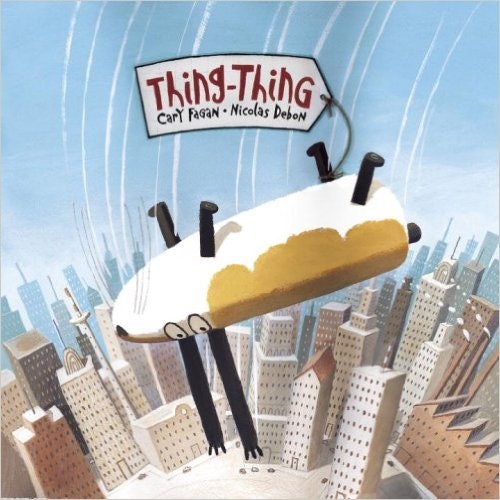
1. 'Thing-Thing' by Carly Fagan

 Read more...


Tuesday, July 19, 2016

Libraries across the country look to Hennepin County Library for response to Black Lives Matter

Wednesday, April 6, 2016

Beverly Cleary on turning 100: Kids today ‘don’t have the freedom’ I had by Nora Krug

Beverly Cleary doesn’t really want to talk about turning 100. “Go ahead and fuss,” she says of the big day, April 12. “Everyone else is.”
Across the country, people are delving into Cleary nostalgia, with celebrationsand new editions of her books with introductions by the likes of Amy Poehler and Judy Blume. Kids and adults are being asked to “Drop Everything and Read” to commemorate Cleary’s contribution to children’s literature.
But the beloved children’s author has something far more low-key in mind for herself: a celebratory slice of carrot cake, she says, “because I like it.”
Cleary is as feisty and direct as her famously spirited character Ramona Quimby — an observation that she hears often and doesn’t care for. “I thought like Ramona,” she says in a phone interview, “but I was a very well-
behaved little girl.” Read more...

Monday, November 2, 2015

Long Line at the Library? It’s Story Time Again By WINNIE HU NOV. 1, 2015

Forty strollers were double- and triple-parked on the main floor of the Fort Washington Library in Upper Manhattan. As another one came through the door, Velda Asbury waved toward a spot beside a book stack.
Officially, Ms. Asbury is a library clerk, checking books in and out. But every Wednesday she doubles as a parking attendant during one of theNew York P ublic Library’s most popular programs: story time.
 A library tradition is being refashioned to emphasize early literacy and better prepare young children for school, and drawing many new fans in the process.
 By WINNIE HU on Publish DateNovember 1, 2015. Photo by Sam Hodgson for The New York Times.Watch in Times Video »


“Good morning, little people,” she called out, as the library’s youngest patrons climbed, or were carried, up an old wooden staircase to the second floor for a 45-minute romp through books and music.
Among parents of the under-5 set, spots for story time have become as coveted as seats for a hot Broadway show like “Hamilton.” Lines stretch down the block at some branches, with tickets given out on a first-come-first-served basis because there is not enough room to accommodate all of the children who show up.  Read more...

Children settled into spots on the floor during story time at the Fort Washington Library last month. CreditSam Hodgson for The New York Times

Wednesday, September 2, 2015

Garbage Collector Rescues Discarded Books for Children


Of the 19 public libraries in Bogotá, Colombia, all are located far from the poorer regions of the city, thus restricting many people’s access to books.

Thankfully, 53-year-old garbage collector Jose Gutierrez is working hard to ensure that children everywhere are exposed to the joy of reading. As ABC News reports, Gutierrez began “rescuing books from the trash almost 20 years ago, when he was driving a garbage truck at night through the capital’s wealthier neighborhoods.” Due to the shockingly large number of abandoned books, Gutierrez was able to create a “makeshift community library stacked…with some 20,000 books” in his own home.

Gutierrez champions the power of books, regarding them as “luxuries” for children in poverty-stricken areas. He recalls how his mother, despite being unable to keep him in school past the second grade, still endeavored to read him stories every night during his childhood. Gutierrez therefore refers to books as our “salvation,” which I certainly can’t disagree with. His favorite books include One Hundred Years of Solitude and The General in his Labyrinth, written by fellow Colombian and Nobel-Prize winning novelist Gabriel García Márquez.

Gutierrez is known as “Lord of the Books” in Colombia, and due to his fame he frequently receives book donations. I can’t help but wish we had an American equivalent of “Lord of the Books,” especially considering the existence of  its antithesis: the “Literary Litterbug,” a Colorado man recently found guilty for tossing unwanted books out of his vehicle. Gutierrez could have undoubtedly offered those novels a home in his library. If only!

Tuesday, September 1, 2015

12 Ways Your Parents Turned You Into A Book-Lover by Julia Seales


My mom got her degree as a reading specialist. So, it'd probably be an understatement to say that when I was growing up, books were a pretty important part of everyday life. There's no way I could have grown up NOT loving books, because I was surrounded by them all day, every day.

At one point, my mom actually owned a used book business, and she would take me to book sales and let me get as many five-cent Nancy Drew Notebooks as I could fit in my scrawny arms... and then some. (Side note: If you’ve never experienced a book sale, you’re missing out. We would wake up at about 4 a.m., go to a huge warehouse, and straight-up fight other lit-lovers over old library copies of rare books. Literally, imagine a fashion sample-sale scene, replace the Louboutins with books, and you’d have an accurate mental picture of a book sale.)

Anyway, if you're a fellow book-lover, you probably have a similar story. No, I don’t mean you fought some woman with a blonde updo over a rare children’s book… I mean that if you love to read, your parents are at least partially to thank for that. After all, chances are they're the first people who even told you what this beautiful and wonderful thing called a "book" was, and that's just one of the many ways they turned you into the lit-lover you are today.

Read more: http://www.bustle.com/articles/107146-12-ways-your-parents-turned-you-into-a-book-lover

Thursday, July 23, 2015

8 things you didn’t know about Dr. Seuss


BY Joshua Barajas  July 22, 2015 at 1:06 PM EDT
Theodor “Ted” Seuss Geisel, better known as Dr. Seuss, on his last visit to his hometown of Springfield, Massachusetts in 1986. Photo courtesy of Springfield Union-News

A long-lost manuscript from the beloved author and illustrator Dr. Seuss will be released next week, marking a quarter-century since his swan song “Oh, the Places You’ll Go!” empowered us to move mountains. The posthumous “What Pet Should I Get?” arrives July 28, two years after the author’s widow unearthed the story’s text and sketches. It features the siblings from “One Fish Two Fish Red Fish Blue Fish” on a trip to the pet store, which we know is never that sensible with a Seuss book.

Philip Nel, author of “Dr. Seuss: American Icon,” and Guy McLain, director of the Wood Museum of Springfield History, discuss how the author’s advertising beginnings gave way to Zooks and Zummers, pulling children’s literature away from the tsk-tsking of the Dick and Jane books and obliterating the boring belief that young readers ought to be prim and proper.

Thing 1. He got his sense of poetry from his mother. Read more...


Wednesday, July 15, 2015

How to talk to your kids about prejudice with the help of 12 of our favorite books


It’s been a big few weeks for America, hasn’t it? From the heartbreak of the Charleston shootings to the landmark #LoveWins Supreme Court decision to the Girl Scouts donor dust-up, people everywhere are talking about prejudice.

While I’ve seen such a beautiful swell of love, support and compassion for all kinds of people all over my social media this past month, I’ve also talked to lots of moms who are wondering how to talk to kids about prejudice and racism. Because even as my kids help me pick out wedding presents for all our friends, prejudice most definitely still exists whether it’s because of the color of your skin or the country your family came from.


One of my favorite go-to tools for starting hard conversations with my kids is by reading books together. Reading a great story is an easy way for me to get my kids talking about concepts like open-mindedness, embracing people who are different from them, and fighting for the rights of people who have been marginalized. Even if marginalization is still a word that’s a little over their heads.

Read more: http://coolmompicks.com/blog/2015/07/07/12-childrens-book-help-talk-to-kids-about-prejudice/

Tuesday, October 8, 2013

New York Public Library risks tears with list of 100 most popular children's books of the last century - NY Daily News

While classics like 'The Cat in the Hat' and modern works such as 'Don't Let the Pigeon Drive the Bus' made the New York Public Library's list of the 100 most popular children's books of the last 100 years, favorites including 'The Wonderful Wizard of Oz' have been omitted.

Comments (2)


MR

Thinkstock

Some kids may disagree with the New York Public Library's choices in the list of the 100 most popular children’s books of the last century.

The New York Public Library is risking the wrath of kids of all ages with a new list of the 100 most popular children’s books of the last 100 years that omits many favorites.
Of course, plenty of the rugrat must-reads on the alphabetical list are beloved classics, including “Winnie-the-Pooh,” “Charlotte’s Web,” “Where the Wild Things Are,” “Make Way for Ducklings,” “The Cat in the Hat,” and “Curious George.”

Read more: http://www.nydailynews.com/new-york/new-york-public-library-releases-100-popular-children-books-list-article-1.1471423#ixzz2hABOg4SL
Enhanced by Zemanta

Tuesday, June 25, 2013

Tour of the Nolen Library at Metropolitan Museum

Librarian Naomi Niles described the Nolen library as a “jewel box”. The library is certainly small and beautiful. The rooms are wonderfully open with large glass windows on two sides. The bannisters and shelving gleam with light gold wood. It even smells new.


The open form of the library space reflects the openness of the library’s policies. The Nolen Library is the only one of the Met’s many department libraries which has open stacks. Anyone can come in and use the wi-fi, books, scanners and study space, even without paying admission to the Metropolitan Museum. The Thomas J. Watson library is open to any adult patron, but the books have to be paged, and children are discouraged. Nolen has a children’s space with picture books and storytime events. Computer terminals at a child’s height, give access to whitelisted sites such as National Geographic.


The subjects collected by the library are equally wide, stretching from gardening to history.  Naomi Niles says the library collects anything that would help a patron understanding of art, which, of course, includes many topics. A large collection of art documentary tapes and DVDs cover the walls of a meeting space at the back of the library, and Nolen even has a small, but beautiful graphic novels section.


The library is staffed by a group of fifteen librarians who rotate between Watson and Nolen with occasional stops at the department libraries. Ms. Niles herself, started as an intern 20 years ago. She said at first she could not imagine living in New York City for more than a few years, but here she still is and she loves the Met.


Ms. Niles encouraged librarians to use the Metropolitan Museum’s online research materials, including teachers resources, and images. Metmedia is a great collection of interactive, audio and video resources about the collections. The Met is also scanning all of its publications from around 1900 to the present.


If you feel like dropping by, the Nolen library is located in the Ruth and Harold D. Uris Education Center on the ground floor of the Metropolitan Museum. The ground floor is one floor down from the lobby. You can enter the Education Center from an entrance at 81st street, or you can take an elevator down from the Greek and Roman wing. Nolen library is open 9:30-5pm Tuesday through Friday and 10-5pm on the weekends.


Wednesday, November 21, 2012

Book People Unite - YouTube

Book People Unite - YouTube

Reading lovers are coming together to help us get books into the hands of kids who need them the most. Remember visiting Narnia, playing Jumanji, and eating Green Eggs and Ham? Books can have an incredible effect on childrens lives, yet theres only one book for every 300 kids living in underserved communities in the U.S. So weve brought together some of our most beloved literary characters to help make this film and rally Book People for the cause.
Enhanced by Zemanta