Pages

Showing posts with label teaching tolerance. Show all posts

Thursday, August 17, 2017

Curriculum for White Americans to Educate Themselves on Race and Racism–from Ferguson to Charleston | Bibliography

Citizenship and Social Justice | Race & Racism | Curriculum

by Jon Greenberg  | July 10, 2015
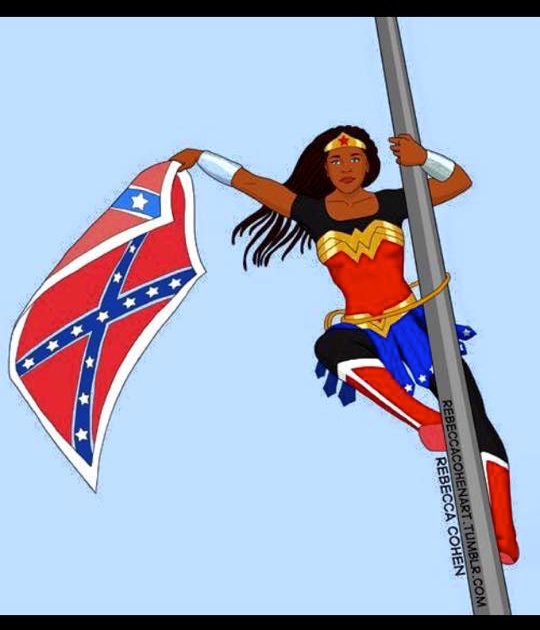

When teaching about race and racism, I invite participants to consider the following analogy: Think of racism as a gigantic societal-sized boot.

Which groups do you think are fighting the hardest against this boot of racism?” I ask them. Invariably, participants of diverse races answer that those fighting hardest to avoid getting squashed by the boot are people of Color. (Keep in mind that I don’t ask this question on day one of our study of race. Rather, participants come to this conclusion after exploring the concept of White privilege and studying the history of race and racism in the United States through multiple sources and perspectives.)

If that’s true,” I continue, “then who do you think is wearing the boot?” The participants’ answer (though it often only reluctantly hits the air): White people.

If that’s true, then whose responsibility is it to stop the boot from squashing them? The people of Color already pushing upward and resisting the boot? Or the people wearing the boot–consciously or not–who contribute to a system that pushes downward?

Everyone has a role in ending racism, but the analogy shows how little sense it makes for only those facing the heel-end of oppression to do all the work. It’s time for White America to take on a far bigger role in taking off the boot. 



 Read more...

Wednesday, October 5, 2016

How Banning Books Marginalizes Children by Paul Ringel

Banned Books

Oct. 1, 2016 [from The Atlantic]
Since the 1800s, attitudes about which books are “appropriate” for kids to read have too often suppressed stories about different cultures and life experiences. Comstock / Getty

Every year since 1982, an event known as Banned Books Week has brought attention to literary works frequently challenged by parents, schools, and libraries. The books in question sometimes feature scenes of violence or offensive language; sometimes they’re opposed for religious reasons (as in the case of both Harry Potter and the Bible). But one unfortunate outcome is that 52 percent of the books challenged or banned in the last 10 years feature so-called “diverse content”—that is, they explore issues such as race, religion, gender identity, sexual orientation, mental illness, and disability. As a result, the organizers of Banned Books Week, which started Sunday, chose the theme “Celebrating Diversity” for 2016.

Since the inception of the American children’s literature industry in the 1820s, publishers have had to grapple with the question of who their primary audience should be. Do kids’ books cater to parents and adult cultural gatekeepers, or to young readers themselves? But as books that address issues of diversity face a growing number of challenges, the related question of which children both the industry and educators should serve has become more prominent recently. Who benefits when Sherman Alexie’s The Absolutely True Diary of Part-Time Indian, which deals with racism, poverty, and disability, is banned for language and “anti-Christian content”? Who’s hurt when Jessica Herthel and Jazz Jennings’s picture book I Am Jazz, about a transgender girl, is banned? The history of children’s book publishing in America offers insight into the ways in which traditional attitudes about “appropriate” stories often end up marginalizing the lives and experiences of many young readers, rather than protecting them Read more...