Pages

Showing posts with label cookbooks. Show all posts

Thursday, March 29, 2018

Cooking the Books with Yotam and Nigella [Podcast with transcript]

Food | Cookbooks | Podcast

Who first started collecting recipes into cookbooks? Do cookbooks have a future in a world full of online recipes? And can cookbooks tell us anything about what people are actually eating, or are they simply aspirational food porn? This episode, we explore the past, present, and future of cookbooks, from cuneiform tablets to Hail Marys, with the help of two of our favorite cookbooks authors—and Gastropod fans—Nigella Lawson and Yotam Ottolenghi.
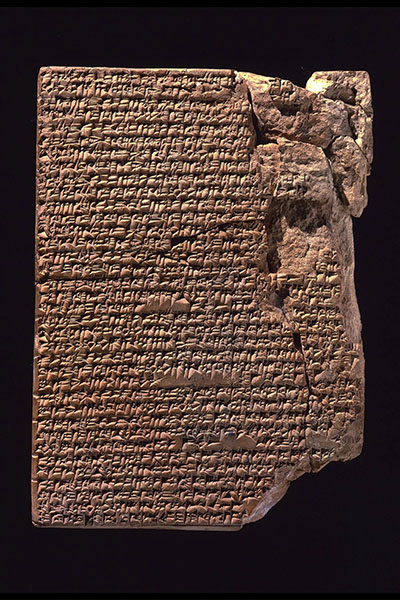
The oldest known culinary recipes. YBC 4644 from the Old Babylonian Period, ca. 1750 BC, via Yale University Library.

According to Henry Notaker, journalist and author of A History of Cookbooks: From Kitchen to Page Over Seven Centuries, the first cookbook that archaeologists have discovered is 3,700 years old. It consists of 35 recipes written on clay tablets, and its recipes are thought to have been intended for gods rather than humans. Still, it demonstrates that humans have been collecting cooking instructions for millennia. A few things have remained the same for much of the cookbook's history: they are still anthologies of imaginary meals, often fueled more by aspiration and desire than the reality of what's for dinner, and they still promise an almost alchemical transformation of raw ingredients into status and well-being.

Others aspects of today's cookbooks are much more recent. Such seemingly essential formatting elements as a separate ingredients list only became standard relatively recently. Meanwhile, the content, authorship, and user base of cookbooks have shifted dramatically in response to technological innovation and social change. Notaker points to the first German recipe to include bananas as a sign that the exotic fruit was becoming available in Europe: published in 1913, it recommends frying the fruit with marjoram, like a sausage. (The recipe was literally titled "banana sausage.") Meanwhile, Megan Elias, author of Food on the Page: Cookbooks and American Culture, traces the introduction of refrigeration and mass transportation through the strawberry's rise to glory in early twentieth-century recipes. Finally, in a world where more recipes are published online everyday than anyone could hope to cook in a week, we ask: what is the role of the cookbook today—and what might it become in the future? Listen in this episode for more of the surprising story of cookbooks, including men in drag and Norwegian drinking songs, as well as cookbook authors Nigella Lawson and Yotam Ottolenghi's tales of writing their very first cookbooks.

Episode Notes

Yotam Ottolenghi

Yotam Ottolenghi is an Israeli-British chef and restaurateur, and the author of many of our favorite cookbooks, including, most recently, Sweet: Desserts from London's Ottolenghi.

Nigella Lawson

Nigella Lawson is a British food writer and T.V. personality, and the author of our other favorite cookbooks, including, most recently, At My Table: A Celebration of Home Cooking.

Henry Notaker and A History of Cookbooks

Henry Notaker is a Norwegian journalist and author of A History of Cookbooks: From Kitchen to Page Over Seven Centuries.

The First Recipe Book

Tablets YBC 4644, YBC 8958, and YBC 4648 together contain 35 recipes from ancient Mesopotamia. According to Henry Notaker, they form the earliest "cookbook" yet discovered, though they consist primarily of lists of ingredients and are thought to be instructions for dishes to be served in religious ceremonies, rather than for dinner. In 1995, French historian Jean Bottéro published translations of the recipes in a book titled Textes Culinaires Mésopotamiens; journalist Laura Kelley published her interpretations online here, if you'd like to have a go at preparing them yourself.

Link to podcast:

Wednesday, March 1, 2017

Joan Nathan’s new cookbook on global Jewish cooking couldn’t be more timely | February 28, 2017

Book review | Cookbooks |Immigration Ban

by Jill Warren Lucas
Joan Nathan, who has won numerous awards for her cookbooks, is a keynote speaker at UNC’s “Jewish Food in the Global South” symposium this weekend. Her new book, “King Solomon’s Table: A Culinary Exploration of Jewish Cooking from Around the World,” will be published on April 4. GABRIELA HERMAN    
 

Read more here: http://www.newsobserver.com/living/food-drink/article135475149.html#storylink=cpy


Joan Nathan didn’t expect her book about how the Jewish diaspora influenced global cuisines – and how those cuisines and local ingredients affected Jewish cookery – to hit store shelves amid a surge of anti-Semitism, growing distrust of foreigners and stepped-up immigration enforcement.

Then again, she never imagined such provocations would end.


“You’re not going to change the mind of somebody who doesn’t see you as a human being,” Nathan said. “All you can do is find like-minded people and try to not be that way about other people."

Joan Nathan’s new book, “King Solomon’s Table: A Culinary Exploration of Jewish Cooking from Around the World,” will be published on April 4. Her 11th collection has a historical overview and thoughtful anecdotes that precede most recipes GABRIELA HERMAN  


Read more here: http://www.newsobserver.com/living/food-drink/article135475149.html#storylink=cpy
Read more...

Monday, June 15, 2015

Turning a Long Lost Cookbook Into a Bestseller By Joy Bean | Jun 12, 2015

A cookbook published in 1938 in Yiddish doesn’t sound like a slam dunk to be a bestseller in 2015, and yet that’s precisely what happened with The Vilna Vegetarian Cookbook: Garden-Fresh Recipes Rediscovered and Adapted for Today’s Kitchen by Fania Lewando, translated by Eve Jochnowitz (Schocken). The book, released on May 26, debuted at #8 on PW's cookbook bestseller list.

With only about 1,000 copies printed and sold throughout Europe before WWII broke out, the cookbook would have been lost to history if it had not been for two women, Wendy Waxman and Barbara Mazur, who found a copy of the long out-of-print book in the rare book room at the YIVO Institute for Jewish Research in New York City. The women found a champion of the book in Jewish cookbook author Joan Nathan who, in turn, brought the book to the attention of Schocken editorial director Altie Karper.

Bringing new life to a long-forgotten gem is one challenge, but promoting a book in which the author is deceased (Lewando died in 1941 while fleeing from the Nazis), and therefore doesn’t have a current platform, is even trickier. In order to do the book and its history justice, Schocken went back to the cookbook's roots, which are surprisingly current. “With all of Fania Lewando’s excellent advice about using the freshest, best quality fruit and vegetables you can get, and about using every part of the fruit or vegetable, and about not discarding even the cooking water, it seemed as though the book was written last week, and not 70 years ago,” said Karper. “I was particularly intrigued by the vegetable juice and fruit juice recipes. How much more 21st century can you get?”  Read more...

Thursday, August 30, 2012

Flavorwire » 10 Deliciously Quirky Cookbooks

Flavorwire » 10 Deliciously Quirky Cookbooks

by . Posted on 11:30 am Wednesday Aug 29, 2012

Dirt Candy by Amanda Cohen and Ryan Dunlavey


It seems pretty straightforward, in essence: a cookbook’s purpose is to provide recipes and instructions on how to properly prepare various dishes. That’s why we were giddy when it was announced, seemingly years ago, that one of our favorite New York restaurants, the vegetable-focused Dirt Candy, would be releasing its first cookbook in the form of a graphic novel. Now that it’s finally out, the book has proven itself to be worth the wait: this may be the first and only cookbook to elicit the amount of joy and tears usually reserved for a compelling piece of literary fiction. To celebrate this truly unique work, we rounded up some of our other favorite quirky spins on the “cookbook” concept. Spoiler alert: you’re gonna get a lot of Harold McGee. Ever used any of these? Did we miss your favorite cookbook oddity/treasure? Let us know in the comments. Read more.
Enhanced by Zemanta