Pages

Showing posts with label freedom of speech. Show all posts

Thursday, January 14, 2021

Defining Censorship Before Denouncing It ( Posted by Larry M. Elkin, CPA, CFP®)


If the opinion editors at The New York Times decline to publish your cogent and insightful essay on a matter of great public importance, are they practicing censorship?

No. They are exercising editorial judgment, or maybe mere business judgment, depending on the pressures they feel nowadays to get audiences to engage with their content. It may be good judgment or bad judgment, but it is not censorship. Censorship occurs when the government restricts or compels expression under threat of penalties, which may be administrative, judicial or extrajudicial, such as directing a mob to your home. The New York Times is a privately owned, privately run platform, which its proprietors may offer to or withhold from contributors as they see fit. To demand they do otherwise would run afoul of the First Amendment’s press and speech freedom guarantees.


Read artcile: https://www.palisadeshudson.com/2021/01/defining-censorship-before-denouncing-it/

Monday, December 19, 2016

Stand, Fight, Resist

Advocacy & Activism

Jason Griffey | December 16, 2016


The idea that libraries are neutral spaces has been well and disabused over the last few years. From the services we offer to the collections that we curate, the decisions that libraries and librarians make are political ones that reflect values. Sometimes those are the values of the organization, sometimes the values of the individuals, and sometimes they are the values of the communities that the library serves. Those values are illustrated by our technologies, our ontologies, and our descriptors. Those who attempt to hold that “neutrality” of information access is an ideal for which to strive have had a hard time holding to that stance as increasing numbers of librarians question and deconstruct our profession. I would like to suggest something even stronger…that even if it were possible for libraries to be neutral spaces, that to create such a space would be morally questionable, and potentially actively morally wrong. 

I say this as someone who firmly believes in the maxim of combating bad speech with more speech. I am not here advocating controls or restrictions on speech. But it is not the responsibility of every library to collect and distribute literature of hate, or falsehoods, or lies. Some libraries do need to collect everything, the good and the bad, for archival and historical study purposes, but those libraries are fairly obviously identified in practice and the vast majority of libraries should and could take a stand with their actions, programs, policies, and collections to be on the side of justice and scientific fact. 

Neutrality favors the powerful, and further marginalizes the marginalized. In the face of the current political climate, with the use of opinions as bludgeons and disinformation as the weapon of choice for manipulation and intellectual coercion, it is up to those who value fact and believe in the care of those in need to stand up and positively affirm that to do otherwise is evil. 
Read article

Thursday, January 7, 2016

On the anniversary of the Charlie Hebdo attack dissenting voices must be protected [IFLA January 7, 2016]

Reaffirming our commitment to protecting free expression

On the anniversary of the Charlie Hebdo attacks, PEN International has issued a statement aimed at encouraging governments to protect critical voices and freedom of expression.
IFLA and dozens of other free-speech organisations, institutes, and associations have added their signature to the statement in support of the crucial principles outlined and addressed.

The statement calls on all Governments to:

  • Uphold their international obligations to protect the rights of freedom of expression and information for all, and especially for journalists, writers, artists and human rights defenders to publish, write and speak freely;
  • Promote a safe and enabling environment for those who exercise their right to freedom of expression, and ensure that journalists, artists and human rights defenders may perform their work without interference;
  • Combat impunity for threats and violations aimed at journalists and others exercising their right to freedom of expression, and ensure impartial, timely and thorough investigations that bring the executors and masterminds behind such crimes to justice. Also ensure victims and their families have expedient access to appropriate remedies;
  • Repeal legislation which restricts the right to legitimate freedom of expression, especially vague and overbroad national security, sedition, obscenity, blasphemy and criminal defamation laws, and other legislation used to imprison, harass and silence critical voices, including on social media and online;
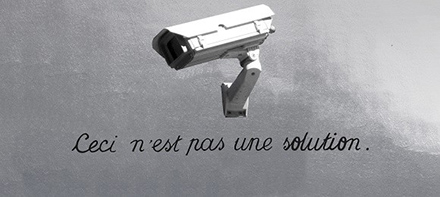
  • Ensure that respect for human rights is at the heart of communication surveillance policy. 
  • Laws and legal standards governing communication surveillance must therefore be updated, strengthened and brought under legislative and judicial control. Any interference can only be justified if it is clearly defined by law, pursues a legitimate aim and is strictly necessary to the aim pursued.
Read the full statement: English | français