Pages

Showing posts with label Japanese internment camps. Show all posts

Thursday, February 23, 2017

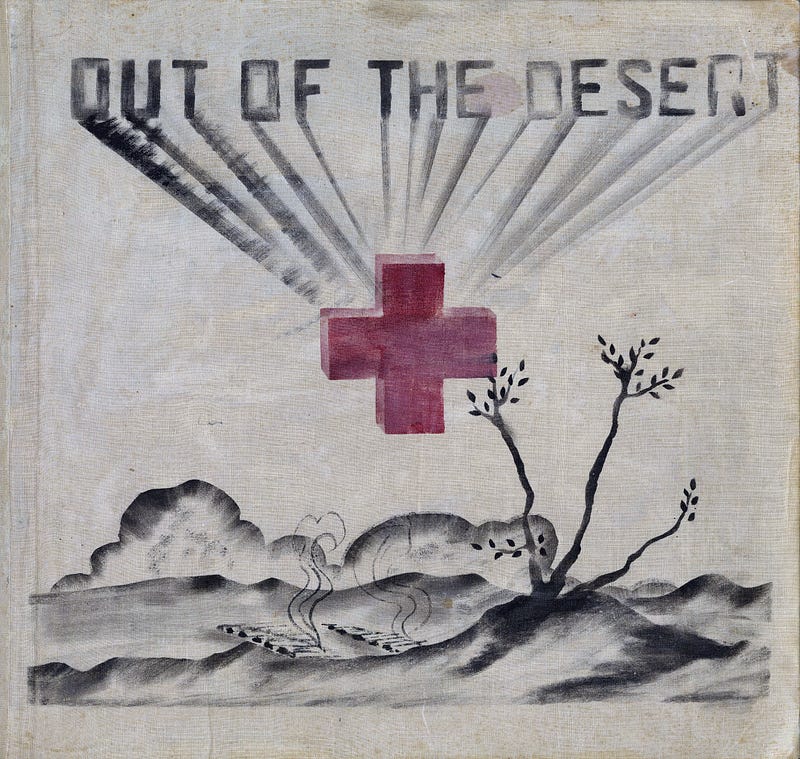
During the internment, Japanese American teens created this heartbreaking scrapbook about camp life: Hope and hardship in the desert

Japanese internment | Racism | Immigrants 

February 17, 2017

Stephanie Busk | timeline

The cover of “Out of the Desert.” (San Francisco State University)      
Masako was curled in a cozy ball listening to the radio when the news bulletin aired. The U.S. government would be forcing Japanese Americans from their homes.

Soon, her friends in Los Angeles began to disappear. First No-bu, then Aiko, then Chiyeko. They were each sent to different camps. Masako wondered, Will I be next?

Then the announcement came. Her family had mere weeks to sell or store their belongings. As Masako walked through her beloved neighborhood, she was close to tears. When she visited her best friend Irene, an Irish girl, she burst with sorrow.

The day finally came. Masako boarded the train that would carry her family away. She reached out the window and clasped Irene’s hand one last time. As they departed, Masako watched her friend become a tiny dot in the distance.

Masako was an autobiographical character invented in 1942 by Nancy Karakane, a high school junior interned at the Poston Concentration Camp. Karakane’s short story appears in Out of the Desert, a scrapbook made by teenagers that depicted life behind barbed wire. Read more...

Thursday, December 8, 2016

Dorothea Lange’s Censored Photographs of FDR’s Japanese Concentration Camps

 Archives & Special Collections | Digital Humanities

December 7, 2016 | Tim Chambers

The military seized her photographs, quietly depositing them in the National Archives, where they remained mostly unseen and unpublished until 2006


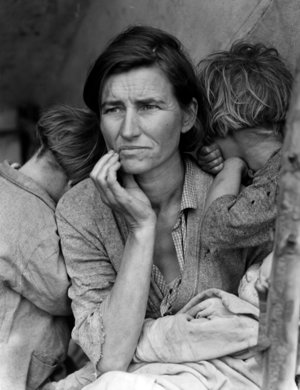
Dorothea Lange—well-known for her FSA photographs like Migrant Mother—was hired by the U.S. government to make a photographic record of the “evacuation” and “relocation” of Japanese-Americans in 1942. She was eager to take the commission, despite being opposed to the effort, as she believed “a true record of the evacuation would be valuable in the future.”

The military commanders that reviewed her work realized that Lange’s contrary point of view was evident through her photographs, and seized them for the duration of World War II, even writing “Impounded” across some of the prints. The photos were quietly deposited into the National Archives, where they remained largely unseen until 2006.

I wrote more about the history of Lange’s photos and President Roosevelt’s Executive Order 9066 initiating the Japanese Internment in another post on the Anchor Editions Blog.
Below, I've selected some of Lange’s photos from the National Archives—including the captions she wrote—pairing them with quotes from people who were imprisoned in the camps, as quoted in the excellent book, Impounded: Dorothea Lange and the Censored Images of Japanese American Internment.

I’ve also made a limted number of prints of her photos available for sale at Anchor Editions, and I’m donating 50% of the proceeds to the ACLU—they were there during WWII handling the two principle Supreme Court cases, fighting against the government’s mass incarceration of Japanese-Americans—and they have pledged to continue to fight against further unconstitutional civil rights violations. Their fight seems especially important today given the current tide of anti-Muslim rhetoric, and talk of national registries and reactionary immigration policies.

“A photographic record could protect against false allegations of mistreatment and violations of international law, but it carried the risk, of course, of documenting actual mistreatment.”
— Linda Gordon, Impounded: Dorothea Lange and the Censored Images of Japanese American Internment
Read more...