 |
Joe Penney / Reuters
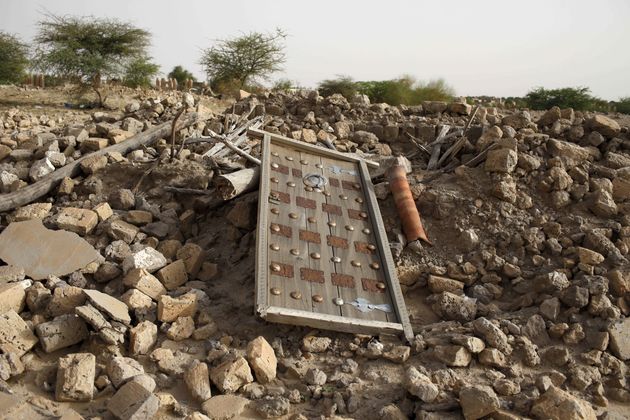
An Islamist fighter has pleaded guilty in the
Hague for destroying parts of the fabled West African trading city of
Timbuktu, in the International Criminal Court’s first case based on the
destruction of cultural artifacts.
Ahmad al-Faqi al-Mahdi has admitted today (Aug
22) to razing all but two of the city’s 16 mausoleums as well as a
mosque dating back to 1400 during a raid by Islamist radicals in 2012.
Ahmad told the tribunal in the Netherlands that he regretted “the damage
[his] actions have caused.” Read more...
TRENDINGSUBSCRIBE AND FOLLOW
Get top stories and blog posts emailed to me each day. Newsletters may offer personalized content or advertisements.
Learn more |
Showing posts with label Timbuktu. Show all posts
Showing posts with label Timbuktu. Show all posts
Tuesday, August 23, 2016
Destroying History Is Now Being Charged As A War Crime


Thursday, April 25, 2013
The Brazen Bibliophiles of Timbuktu | New Republic

One afternoon in March, I walked through Timbuktu’s Ahmed Baba Institute of Higher Studies and Islamic Research, stepping around shards of broken glass. Until last year, the modern concrete building with its Moorish-inspired screens and light-filled courtyard was a haven for scholars drawn by the city’s unparalleled collection of medieval manuscripts. Timbuktu was once the center of a vibrant trans-Saharan network, where traders swapped not only slaves, salt, gold, and silk, but also manuscripts—scientific, artistic, and religious masterworks written in striking calligraphy on crinkly linen-based paper. Passed down through generations of Timbuktu’s ancient families, they offer a tantalizing history of a moderate Islam, in which scholars argued for women’s rights and welcomed Christians and Jews. Ahmed Baba owned a number of Korans and prayer books decorated with intricate blue and gold-leaf geometric designs, but its collections also included secular works of astronomy, medicine, and poetry. Read more...

Subscribe to:
Posts (Atom)