Pages

Showing posts with label #MediaLiteracy. Show all posts

Thursday, March 15, 2018

You Think You Want Media Literacy… Do You? | danah boyd

Information literacy | Social Media | Media literacy


Published on Mar 7, 2018
A decade ago, we imagined a world of participatory culture where youth would be empowered to actively and strategically use technology. Through peer/self-learning and formal education, young people have developed a well-informed understanding of the world through social media. However, this participatory culture can be unhealthy, cruel, and socially devastating. In this talk, I’ll explore unintended consequences of efforts to empower youth, media manipulation and literacy, polarization, and other issues. danah boyd Principal Researcher & Founder & President Microsoft Research/Data & Society The SXSW EDU Conference & Festival cultivates and empowers a community of engaged stakeholders to advance teaching and learning. Visit sxswedu.com to learn more.

The below original text was the basis for Data & Society Founder and President danah boyd’s March 2018 SXSW Edu keynote,“What Hath We Wrought?” — Ed.

Growing up, I took certain truths to be self evident. Democracy is good. War is bad. And of course, all men are created equal.

My mother was a teacher who encouraged me to question everything. But I quickly learned that some questions were taboo. Is democracy inherently good? Is the military ethical? Does God exist?

I loved pushing people’s buttons with these philosophical questions, but they weren’t nearly as existentially destabilizing as the moments in my life in which my experiences didn’t line up with frames that were sacred cows in my community. Police were revered, so my boss didn’t believe me when I told him that cops were forcing me to give them free food, which is why there was food missing. Pastors were moral authorities and so our pastor’s infidelities were not to be discussed, at least not among us youth. Forgiveness is a beautiful thing, but hypocrisy is destabilizing. Nothing can radicalize someone more than feeling like you’re being lied to. Or when the world order you’ve adopted comes crumbling down.


Link to post on danah boyd's blog: Click here


Monday, November 6, 2017

Media Literacy E-Resources | Reference 2018

Reference | Media| Information literacy

By Gary Price & Mahnaz Dar on November 1, 2017

The fight against “fake news” isn’t new to librarians, but with patrons anxious about identifying misinformation, these resources are more crucial than ever. Moving beyond the basics, these free tools provide creative avenues for honing media literacy skills, from uncovering politicians’ suppressed tweets to accessing the latest in facial recognition software.

Court Listener


Read more...

Thursday, March 2, 2017

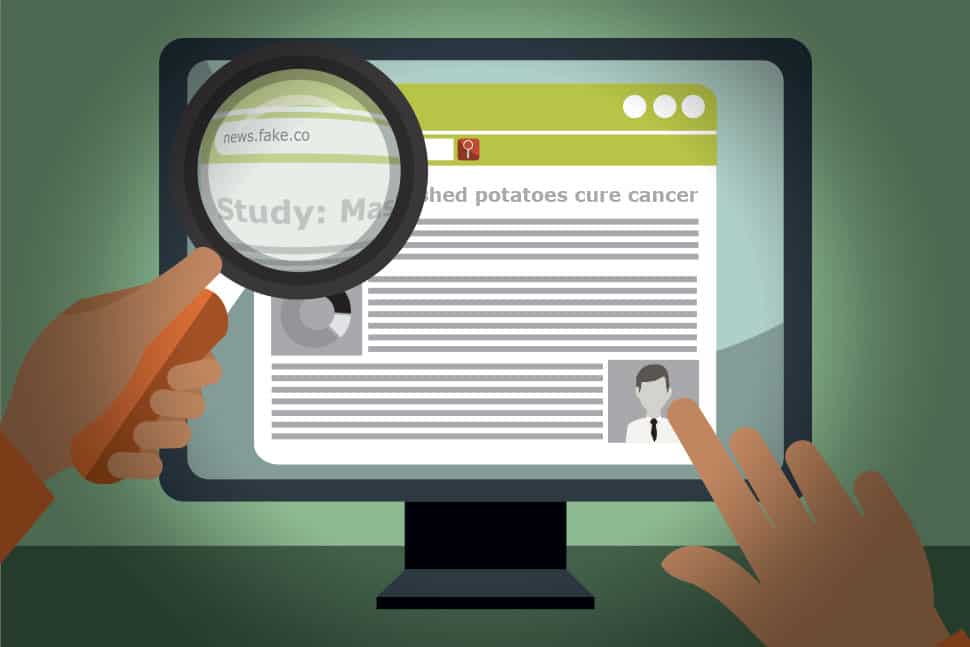
Fighting Fake News: How libraries can lead the way on media literacy | December 27, 2016

Fake news | Information literacy | Journalism

by Marcus Banks

Illustration: Rebecca Lomax/American Libraries  
Librarians—whether public, school, academic, or special—all seek to ensure that patrons who ask for help get accurate information.


Given the care that librarians bring to this task, the recent explosion in unverified, unsourced, and sometimes completely untrue news has been discouraging, to say the least. According to the Pew Research Center, a majority of US adults are getting their news in real time from their social media feeds. These are often uncurated spaces in which falsehoods thrive, as revealed during the 2016 election. To take just one example, Pope Francis did not endorse Donald Trump, but thousands of people shared the “news” that he had done so.

Completely fake news is at the extreme end of a continuum. Less blatant falsehoods involve only sharing the data that puts a proposal in its best light, a practice of which most politicians and interest group spokespeople are guilty.

The news-savvy consumer is able to distinguish fact from opinion and to discern the hallmarks of evasive language and half-truths. But growing evidence suggests that these skills are becoming rarer. A November 2016 study by the Stanford History Education Group (SHEG) showed that students have difficulty separating paid advertising from news reporting, and they are apt to overlook clear evidence of bias in the claims they encounter. These challenges persist from middle school to college.

According to SHEG Director Sam Wineburg, professor at Stanford Graduate School of Education, “nothing less than our capacity for online civic reasoning is at risk.”

Librarians and journalists: natural allies

Read more...