Pages

Showing posts with label #BlackHistoryMonth. Show all posts

Tuesday, February 20, 2018

The FBI's War on Black-Owned Bookstores

Black History Month | Independent Bookstores | African-American Heritage

At the height of the Black Power movement, the Bureau focused on the unlikeliest of public enemies: black independent booksellers.

by Joshua Clark Davis | Feb 19, 2018


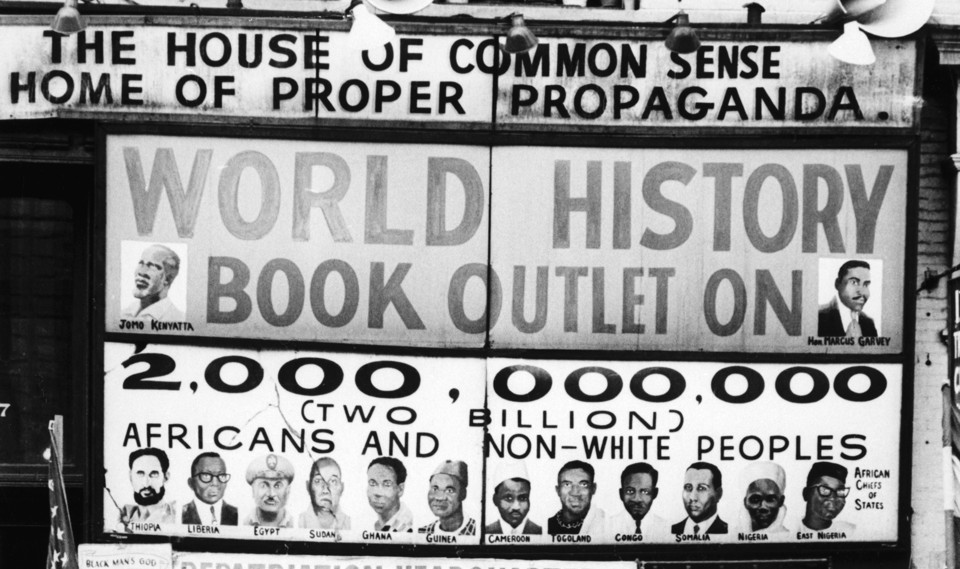
A Harlem bookstore in 1964, where a registration for the Back-to-Africa movement was held


In the spring of 1968, FBI Director J. Edgar Hoover announced to his agents that COINTELPRO, the counter-intelligence program established in 1956 to combat communists, should focus on preventing the rise of a “Black ‘messiah’” who sought to “unify and electrify the militant black nationalist movement.” The program, Hoover insisted, should target figures as ideologically diverse as the Black Power activist Stokely Carmichael (later Kwame Ture), Martin Luther King Jr., and Nation of Islam leader Elijah Muhammad.

Just a few months later, in October 1968, Hoover penned another memo warning of the urgent menace of a growing Black Power movement, but this time the director focused on the unlikeliest of public enemies: black independent booksellers.

In a one-page directive, Hoover noted with alarm a recent “increase in the establishment of black extremist bookstores which represent propaganda outlets for revolutionary and hate publications and culture centers for extremism.” The director ordered each Bureau office to “locate and identify black extremist and/or African-type bookstores in its territory and open separate discreet investigations on each to determine if it is extremist in nature.” Each investigation was to “determine the identities of the owners; whether it is a front for any group or foreign interest; whether individuals affiliated with the store engage in extremist activities; the number, type, and source of books and material on sale; the store’s financial condition; its clientele; and whether it is used as a headquarters or meeting place.”
 
Perhaps most disturbing, Hoover wanted the Bureau to convince African American citizens (presumably with pay or through extortion) to spy on these stores by posing as sympathetic customers or activists. Read more...

Tuesday, February 6, 2018

Rosa Parks Was My Aunt. Here's What You Don't Know About Her.

Civil Rights | Black Heistory Month | Women's History

by Urana McCauley as told to Liz Dwyer | February 2, 2018

Urana McCauley  
After that NAACP event, that’s when I started asking her questions about what she witnessed, what she endured, and what life was like for black people back then. That led to her telling me a lot of stories. She’d tell me what her life was like when she was a little girl growing up in Alabama. One of the things that people don’t understand about my aunt is that she was an activist her whole life and she started questioning things at a young age. I think part of it was her upbringing with her grandfather, Sylvester Edwards. He would sit up at night with a shotgun — in case the KKK might come by and try to kill them — and talk to her about black resistance and the key figures in it: Crispus Attucks, Harriet Tubman, Marcus Garvey. That laid the foundation for my aunt to feel like, "This isn’t right. I should be doing something and becoming an activist." Her whole life became dedicated to change.

When she was 10, a white boy pushed Auntie Rosa, and she pushed him back. Auntie Rosa’s grandmother told her, "You need to be quiet, you need to stop being so vocal." She was told, as black people, we’re not allowed to do those things to whites. Her grandmother was concerned that she’d get hurt, that she could even get lynched. But Auntie Rosa told her grandmother, "Let them try to lynch me." She was that bold, even when she was young. Read article...

Thursday, March 9, 2017

Women’s History Month: The Legacy of Hannah Richards | March 8, 2017

Black History Month | Women's History Month | Library of Congress | Archives


(The following guest post was written by Beverly W. Brannan, curator of photography in the Prints and Photographs Division.)

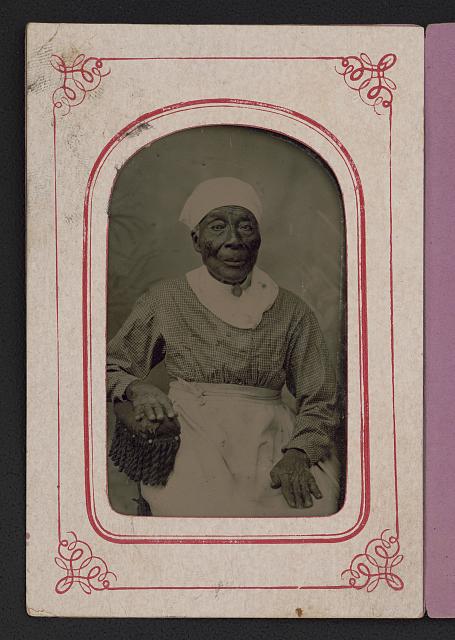
Tintype of Hannah Richards from the William Henry Richards Collection

The Library purchased the collection of William Henry Richards (1856–1941), a law professor at Howard University, in 2013. The collection includes manuscript and visual materials, including a tintype of Hannah Richards, William’s grandmother, who was born in captivity but later freed. Research into her life—a story of determination and resilience—suggests she may have motivated William’s successful career. Besides being a law professor, he was a civil rights activist and a supporter of temperance and women’s right to vote and own property in the District of Columbia.

The library edition of Ancestry.com shows that Hannah Richards was born in Virginia, probably near Danville, around 1800. She belonged to Gabriel Richards (1739–1826), who moved to Roane County, Tennessee, in about 1805. He later relocated to McMinn County, Tennessee, where he died in 1826, freeing Hannah in his will. But there is more to the story.

Freed slaves were always at risk of being re-enslaved after being kidnapped or jailed for trivial offenses. Hannah almost lost her freedom for keeping company with a man. She was arrested in 1828, according to databases, and charged with harboring “a certain Negro slave Sandy without either written or verbal authority from . . . the said boy’s master” for two years. Papers filed in McMinn County court stated that Sandy had been “with her at her place of living on Sunday nights.” Hannah was fined $2.20 for “harboring and entertaining” Sandy, $2.00 for her jail fee and $0.75 for the justice of the peace. She was warned that if she did not pay all the costs as well as an additional $2.00, she could be sold into slavery for nonpayment of debt.

Read more...