Pages

Showing posts with label #Facebook. Show all posts

Tuesday, May 8, 2018

Stop Facebook From Using Your Private Info: A Beginner’s Guide |WSJ

Privacy | Facebook | Social Media

ILLUSTRATION: Dan PAGE


Mom always said to share, but Facebook has us thinking twice. Here, how to regain command of your digital privacy from social media sites to dangers lurking in your own smartphone

SOCIAL MEDIA was supposed to be a fun, lively place to connect with high-school flings, share photos, brag humbly and get in occasional spats over “Star Wars” sequels. But recent revelations about the ways political consulting firm Cambridge Analytica trawled through Facebook FB -0.04% data have made people realize they’ve shared much more than just cat memes online.

A recent HarrisX poll found that 46% of Americans surveyed don’t believe Facebook protects their personal information, often more than twice that of rivals Twitter , Google, LinkedIn and Snapchat—another 25% were “uncertain.” While most people favor stricter regulations than ever around data privacy, years of studies by groups like the Pew Research Center have found that users are specifically concerned about who had access to the online information they share.

“It’s not so much the old definition of privacy—‘I want the right to be left alone,’” said Lee Rainie, director of internet and tech research at Pew, who sums up the new goal as “I want to control the world’s understanding of who I am.”

A HarrisX poll found that 46% of Americans surveyed don’t believe Facebook protects their personal information.Read more...

Wednesday, March 28, 2018

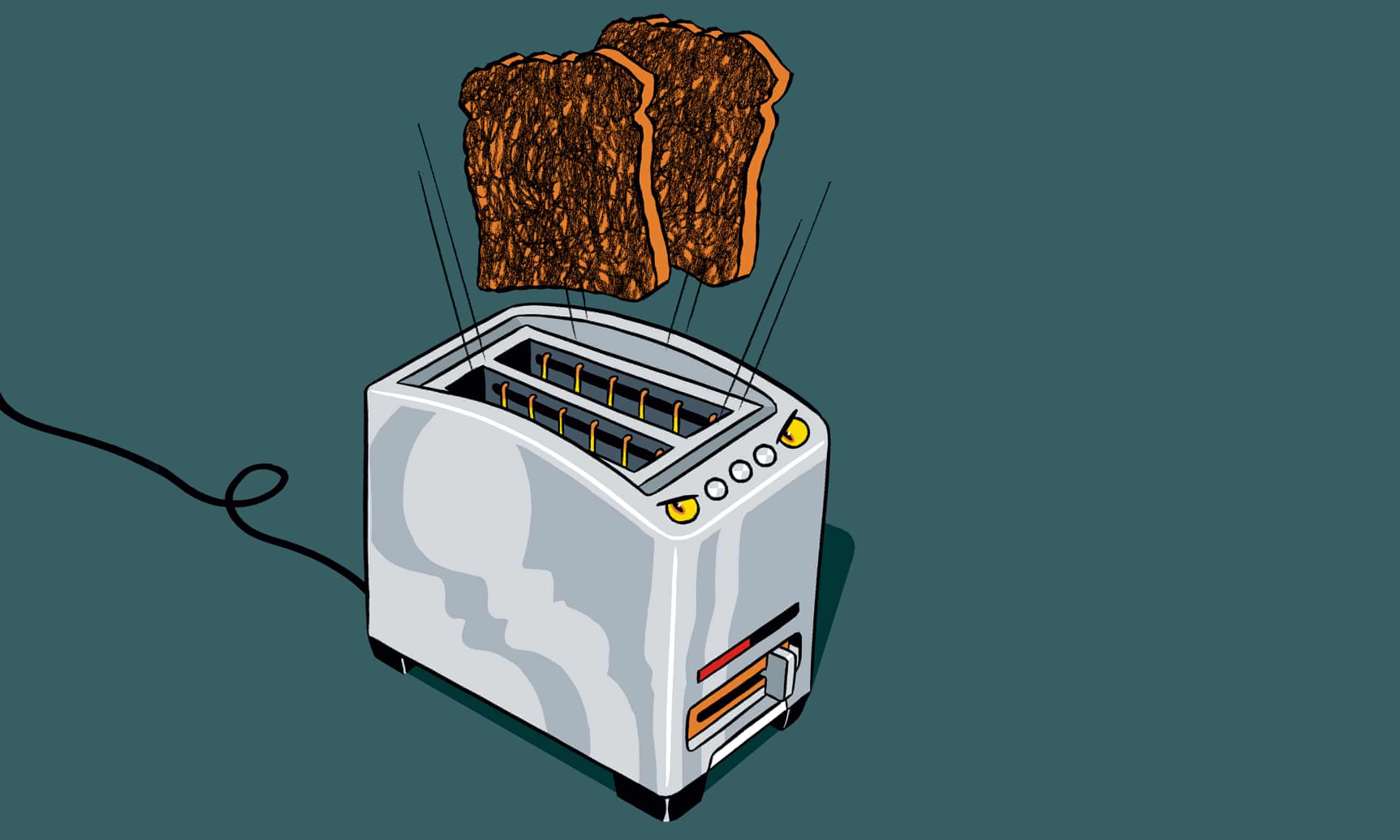
Beware the smart toaster: 18 tips for surviving the surveillance age

Internet | Safety | Privacy

There’s enough to worry about today without having to wonder if your toaster is plotting against you.’ Illustration: Jason Ford     
We’ve come a long way since the web was just a fun place to share cat gifs – now it’s a place mostly dedicated to finding and selling your personal info. Here’s what you need to know in this new era

On the internet, the adage goes, nobody knows you’re a dog. That joke is only 15 years old, but seems as if it is from an entirely different era. Once upon a time the internet was associated with anonymity; today it is synonymous with surveillance. Not only do modern technology companies know full well you’re not a dog (not even an extremely precocious poodle), they know whether you own a dog and what sort of dog it is. And, based on your preferred category of canine, they can go a long way to inferring – and influencing – your political views.

Just over a week ago, the Observer broke a story about how Facebook had failed to protect the personal information of tens of millions of its users. The revelations sparked a #DeleteFacebook movement and some people downloaded their Facebook data before removing themselves from the social network. During this process, many of these users were shocked to see just how much intel about them the internet behemoth had accumulated. If you use Facebook apps on Android, for example – and, even inadvertently, gave it permission – it seems the company has been collecting your call and text data for years. Read more...

Wednesday, October 18, 2017

In Italian Schools, Reading, Writing and Recognizing Fake News

Europe | Fake news | Social media | Italy

Laura Boldrini, president of Italy’s Chamber of Deputies, spearheaded a project to educate high-school students on how to recognize fake news and conspiracy theories online.
Andreas Solaro / Agence France-Presse — Getty Images
 
 
ROME — After reading the horrors in Dante’s “Inferno,” Italian students will soon turn to the dangers of the digital age. While juggling math assignments, they’ll also tackle worksheets prepared by reporters from the national broadcaster RAI. And separate from the weekly hour of religion, they will receive a list of what amounts to a new set of Ten Commandments for the digital age.

Among them: Thou shalt not share unverified news; thou shall ask for sources and evidence; thou shall remember that the internet and social networks can be manipulated.
The lessons are part of an extraordinary experiment by the Italian government, in cooperation with leading digital companies including Facebook, to train a generation of students steeped in social media how to recognize fake news and conspiracy theories online.

“Fake news drips drops of poison into our daily web diet and we end up infected without even realizing it,” said Laura Boldrini, the president of the Italian lower house of Parliament, who has spearheaded the project with the Italian Ministry of Education. Read more...

Tuesday, March 28, 2017

You can now call your elected officials through Facebook | March 27, 2017

Activism | Social Media | Politics

By Brian Fung

Mark Zuckerberg, chief executive of Facebook. (David Paul Morris/Bloomberg News)  
Since the election in November, U.S. lawmakers have received a deluge of phone calls from Americans weighing in on the GOP's congressional agenda. Now, those floodwaters may rise even higher as Facebook rolls out new tools making it easier for users to contact their representatives. The tools, which were being beta-tested but went live to all Facebook users Monday, could lead to a lot more calls from constituents who are pleading to be heard.

One of Facebook's new tools, Town Hall, allows you to find out who your local, state and federal representatives are. You can get to it by visiting facebook.com/townhall, by looking under the "Explore" section of your News Feed on a desktop, or by looking in the menu of your Facebook app on your phone. Read more...

Wednesday, March 22, 2017

Facebook and Google: most powerful and secretive empires we've ever known | 28 September 2016 |The guardian

Google | Facebook | Social media | Citizen journalism | Technology | Internet

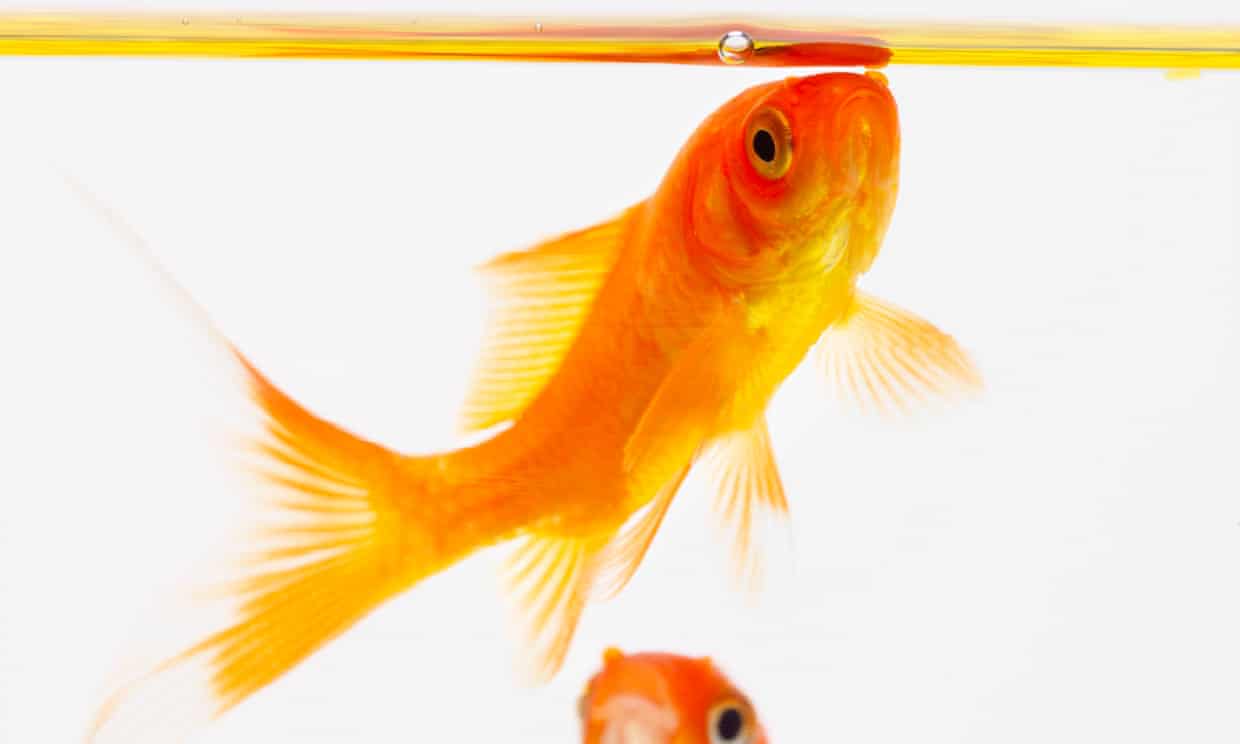
We are living in the web['s goldfish bowl. Photograph: Alamy

Google and Facebook have conveyed nearly all of us to this page, and just about every other idea or expression we’ll encounter today. Yet we don’t know how to talk about these companies, nor digest their sheer power. 

We call them platforms, networks or gatekeepers. But these labels hardly fit. The appropriate metaphor eludes us; even if we describe them as vast empires, they are unlike any we’ve ever known. Far from being discrete points of departure, merely supporting the action or minding the gates, they have become something much more significant. They have become the medium through which we experience and understand the world.

As their users, we are like the blinkered young fish in the parable memorably retold by David Foster Wallace. When asked “How’s the water?” we swipe blank: “What the hell is water?”

We pay attention, sometimes, to racism, death threats, outrage. Other than that, we have barely started feeling their algorithmic undertow. We have trouble grasping the scope of it: the vast server farms, the job cuts, the barriers to entry, the public-private partnerships, the manufacturing of data, the knowing cities, the branded self, the slavish service to their metrics, the monoculture. Read more...

Monday, March 6, 2017

Facebook has quietly rolled out its long-awaited solution to fake news | 4 March 2017

Fake news | Media literacy | Social Media

by Emma Hinchliffe


Since people first started complaining about "fake news" on Facebook, the phrase has evolved—from a useful way to identify false-information-masquerading-as-traditional-news, to a term that means basically nothing, now wielded by President Donald Trump against stories he doesn't like, and also, drunk people in bars screaming about things and/or sports results they disagree with.

But the original problem still genuinely exists. And Facebook finally came out with its long-awaited response to beginning to cut away at the issue.

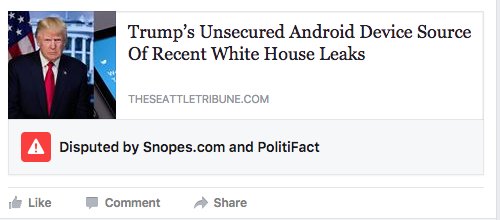
Spotted on Twitter on Friday night, the tool identifies links to sites known to produce misinformation. The tool cites third-party fact-checking organizations like Snopes and Politifact—the kind of sites that Trump supporters also like to dispute.  Read more...