Pages

Tuesday, January 31, 2017

25 Great Books by Refugees in America | By GAL BECKERMANJAN. 30, 2017

Book review | Reader's Advisory | Diversity | Immigrants in the US 

One way to regard the refugees in the news these frenzied past few days is as potential Americans, individuals and families escaping bad situations who imagine themselves building new lives here. What these particular refugees could become in this country, and how they could contribute to our society and culture, is a question stuck in suspended animation. But we do have the power to look to the past. And in the literary realm it’s unquestionable that refugees, once here, often make major contributions.

Through the 20th century and into this one, those fleeing political persecution or war have produced important works that we think of now as at least partly American, from fiction about the harrowing experiences of exile and dislocation to political treatises by thinkers who want to understand why their homelands fell apart. This is a sampling of 25 of those works.


ALA opposes new administration policies that contradict core values - News and Press Center

Advocacy | Human Rights | Library Ethics

ALA opposes new administration policies that contradict core values - News and Press Center

for Immediate Release


Mon, 01/30/2017


Contact:
Macey Morales
Deputy Director
Public Awareness Office
American Library Association
(312) 280-4393


CHICAGO
— Today American Library Association President Julie Todaro released
the following statement responding to recent actions by the new
administration and specifically addressing issues regarding access to
information, discrimination and intellectual freedom.


“We are shocked and dismayed by recent executive orders and other
actions by the new administration, which stand in stark contrast to the
core values of the American Library Association (ALA). Our core values
include access to information; confidentiality/privacy; democracy;
equity, diversity and inclusion; intellectual freedom; and social
responsibility.


“The American Library Association strongly opposes any actions that
limit free access to information, undermine privacy or discriminate on
any basis. This includes the temporary suspension of visas and entrance
to the US based on anyone’s nationality or religion as well as the
increased scrutiny of any individual’s communication such as mobile
phone and/or social media activity.


“Our nation’s 120,000 public, academic, school and special libraries
serve all community members, including people of color, immigrants,
people with disabilities and the most vulnerable in our communities,
offering services and educational resources that transform communities,
open minds, and promote inclusion and diversity.


“ALA believes that the struggle against racism, prejudice,
stereotyping and discrimination is central to our mission. We will
continue to speak out and support efforts to abolish intolerance and
cultural invisibility, stand up for all the members of the communities
we serve, and promote understanding and inclusion through our work.


“We will continue to speak out and support our members as they work
tirelessly for access to library and information resources on behalf of
all of their community members, while advocating for privacy,
intellectual freedom, critical global research, information literacy,
ongoing access to scientific research, and fair and equitable treatment
for everyone.


“As our strategic plan states, ‘ALA recognizes the critical need for
access to library and information resources, services, and technologies
by all people, especially those who may experience language or
literacy-related barriers; economic distress; cultural or social
isolation; physical or attitudinal barriers; racism; discrimination on
the basis of appearance, ethnicity, immigrant status, housing status,
religious background, sexual orientation, gender identity, gender
expression; or barriers to equal education, employment and housing.’


“We encourage our members to continue to speak out and show their
support for and work on behalf of our core values, in their communities
as well as with their local, state and national elected and appointed
officials. Additionally, ALA has tools and resources online to help you
advocate for our core values:


“ALA is committed to using its national platform for speaking up
and speaking out for its members and constituents in these chaotic,
unprecedented and challenging times. We appreciate the library
community’s continued support.”


# # #


Thursday, January 26, 2017

16 Books About Race That Every White Person Should Read | Zeba Blay

Diversity | Reader's Advisory


The Huffington Post


Earlier this week, actor Matt McGorry gave a shout out to Michelle Alexander’s powerful book on mass incarceration, The New Jim Crow. “I’m embarrassed that I didn’t come across the information in this book sooner,” McGorry wrote on Facebook. “But that’s white privilege for ya... Burning crosses and racial slurs are not the only types of racism affecting people of color. And we owe it to our black and brown brothers and sisters to understand this.”

The “Orange is the New Black” star’s post has gained him plenty of praise for actively trying to educate himself on issues regarding race, but it also serves as a powerful example to other white people and allies on how, sometimes, one of the best ways to better understand racism is to just pick up a book.
In the spirit of this, we’ve compiled a list of books that every white person and ally should read right now, and have included some of each book’s most powerful passages: Read more...

Wednesday, January 25, 2017

1984 climbs the bestseller list — almost 70 years after it was published | January 24, 2017


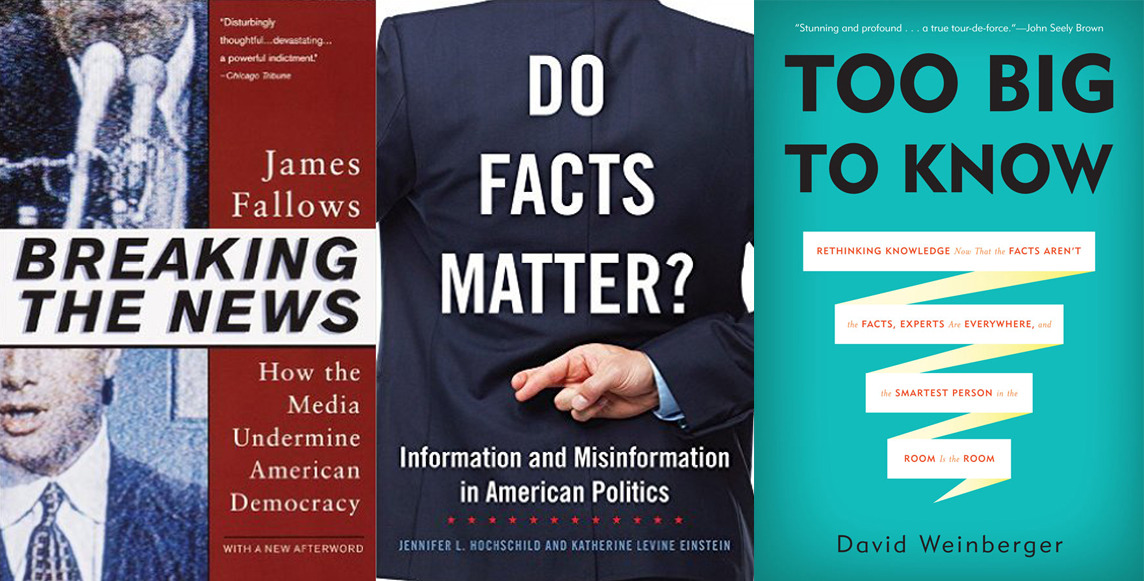
Truth and Lies in Media and Politics: A Reading List


Breaking the News: How the Media Undermine American Democracy
Do Facts Matter?: Information and Misinformation in American Politics
Too Big to Know: Rethinking Knowledge Now that the Facts aren’t the Facts, Experts are Everywhere, and the Smartest Person in the Room is the Room
Digital Disconnect: How Capitalism is Turning the Internet Against Democracy
Standard Deviations: Flawed Assumptions, Tortured Data, and Other Ways to Lie with Statistics
When the Press Fails: Political Power and the News Media from Iraq to Katrina
It Ain’t Necessarily So: How the Media Remake our Picture of Reality
Telling Lies: Clues to Deceit in the Marketplace, Politics, and Marriage
Distant Witness: Social Media, The Arab Spring and a Journalism Revolution
Information War: American Propaganda, Free Speech and Opinion Control Since 9/11
What Liberal Media?: The Truth About Bias and the News
Deciding What’s True: the Rise of Political Fact-Checking in American Journalism

shout out to our friends at the Brooklyn Public Library for their topic guide On new, media, and truth

Tuesday, January 24, 2017

In Discarded Women’s March Signs, Professors Saw a Chance to Save History | By Fernanda Zamudio-Suaréz January 24, 2017


Archives | Women's studies | Research

Dwayne Desaulniers, AP Images
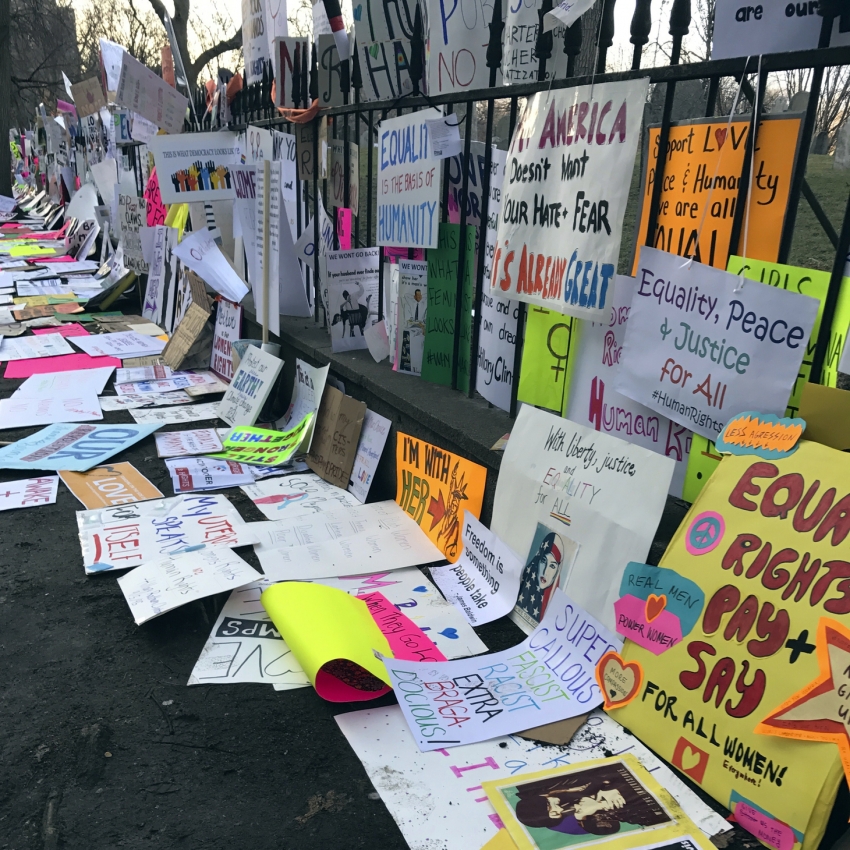
Signs line the fence surrounding Boston Common after the Boston Women's March for America on Saturday. Some of those signs could end up in an archive at Northeastern U. 


The signs were pink, blue, black, white. Some were hoisted with wooden sticks, and others were held in protesters’ hands. A few sparkled with glitter, and some had original designs, created on computers with the help of a few internet memes.

Still, at the Boston Women’s March for America on Saturday, hundreds of the signs criticizing President Trump’s campaign promises and administrative agenda ended up wrapped around the fence near Boston Common, laid down like a carpet covering the sidewalk.

After leaving a late lunch with some colleagues, Nathan Felde, a design professor at Northeastern University, stopped to admire the signs. He was struck by their originality, and how most had come from amateur artists. Parks employees told him they had been instructed to dispose of the signs that evening, he said.

"There was that moment where, in looking at that work, it was almost instinctual to say, ‘This all has to be saved,’ and then acting on it before we knew what we were going to do next," Mr. Felde said.
The workers said Mr. Felde and his group were free to take signs. So he rented a van, his colleagues and a few onlookers loaded them up, and off to a newly rented storage unit they went. Dietmar Offenhuber, an assistant professor of art and design and public policy, said the collected signs filled a 40-square-foot storage unit.

Now the group wants to archive the collection, physically and online, with the help of Northeastern University’s library. Read more...

Tuesday, January 10, 2017

Centuries of New York History Prepare for a Move

Archives | U.S. History

Caked in dust and dating back to 1674, the written records of a growing city
are headed to new homes, to be preserved and made accessible to researchers.


Rumors of the Demise of Books Greatly Exaggerated | Gallup

Reading habits | Literacy

January 6, 2017

Rumors of the Demise of Books Greatly Exaggerated

by Art Swift and Steve Ander

Story Highlights

35% say they read more than 11 books in the past year
53% of young adults read between one and 10 books in the past year
73% prefer printed books to e-readers or audio books

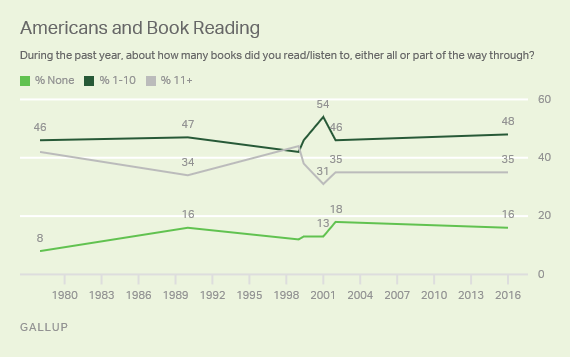
WASHINGTON, D.C. -- Despite the abundance of digital diversions vying for their time and attention, most Americans are still reading books. In fact, they are consuming books at nearly the same rate that they were when Gallup last asked this question in 2002 -- before smartphones, Facebook or Twitter became ubiquitous. More than one in three (35%) appear to be heavy readers, reading 11 or more books in the past year, while close to half (48%) read between one and 10 and just 16% read none.


Rumors of the Demise of Books Greatly Exaggerated | Gallup: Rumors of the Demise of Books Greatly Exaggerated

Internet Truth Debunked: INTERNET LISTS DEBUNKED - Surprising Book Facts | Saturday, 25 October 2014

Reading habits | Infographics | Literacy

Internet Truth Debunked: INTERNET LISTS DEBUNKED - Surprising Book Facts:A pretty infographic showing with statistics to remind you how society is just getting stupider will always get a lot of reshares.  Maybe people are getting stupider, because they accept statistics on pretty infographics as true...


The infographic was created by Rob Brewer in in 2012, later realising the errors in the original he created a new one:


Since the new one are far less surprising and far less emotive than the original, guess which one still gets shared around?

Rob Brewer notes where the original statistics come from and why he now thinks they're dubious on the page above.  Here's an more detailed look at it from a link on his page.

The stats come from a speech given by Jenkins in 2003, so wherever possible, 2002 statistics are used below.  It's important to note that however accurate the statistics in the speech, the speech was to industry people about the industry. Read more...

Thursday, December 29, 2016

002: The French Dressmaker (1906)

Archives | Podcast | Oral history | Women's Studies | US in the 1900s


In this episode we hear from twenty-five-year-old Amelia des Moulins, a French dressmaker and immigrant living in New York City. Amelia came to the U.S. in 1899. Amelia talks about life in Paris before coming to the U.S., the fashion industry in Paris and New York, and her hard work to be a success in a new country. Her story was collected as part of an anthology published in 1906, titled, The Life Stories of Undistinguished Americans. The anthology was edited by Hamilton Holt, editor and publisher of the liberal weekly The Independent and later president of Rollins College.


Subscribe to the Her Voice Echoes podcast

Click here if you’d like to support our podcast.

Navajo Nation Library wants to digitally preserve thousands of hours of oral histories | Danny Lewis Smithsonian.com | December 28, 2016

Archives | Oral Histories | Native Americans

The library is looking for help protecting its tapes


oral histories1
An audio tape from the oral history collection at the Navajo Nation Library (Irving Nelson)

Smithsonian

In the 1960s, the Navajo Culture Center of the Office of Navajo Economic Opportunity (ONEO) turned to technology to preserve the oral histories of the Navajo people. Over the course of the next decade, the center recorded thousands of hours of oral histories, logging stories, songs and details about life as experienced by many Navajo elders. But while the preservation effort documented priceless details for generations to come, keeping the stories safe is harder—and more expensive—than it sounds.


Read more: http://www.smithsonianmag.com/smart-news/navajo-nation-library-wants-digitally-preserve-thousands-hours-oral-histories-180961576/#OOsGpiuVUjEX0ph8.99
Give the gift of Smithsonian magazine for only $12! http://bit.ly/1cGUiGv
Follow us: @SmithsonianMag on Twitter


Wednesday, December 28, 2016

Fill Your New Kindle, iPad, iPhone, eReader with Free eBooks, Audio Books, Online Courses & More | Free ebooks

Ebooks & E-Readers | Free books | Free courses

December 25, 2016

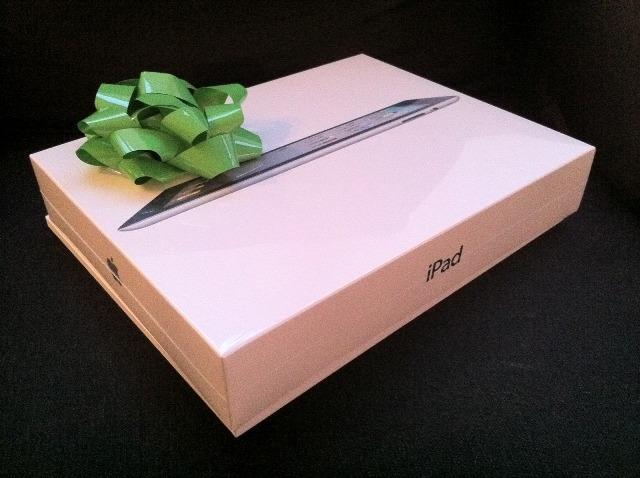
Santa left a new Kindle, iPad, Kindle Fire or other media player under your tree. He did his job. Now we’ll do ours. We’ll tell you how to fill those devices with free intelligent media — great books, movies, courses, and all of the rest. And if you didn’t get a new gadget, fear not. You can access all of these materials right on a computer. Here we go:

Free eBooks: You have always wanted to read the great works. And now is your chance. When you dive into our Free eBooks collection you will find 800 great works by some classic writers (Dickens, Dostoevsky, Austen, Shakespeare and Tolstoy) and contemporary writers (Philip K. Dick, Isaac Asimov, and Kurt Vonnegut). The collection also gives you access to the 51-volume Harvard Classics. Read more...

Thursday, December 22, 2016

A Library From the Future Arrives In Denmark | Michaela Cavanagh | Dec 20, 2016

Public libraries | Library Design | Library Trends | Technology in Libraries

In Aarhus, Dokk1 merges old and new concepts of how a public place for learning should function.

Schmidt Hammer Lassen Architects  
It’s hard not feel as if you’ve just visited the library of the future after spending a day at Dokk1.
In a formerly industrial part of Aarhus, egg chairs are now sprinkled around the periphery of the massive new “hybrid library.” There, a three-ton tubular bell called The Gong echoes through every time a child is born at the local hospital. Outside, a ferry to Copenhagen comes and goes from the harbor while kids and adults play across a field with teeter-totters, a tire swing, and a huge slide in the shape of an eagle.

Opened in 2015, Dokk1 is more than Scandinavia’s largest library—it’s a community hub that meets the changing needs of Denmark’s second largest city. Last summer, Dokk1 was named the Public Library of the Year by the International Federation of Library Associations and Institutions (IFLA). As the notion that libraries simply serve as a home for books dissolves, Dokk1 merges old and new concepts of what a library should be. Read more...


Libraries are dying – but it’s not about the books | Simon Jenkins

 Libraries | Ebooks| Advocacy | Programming | Trends


The internet stole the monopoly on knowledge but it can’t recreate a sense of place. Revival is possible


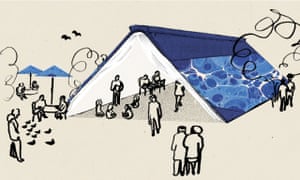
Illustration by Ellie Foreman-Peck
‘The library must rediscover its specialness. This must lie in exploiting the strength of the post-digital age, the ‘age of live’.’ Illustration: Ellie Foreman     
Public libraries have had another bad year. They are like churches and local railways. People like having them around, and are angry if they close. But as for using them, well, there is so little time these days.

The latest Chartered Institute of Public Finance and Accountancy figures on library closures are dire. In the past five years 343 have gone. Librarian numbers are down by a quarter, with 8,000 jobs lost. Public usage has fallen by 16% and spending by 14%. Book borrowing is plummeting, in some places by a half.

The admirable children’s laureate (and cartoonist) Chris Riddell said during the latest campaign for libraries in November that, “if nurtured by government, they have the ability to transform lives. We must all raise our voices to defend them.”

But what sort of library are we defending? I’m not sure the fault in this lies with that easy target, the government, nor even in the once-gloomy fate of the book. Last week I was in my excellent local library and it was near empty. The adjacent Waterstones was bursting at the seams. I know it was Christmas, but something tells me there is a problem with libraries, not with books. When an institution needs a luvvie-march to survive, it looks doomed.
I was a library addict

Wednesday, December 21, 2016

2562 68 Beyond books: Eight things you may not know about libraries

USA TODAY NETWORKRamon Padilla, Adam Shapourian, Nicole Vas, Berna Elibuyuk and Mary Bowerman9:48 a.m. EDT April 21, 2016


As people become more reliant on devices and less likely to crack open a paperback, libraries have been forced to adapt.
Most modern libraries offer e-book and e-magazines, plus movies on DVD and other digital items. But did you know that many also provide such services as free Wi-Fi, used bookstores, and even unique items borrowing.


Coming off of National Library Week, here's a look at eight things you might not know about your local library: Read article:

Tuesday, December 20, 2016

Science Says You Should Still Keep Reading Print Books Over e-Books

Reading

Penn Collins | December 19, 2016 

E-book devices like the Kindle and Nook have already changed the industry of publishing in their relatively short lives. Much as the iPod did with music, now authors can self-publish right from their laptops and readers can carry with them every book they own in something about the size and weight of a paperback.

But while the e-book readers might seem good, uh, on paper, you might consider continuing to read print books for the foreseeable future. Science has given us several reasons why the health and wellness benefits of reading printed material outweigh the convenience and affordability of their digital brethren.
Daily Mail


Read more...

Monday, December 19, 2016

Insurance Policies on Slaves: New York Life’s Complicated Past

Archives


In its 19th-century beginnings, New York Life Insurance sold 508
policies covering slaves. Their descendants are grappling with it.

‘Book Doctors’ Say What You Need Is a Good Read

Reader's Advisory

Bibliotherapists recommend tomes they think can help what ails you; finding calm in ‘The Old Man and the Sea’ 


Dutch novelist Mano Bouzamour at the Frankfurt Book Fair. Photo: Sarah Sloat 


FRANKFURT—Depressed? Over-the-counter remedies abound, though some are hard to swallow. The 272-page “City of Thieves” by David Benioff, for example.

It is one palliative prescribed by Mano Bouzamour at the recent Frankfurt Book Fair, where he sat at a desk sporting a white doctor’s coat and stethoscope. The Dutch novelist, who has no medical license, was serving as a “book doctor.” After brief consultations with people who lined up in the cold drizzle outside a pop-up clinic, he pulled out a prescription pad and scribbled titles to alleviate readers’ woes.

Read more...

Stand, Fight, Resist

Advocacy & Activism

Jason Griffey | December 16, 2016


The idea that libraries are neutral spaces has been well and disabused over the last few years. From the services we offer to the collections that we curate, the decisions that libraries and librarians make are political ones that reflect values. Sometimes those are the values of the organization, sometimes the values of the individuals, and sometimes they are the values of the communities that the library serves. Those values are illustrated by our technologies, our ontologies, and our descriptors. Those who attempt to hold that “neutrality” of information access is an ideal for which to strive have had a hard time holding to that stance as increasing numbers of librarians question and deconstruct our profession. I would like to suggest something even stronger…that even if it were possible for libraries to be neutral spaces, that to create such a space would be morally questionable, and potentially actively morally wrong. 

I say this as someone who firmly believes in the maxim of combating bad speech with more speech. I am not here advocating controls or restrictions on speech. But it is not the responsibility of every library to collect and distribute literature of hate, or falsehoods, or lies. Some libraries do need to collect everything, the good and the bad, for archival and historical study purposes, but those libraries are fairly obviously identified in practice and the vast majority of libraries should and could take a stand with their actions, programs, policies, and collections to be on the side of justice and scientific fact. 

Neutrality favors the powerful, and further marginalizes the marginalized. In the face of the current political climate, with the use of opinions as bludgeons and disinformation as the weapon of choice for manipulation and intellectual coercion, it is up to those who value fact and believe in the care of those in need to stand up and positively affirm that to do otherwise is evil. 
Read article

Tuesday, December 13, 2016

Donald Trump Is Gaslighting America by Lauren Duca

 Advocacy & Activism

In this scorched-earth op-ed, Lauren Duca takes on Trump's systematic attempts to destabilize the truth and weaken the foundation of American freedom.

Dec 10, 2016 


The CIA officially determined that Russia intervened in our election, and President-elect Donald Trump dismissed the story as if it were a piece of fake news. "These are the same people that said Saddam Hussein had weapons of mass destruction," his transition team wrote in a statement. "The election ended a long time ago in one of the biggest Electoral College victories in history. It’s now time to move on and ‘Make America Great Again'."

It wasn't one of the biggest Electoral College victories in history, so presumably that's another red-herring lie to distract from Trump treating the Central Intelligence Agency of the United States like it is some rogue blogger to be cast to the trolls. A foreign government's interference in our election is a threat to our freedom, and the President-elect's attempt to undermine the American people's access to that information undermines the very foundation upon which this country was built. It's also nothing new.

Trump won the Presidency by gas light. His rise to power has awakened a force of bigotry by condoning and encouraging hatred, but also by normalizing deception. Civil rights are now on trial, though before we can fight to reassert the march toward equality, we must regain control of the truth. If that seems melodramatic, I would encourage you to dump a bucket of ice over your head while listening to “Duel of the Fates." Donald Trump is our President now; it’s time to wake up.
Read more...