Pages

Showing posts with label #libraries. Show all posts

Monday, March 16, 2020

You’re a Researcher Without a Library: What Do You Do?


Research | Libraries | Access | Free resources

Investigating solutions for frustrated scholars, nonprofits, independent learners, and the rest of us.

Jake Orlowitz
Nov 15, 2017 · 15 min read
The world of publishing is evolving frantically, while it remains frustratingly fragmented and prohibitively expensive for many. If you’re a student who just left your academic library behind only to discover you are now locked out of the stacks; a startup researching water usage in Africa and keep hitting paywalls; a local nonprofit that studies social change activism, but all the latest papers cost $30 per read… This article is for you.


Thursday, August 16, 2018

How an Artist Is Rebuilding a Baghdad Library Destroyed During the Iraq War

Iraq | Foreign libraries | Gulf War |Libraries

“168:01,” an installation now on view at the Aga Khan Museum in Toronto, encourages visitors to donate books to the University of Baghdad 


smithsonian.com
Aly Manji
n 2003, at the start of the U.S.-led war in Iraq, looters set fire to the College of Fine Arts at the University of Baghdad. The college’s vast collection of 70,000 books was destroyed, and 15 years later, students still have few titles at their disposal. So, as Hadani Ditmars reports for the Art Newspaper, an installation
 
“168:01,” as the project by Iraqi-American artist Wafaa Bilal is titled, is a stark white display featuring bookshelves filled with 1,000 blank books. Visitors are encouraged to replenish the volumes with titles from an Amazon wish list compiled by the college’s students and faculty; donations can be made by sending the books on the wish list to the museum, or by gifting funds to the project through Bilal’s website.

In exchange for their donations, visitors are able to take home one of the exhibition’s white volumes that represent a rich cultural heritage stripped bare by years of conflict. In turn, the colorful books they contributed to the project will ultimately be sent to the College of Fine Arts.

“I wanted a simple visual representation of what’s been lost,” Bilal told Murray Whyte of the Toronto Star last month. “But what’s important is that, over time, this place comes back to life.” Read more...

Tuesday, February 6, 2018

You’re a Researcher Without a Library: What Do You Do? | Medium

Research | Access | Libraries | Open Access

by Jake Orlowitz  | Nov 15, 2017

Investigating solutions for frustrated scholars, nonprofits, independent learners, and the rest of us.

Wikimedia Commons


 The world of publishing is evolving frantically, while it remains frustratingly fragmented and prohibitively expensive for many. If you’re a student who just left your academic library behind only to discover you are now locked out of the stacks; a startup researching water usage in Africa and keep hitting paywalls; a local nonprofit that studies social change activism, but all the latest papers cost $30 per read… This article is for you.

Local Library

Citizens, taxpayers, cities, states, and nations pay a lot of money to provide free services. Use them! Public libraries often subscribe to costly databases; the annual investments for these licenses are only worth it if they are of use to the libraries’ constituency. The good news is that most people have a library nearby, many of the resources are fully available online (especially the databases), and a library card is often free or inexpensive. Also, libraries have librarians, who are pros at finding what you want (or something even better).

Bad news is that your local library may not be that local, and you may need to jump through some hoops to get your library card. Not all local libraries can afford masses of scholarly journals either, although many have at least some access. Read more...

Monday, September 25, 2017

Libraries from Puerto Rico to Florida Respond to Hurricane Irma | ALA

Disaster planning | Hurricanes | Libraries

by Lisa Peet | September 18, 2017

Downed trees outside the Miami-Dade Public Library System’s Coconut Grove Branch after the storm
Photo courtesy of Miami Dade Public Library System


Arriving hard on the heels of Hurricane Harvey, Irma cut a destructive swath through the northeastern Caribbean and Florida Keys. More than $50 billion worth of damage was reported in the United States, as well as 39 fatalities.

Despite Irma’s size and power, Florida libraries had fewer tales of destruction to relate than their counterparts in Texas did after Harvey. While most larger systems reported some leakage and damage to property, delays in opening were mainly due to lack of electricity or running water or exterior obstructions such as fallen trees and debris.

Florida Governor Rick Scott declared a state of emergency on September 4, and ordered that all public schools and colleges across the state close from Friday, September 8 through Monday, September 11. Thousands of Floridians evacuated their homes on both coasts and headed north—the largest evacuation in the state’s history. Read more...

Wednesday, September 20, 2017

Using Our Words : Getting it right on neutrality and libraries | American Libraries

Intellectual freedom |Libraries and neutrality

by Joseph Hanes | 09-01-17

I’ve always been a wordy sort of person. Yes, that too, but I mean word-y. I was the sort of kid who spent time with a thesaurus and dictionary as well as Tinkertoys and Matchbox cars. I was fascinated by words, their uses, and shades of meaning.

Even my amateur lexicographic interest ill prepared me for a world in which one of the more trenchant voices of political observation belongs to the Merriam-Webster Twitter feed (@MerriamWebster). If you don’t follow it yet, do so immediately, for its largely straightforward Word of the Day feature as well as its often wry and acerbic commentary on trending lookups based on “conversations” of the moment, not to mention words that aren’t really words (“covfefe”).

So the Webster’s dictionary has taken a side, or at least a perspective. Based on what I know of Noah Webster’s own colorful history and antipopulist views, I think he might approve. All of which puts an intriguing gloss on an emerging discussion within our own profession on what some may think a bedrock principle of librarianship: neutrality. This discussion includes my fellow AL columnist Meredith Farkas’s excellent piece on the critical librarianship movement (Jan./Feb., p. 70).

In one important sense, we aren’t neutral and never can be—nor should we be. Naturally, each of us has his or her own biases, prejudices, and preferences; we represent a sample of the breadth of society, so this is inevitable and necessary to avoid homogeneity of thought and action. Together, though, we advocate strongly on matters critical to our success. We fight in public for the rights of our patrons to read and think freely without fear of exposure, surveillance, or censure, as well as for open and equal access to a range of materials. We stand for the principle that government and public information shouldn’t depend on the whims of the moment. We are engaged with, represent, and fight for our communities and strive to improve them through our institutions and our work. Read more...
I want to be sure that we’re fighting the right fights on the right terms and, yes, using the right words.

Monday, September 18, 2017

Volunteers rescue thousands of books from Mosul library destroyed by Islamic State

Advocacy | Libraries | Mosul

by Linda Mottram and Connie Agius September 17, 2017


Photo
Volunteers help carry out books from the Mosul library destroyed by Islamic State.
Supplied: Ali Al-Barood
      
It was a reading festival. But this is Mosul, and until a few months ago it was crawling with Islamic State militants.

They occupied the city's university library, where last week festival-goers celebrated a rich culture and donated books.

The volunteer effort to save what was left of Mosul University library after it was destroyed by IS has renewed hope for the city after more than two years of occupation.

The library once contained hundreds of thousands of ancient documents, including a ninth-century Koran, before it was burned down in a deliberate attempt to erase culture.

But Mosul local and amateur photographer Ali ِAl-Baroodi, who once taught at the university, has been part of a community campaign led by independent blogger Mosul Eye to restore what remained of the library's collection.
"At the beginning when we went by the library, we couldn't hold back our tears, and we thought it was all over," Mr Al-Baroodi said.

Read more...

Thursday, September 7, 2017

Blood, bookworms, bosoms and bottoms: the secret life of libraries

Libraries | Rare books | Book collecting | Book trade

by Stuart Kells August 26, 2017
A cat resting on books in a library
‘Two trends are changing how we think of old books and old libraries.’ Photograph: Alamy
I recently had the privilege of circling the world to write a book about libraries. My timing was excellent: after a short-lived e-books scare, physical books are back in fashion, and libraries are the place to be.

My trip was not unlike the pilgrimages made by 18th-century library tourists. On my journey I noticed two trends that are changing how we think of old books and old libraries.

The first is a stronger focus on provenance research. Through whose hands have the books passed? How did those handlers use and mark and protect their books? This branch of bibliography is helping to humanise it.

The other trend involves breaking away from traditional ideas of what constitutes a meritorious book, and from the traditional oppositions of high and low literature. Thanks to this, pulp novels – featuring what Allen Lane called “bosoms and bottoms” cover art – have infiltrated rare book collections. Crime pulps and sci-fi paperbacks are now prized by such hallowed institutions as the Smithsonian, the Houghton and the British Library.

Old-school bibliographers and librarians would probably be mortified by the incursion of pulps, which are fighting not only for shelf space but also for influence. But instead of being corralled and appropriated into old models of scholarship and curation, the pulp sensibility is spreading. Traditional bibliography and librarianship are being reread and reshaped with a pulp mentality.

Pulps, in short, are about lust, sex, theft, betrayal and degradation. Pulp men and women are dangerous, duplicitous, damaged. What is coming from this Gonzo-esque rereading of books and their stories? A new history of old books that is human, messy, fascinating and appalling, shot through with desire and criminality, heroism and dereliction.

Read more...

Thursday, August 31, 2017

Things millennials love about the library | Podcast

Libraries | Millennials | Public services | Podcast

By 


A library at a secondary school in London. - 
Millennials are renowned for loving old things — vinyl records, retro bicycles, film cameras. What about old institutions?

Despite being the generation that grew up hand-in-hand with technology, it turns out the millennial generation — those between ages 18 and 35 — love public libraries.

They're more likely than baby boomers or Gen Xers to visit the local public library or a public bookmobile. A Pew Research Center study found that 53 percent of millennials in the U.S. had used their public library at least once in the year prior to the survey.

What have libraries been doing that's attracting so many young adults? Marketplace Weekend staff discovered a few exciting things: Read more...

Wednesday, August 23, 2017

How to get free Kindle books with your library card | WIRED

E-books | Library services | Digital resources

Getty Images
by Jordan McMahon | GEAR | 08.22.17

Your book club meets next month, but you’re just too busy to run down to Barnes and Noble to pick up Infinite Jest. Sure, you could order it on Amazon, but it's way too heavy to lug around in your backpack and your bookshelf is looking pretty crammed. That’s OK, though! With a library card, an internet connection, and an e-reader, you can download the book—for free!—without ever leaving your house.

First, you'll need a library card. If you don't already have one, visit your local branch to get one. Then, use your credentials to access your library's e-book collection. Many libraries use OverDrive, a cross-platform service with millions of e-books and audiobooks. Scroll through OverDrive's catalogue in your browser, or download the Libby app from OverDrive to scroll through the selection on your phone.

Monday, August 14, 2017

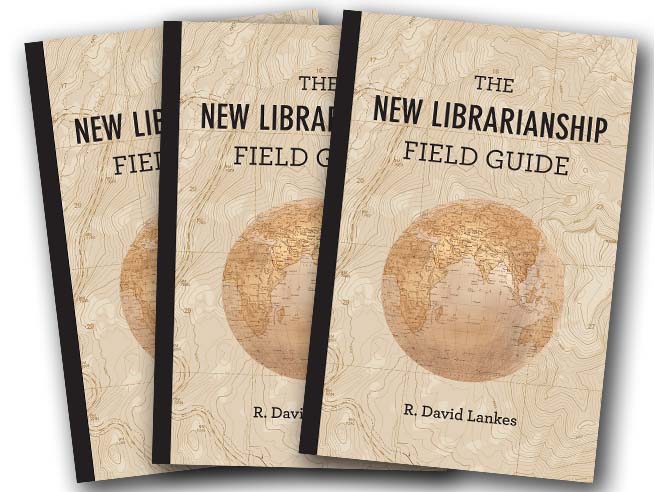
On Racism, Ignorance, and Librarianship | RD Lankes

Librarianship | Racism | Activism | Advocacy

RD Lankes August 13, 2017


On Racism, Ignorance, and Librarianship

I begin this post by condemning the racists, white supremacist, and Nazi actions in Charlottesville.

The past few days have been extremely troubling, and left me wondering what I can do. I then remembered I was asked that exact question after the Charlie Hebdo attack in France. I put together this post: https://davidlankes.org/charlie-hebdo/

This morning I re-read it and while I stand by it, I don’t think it went nearly far enough, and I need to amend it.

Read more...


Wednesday, February 22, 2017

Libraries are fighting back hard against Trump's America | by Colin Daileda

Advocacy | Library services | Library activism

February 21, 2017
via Mashable
 
Perhaps libraries and President Donald Trump were destined to be enemies.

The president has made it known that he's not a man of books. Libraries, meanwhile, are filled with many more books than people. The president has made it known he's not a fan of immigration. Libraries are often an integral part of the life of immigrants in the United States. These things are not like each other.

Protest has taken many forms in the few weeks since Trump became president, but one of the most distinct forms of demonstration has taken place at libraries around the United States.

Much of the action has centred around @LibrariesResist, an account created by Columbia University rare book cataloger Matt Haugen. The account, which has over 2,500 followers as of this writing, tweets and retweets in support of truth and archived sources in the face of an administration that has promoted "alternative facts."


Read more...