Pages

Tuesday, February 7, 2017

Long Overdue: Why public libraries are finally eliminating the late-return fine

Public libraries | Access | Community outreach

by Ruth Graham

A thing of the past? 
Photo illustration by Slate. Images via jmbatt, simo988/iStock.


In 1906, a reporter for the Detroit Free Press described a scene that had become all too common at the city’s public libraries. A child hands an overdue book to a stern librarian perched behind a desk, and with a “sinister expression,” the librarian demands payment of a late fine. In some cases, the child grumbles and pays the penny or two. But in others—often at the city’s smaller, poorer library branches—the offender cannot pay, and his borrowing privileges are revoked. “Scarcely a day passes but it does not leave its record of tears and sighs and vain regrets in little hearts,” the reporter lamented.

More than a century later, similar dramas are still enacted in libraries across the country every day. In some districts, up to 35 percent of patrons have had their borrowing privileges revoked because of unpaid fines. Only these days, it’s librarians themselves who often lament what the Detroit reporter called “a tragedy enacted in this little court of equity.” Now some libraries are deciding that the money isn’t worth the hassle—not only that, but that fining patrons works against everything that public libraries ought to stand for. Read more...

Monday, February 6, 2017

Librarians take up arms against fake news | Jerry Large February 6, 2017

Fact checking | Literacy | Critical reading | Journalism

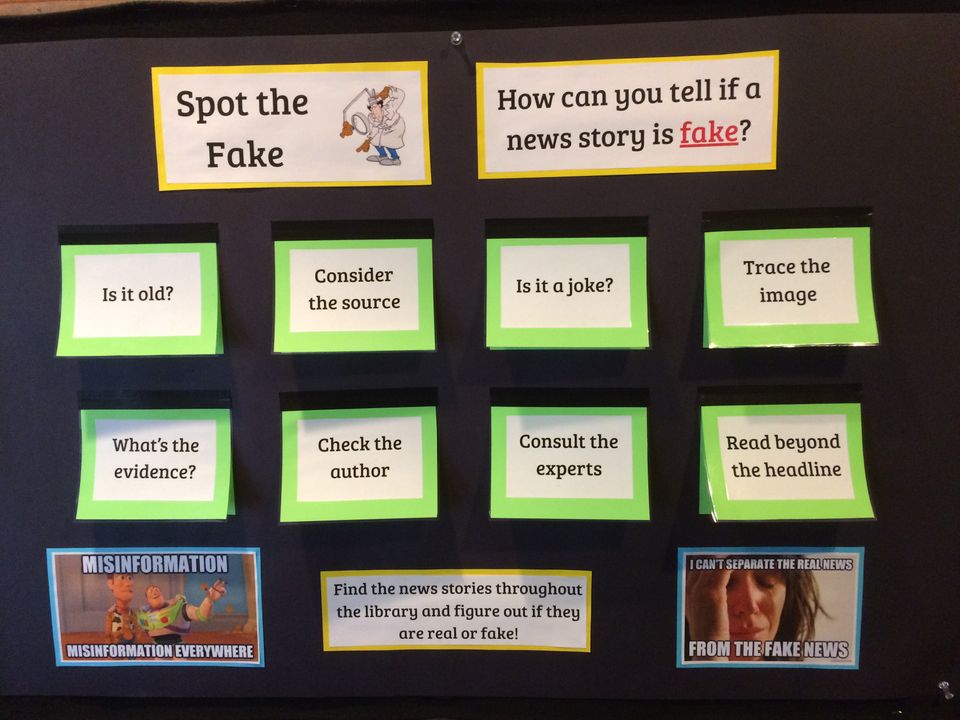
Tips for spotting fake news in the Upper School library at Lakeside School in north Seattle. (Jerry Large/The Seattle Times)  

Librarians are stepping into the breach to help students become smarter evaluators of the information that floods into their lives. That’s increasingly necessary in an era in which fake news is a constant.


Janelle Hagen is a school librarian whose job goes far beyond checking out books. She and many other librarians are equipping students to fight through lies, distortion and trickery to find their way to truth.

Helping students become smarter evaluators of the information that floods into their lives has become increasingly necessary in an era in which fake news is a constant.

Two University of Washington professors recently announced a new class that will focus on the ways data are misused to mislead the public. Younger students may need guidance even more.

Hagen, the middle-school librarian at Lakeside School in Seattle, said the students she serves are online every day, and they need to be able to figure out what’s trustworthy and what isn’t. Read more...

The History the Slaveholders Wanted Us to Forget | By Henry Louis Gates, J. FEB. 4, 2017

Black History Month

Writing in 1965, the distinguished British historian Hugh Trevor-Roper argued against the idea that black people in Africa had their own history: “There is only the history of the Europeans in Africa,” he declared. “The rest is largely darkness.” History, he continued, “is essentially a form of movement, and purposive movement too,” which in his view Africans lacked.

Trevor-Roper was echoing an idea that goes back at least to the early 19th century. But it wasn’t always this way. When the young Prince Cosimo de Medici (1590-1621) was being tutored to become the Duke of Tuscany — about the time that Shakespeare was writing “Hamlet” — he was asked to memorize a “summary of world leaders” that included Álvaro II, the King of Kongo, along with the Mutapa Empire and the mythical “Prester John” of Ethiopia. Soon, however, even that level of knowledge about African history would be rare.

Perhaps it shouldn’t surprise us that ideas about Africans and their supposed lack of history and culture were used to justify the enslavement of millions of Africans throughout the New World, especially during the 19th century when sugar production was reaching a zenith in Cuba and cotton was making growers and manufacturers rich. What is surprising is that these ideas persisted well into the 20th century, among white and black Americans alike.

A
A generation of African leaders who inspired an American schoolboy: from left, Patrice Lumumba and Moïse Tshombe of the Congo; Léopold Senghor of Senegal; and Kwame Nkrumah of Ghana. Credit From left, photographs by Terence Spencer/The Life Images Collection, via Getty Images (both), Agency France-Presse/Getty Images, and Bettmann Archive

Read more...

Thursday, February 2, 2017

Father-child reading leads to improvements in learning and behavior | Reuters Jan 30, 2017

Reading | Literacy | Parenting | Children's Literature


(iSTOCKPHOTO)  
A reading program designed to help men become better fathers is associated with better parenting skills as well as behavior and learning improvements in kids, a small study has found.
Researchers focused on Head Start centers in New York City, where programs are designed to improve school readiness for children younger than 5.

Researchers randomly assigned 126 families to either participate in a reading-based parenting program with eight weekly sessions or join a control group of people on a waiting list for the program.

Fathers in the parenting program watched videos showing dads reading with children and making exaggerated errors. The men discussed better approaches and were encouraged to practice these strategies when reading at home with their own sons and daughters. Read more...

How Video Games Can Save The World | Jordan Shapiro | Jan 31, 2017

Video games | Diversity | Tolerance | Book Review


The new book, Power Play: How Video Games Can Save The World, by Asi Burak and Laura Parker, was just released. Asi is well known in the game world as the creator of PeaceMaker and the former executive director of Games For Change. For quite a while now, he has been the go-to source for understanding the social impact gaming movement.

In this important book, along with coauthor Laura Parker, Asi maps out the landscape of games with a purpose. But what really struck me is how clearly the book expresses the possibilities that still lie ahead for digital play. When I finished reading it, I was clearly reminded that the video game industry is still in it’s infancy. And I felt a kind of enthusiastic anticipation to see what direction it will go.

I also wanted to talk to Asi about it. So I reached out to him to ask about PeaceMaker, Games For Change, the future of the industry, and how games can make a difference in politically tumultuous times.


Wednesday, February 1, 2017

IFLA-L] How to Spot Fake News - IFLA in the post-truth society


 Information Literacy | Fact-checking |Critical Thinking | Media literacy


IFLA-L] How to Spot Fake News - IFLA in the post-truth society

How To Spot Fake News

With Wikipedia’s #1lib1ref (One Librarian, One Reference) campaign going on – the theme of last week being fake news – IFLA posted an How to Spot Fake News infographic on facebook and twitter. We also published a blog about the topic, exploring some of the ways libraries help battle alternative facts and fake news.


Discussions about fake news has led to a new focus on media literacy more broadly, and the role of libraries and other education institutions in providing this. When Oxford Dictionaries announce post-truth is Word of the Year 2016, we as librarians realise action is needed to educate and advocate for critical thinking – a crucial skill when navigating the information society.

The fake news infographic shows eight simple steps (based on FactCheck.org’s 2016 article How to Spot Fake News) to discover the verifiability of a given news-piece in front of you. Download, print, translate, and share – at home, at your library, in your local community, and in social media networks. The more we crowdsource or wisdom, the wiser the world becomes.
If you want to make a translation of the infographic to your language,  please contact Karolina Andersdotter or Evgeni Hristov at IFLA Headquarters for an editable version of the infographic. We currently have translations in these languages pending, soon to be published on the IFLA website: Spanish, Dutch, Hungarian, Swedish, Finnish – do feel free to add to this list! :-)

Cheers,

Karolina Andersdotter
Policy and Advocacy Assistant, IFLA
IFLA Headquarters
P.O. Box 95312
2509 CH The Hague
Netherlands

Tel. 00 31 (0)70 314 0756

How to Build an Autocracy | David Frum "The Atlantic" March 2017

Democracy | Activism | Advocacy

The preconditions are present in the U.S. today. Here’s the playbook Donald Trump could use to set the country down a path toward illiberalism.


It’s 2021, and President Donald Trump will shortly be sworn in for his second term. The 45th president has visibly aged over the past four years. He rests heavily on his daughter Ivanka’s arm during his infrequent public appearances.

Fortunately for him, he did not need to campaign hard for reelection. His has been a popular presidency: Big tax cuts, big spending, and big deficits have worked their familiar expansive magic. Wages have grown strongly in the Trump years, especially for men without a college degree, even if rising inflation is beginning to bite into the gains. The president’s supporters credit his restrictive immigration policies and his TrumpWorks infrastructure program. Read article

Listen to the audio version of this article:

It may only take 3.5% of the population to topple a dictator – with civil resistance | Erica Chenoweth

Civil disobedience | Democracy | Human rights

The United States has a rich history with effective uses of nonviolent resistance. It’s time to become familiar with it

Nonviolent resistance works not by melting the heart of the opponent but by constraining their options.’


Many people across the United States are despondent about the new president – and the threat to democracy his rise could represent. But they shouldn’t be. At no time in recorded history have people been more equipped to effectively resist injustice using civil resistance.


Today, those seeking knowledge about the theory and practice of civil resistance can find a wealth of information at their fingertips. In virtually any language, one can find training manuals, strategy-building tools, facilitation guides and documentation about successes and mistakes of past nonviolent campaigns.

Material is available in many formats, including graphic novels, e-classes, films and documentaries, scholarly books, novels, websites, research monographs, research inventories, and children’s books. And of course, the world is full of experienced activists with wisdom to share. Read more...


[IFLA-L] Open Societies are Healthy Societies: IFLA rejects unjustified barriers to the free movement of persons | 1st February 2017


Open Societies are Healthy Societies

Libraries are at the heart of healthy societies. By bringing people together – students, researchers, creators, citizens – they support learning, sharing, and the creation of new ideas.

They also support the delivery of key human rights, as set out both in national constitutions and international conventions, most importantly the Universal Declaration of Human Rights: freedom of expression and access to information, as well as the right to participate in cultural life and enjoy the benefits of scientific progress.

Libraries have long supported the flow of ideas and information across borders. IFLA has called for reforms to laws that hold this back. Evidence shows that such flows promote innovation and creativity, which in turn drives growth, jobs and equality everywhere.

However, arbitrary and unjustified barriers to the movement of people jeopardise this situation. Such policies run contrary to states’ obligations under international law, which prohibit discrimination of any kind on the basis of race, colour, sex, language, religion, political or other opinion, national or social origin, property, birth or other status, as set out in the UN’s New York Declaration for Refugees and Migrants.

The International Migration Convention also provides the right to temporary absence from the country of residence, a right which can be undermined by barriers to re-entry.

IFLA condemns such policies, wherever they take place in the world.  The recent Executive Order issued by US President Trump temporarily barring entry into the United States by individuals from seven countries is one such policy.

This policy will affect students, workers and academics, families and children. All use libraries to generate new ideas and perspectives which will benefit social, economic and cultural life.  

The policy also adversely affects refugees fleeing extreme poverty, persecution and conflict. Libraries’ doors are open to help them find support and encouragement to learn the language and develop the skills needed to find their place. Focusing on successful integration, rather than rejection, will produce the scholars, artists, workers and engaged citizens of tomorrow.

History has demonstrated that openness and exchange make countries great. We call on governments, for the sake of the future, to protect these principles.  

Tuesday, January 31, 2017

25 Great Books by Refugees in America | By GAL BECKERMANJAN. 30, 2017

Book review | Reader's Advisory | Diversity | Immigrants in the US 

One way to regard the refugees in the news these frenzied past few days is as potential Americans, individuals and families escaping bad situations who imagine themselves building new lives here. What these particular refugees could become in this country, and how they could contribute to our society and culture, is a question stuck in suspended animation. But we do have the power to look to the past. And in the literary realm it’s unquestionable that refugees, once here, often make major contributions.

Through the 20th century and into this one, those fleeing political persecution or war have produced important works that we think of now as at least partly American, from fiction about the harrowing experiences of exile and dislocation to political treatises by thinkers who want to understand why their homelands fell apart. This is a sampling of 25 of those works.


ALA opposes new administration policies that contradict core values - News and Press Center

Advocacy | Human Rights | Library Ethics

ALA opposes new administration policies that contradict core values - News and Press Center

for Immediate Release


Mon, 01/30/2017


Contact:
Macey Morales
Deputy Director
Public Awareness Office
American Library Association
(312) 280-4393


CHICAGO
— Today American Library Association President Julie Todaro released
the following statement responding to recent actions by the new
administration and specifically addressing issues regarding access to
information, discrimination and intellectual freedom.


“We are shocked and dismayed by recent executive orders and other
actions by the new administration, which stand in stark contrast to the
core values of the American Library Association (ALA). Our core values
include access to information; confidentiality/privacy; democracy;
equity, diversity and inclusion; intellectual freedom; and social
responsibility.


“The American Library Association strongly opposes any actions that
limit free access to information, undermine privacy or discriminate on
any basis. This includes the temporary suspension of visas and entrance
to the US based on anyone’s nationality or religion as well as the
increased scrutiny of any individual’s communication such as mobile
phone and/or social media activity.


“Our nation’s 120,000 public, academic, school and special libraries
serve all community members, including people of color, immigrants,
people with disabilities and the most vulnerable in our communities,
offering services and educational resources that transform communities,
open minds, and promote inclusion and diversity.


“ALA believes that the struggle against racism, prejudice,
stereotyping and discrimination is central to our mission. We will
continue to speak out and support efforts to abolish intolerance and
cultural invisibility, stand up for all the members of the communities
we serve, and promote understanding and inclusion through our work.


“We will continue to speak out and support our members as they work
tirelessly for access to library and information resources on behalf of
all of their community members, while advocating for privacy,
intellectual freedom, critical global research, information literacy,
ongoing access to scientific research, and fair and equitable treatment
for everyone.


“As our strategic plan states, ‘ALA recognizes the critical need for
access to library and information resources, services, and technologies
by all people, especially those who may experience language or
literacy-related barriers; economic distress; cultural or social
isolation; physical or attitudinal barriers; racism; discrimination on
the basis of appearance, ethnicity, immigrant status, housing status,
religious background, sexual orientation, gender identity, gender
expression; or barriers to equal education, employment and housing.’


“We encourage our members to continue to speak out and show their
support for and work on behalf of our core values, in their communities
as well as with their local, state and national elected and appointed
officials. Additionally, ALA has tools and resources online to help you
advocate for our core values:


“ALA is committed to using its national platform for speaking up
and speaking out for its members and constituents in these chaotic,
unprecedented and challenging times. We appreciate the library
community’s continued support.”


# # #


Thursday, January 26, 2017

16 Books About Race That Every White Person Should Read | Zeba Blay

Diversity | Reader's Advisory


The Huffington Post


Earlier this week, actor Matt McGorry gave a shout out to Michelle Alexander’s powerful book on mass incarceration, The New Jim Crow. “I’m embarrassed that I didn’t come across the information in this book sooner,” McGorry wrote on Facebook. “But that’s white privilege for ya... Burning crosses and racial slurs are not the only types of racism affecting people of color. And we owe it to our black and brown brothers and sisters to understand this.”

The “Orange is the New Black” star’s post has gained him plenty of praise for actively trying to educate himself on issues regarding race, but it also serves as a powerful example to other white people and allies on how, sometimes, one of the best ways to better understand racism is to just pick up a book.
In the spirit of this, we’ve compiled a list of books that every white person and ally should read right now, and have included some of each book’s most powerful passages: Read more...

Wednesday, January 25, 2017

1984 climbs the bestseller list — almost 70 years after it was published | January 24, 2017


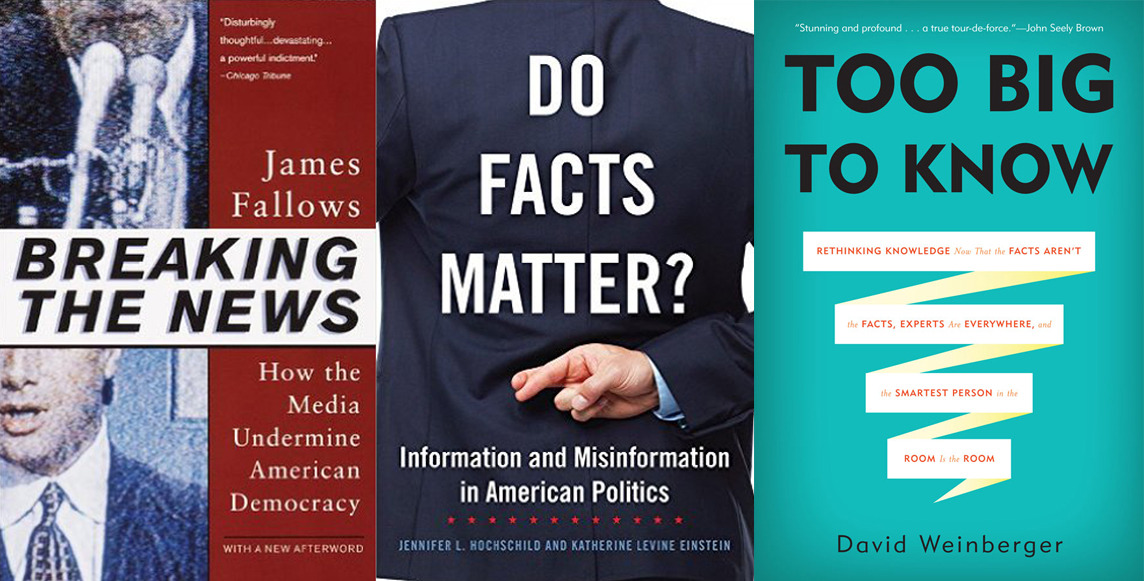
Truth and Lies in Media and Politics: A Reading List


Breaking the News: How the Media Undermine American Democracy
Do Facts Matter?: Information and Misinformation in American Politics
Too Big to Know: Rethinking Knowledge Now that the Facts aren’t the Facts, Experts are Everywhere, and the Smartest Person in the Room is the Room
Digital Disconnect: How Capitalism is Turning the Internet Against Democracy
Standard Deviations: Flawed Assumptions, Tortured Data, and Other Ways to Lie with Statistics
When the Press Fails: Political Power and the News Media from Iraq to Katrina
It Ain’t Necessarily So: How the Media Remake our Picture of Reality
Telling Lies: Clues to Deceit in the Marketplace, Politics, and Marriage
Distant Witness: Social Media, The Arab Spring and a Journalism Revolution
Information War: American Propaganda, Free Speech and Opinion Control Since 9/11
What Liberal Media?: The Truth About Bias and the News
Deciding What’s True: the Rise of Political Fact-Checking in American Journalism

shout out to our friends at the Brooklyn Public Library for their topic guide On new, media, and truth

Tuesday, January 24, 2017

In Discarded Women’s March Signs, Professors Saw a Chance to Save History | By Fernanda Zamudio-Suaréz January 24, 2017


Archives | Women's studies | Research

Dwayne Desaulniers, AP Images
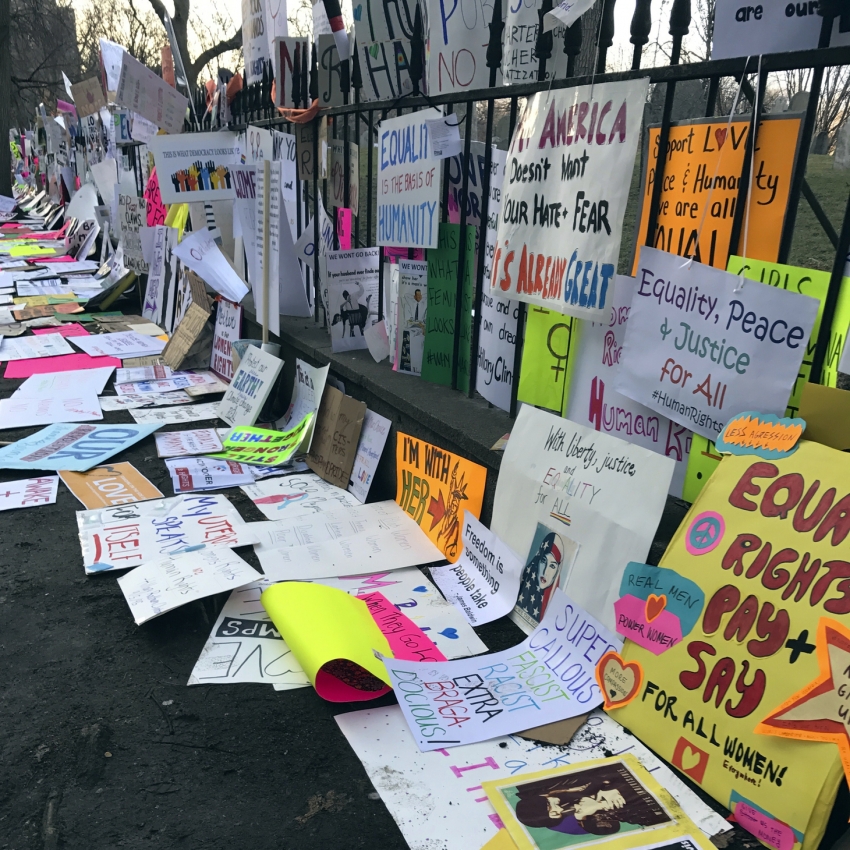
Signs line the fence surrounding Boston Common after the Boston Women's March for America on Saturday. Some of those signs could end up in an archive at Northeastern U. 


The signs were pink, blue, black, white. Some were hoisted with wooden sticks, and others were held in protesters’ hands. A few sparkled with glitter, and some had original designs, created on computers with the help of a few internet memes.

Still, at the Boston Women’s March for America on Saturday, hundreds of the signs criticizing President Trump’s campaign promises and administrative agenda ended up wrapped around the fence near Boston Common, laid down like a carpet covering the sidewalk.

After leaving a late lunch with some colleagues, Nathan Felde, a design professor at Northeastern University, stopped to admire the signs. He was struck by their originality, and how most had come from amateur artists. Parks employees told him they had been instructed to dispose of the signs that evening, he said.

"There was that moment where, in looking at that work, it was almost instinctual to say, ‘This all has to be saved,’ and then acting on it before we knew what we were going to do next," Mr. Felde said.
The workers said Mr. Felde and his group were free to take signs. So he rented a van, his colleagues and a few onlookers loaded them up, and off to a newly rented storage unit they went. Dietmar Offenhuber, an assistant professor of art and design and public policy, said the collected signs filled a 40-square-foot storage unit.

Now the group wants to archive the collection, physically and online, with the help of Northeastern University’s library. Read more...

Tuesday, January 10, 2017

Centuries of New York History Prepare for a Move

Archives | U.S. History

Caked in dust and dating back to 1674, the written records of a growing city
are headed to new homes, to be preserved and made accessible to researchers.


Rumors of the Demise of Books Greatly Exaggerated | Gallup

Reading habits | Literacy

January 6, 2017

Rumors of the Demise of Books Greatly Exaggerated

by Art Swift and Steve Ander

Story Highlights

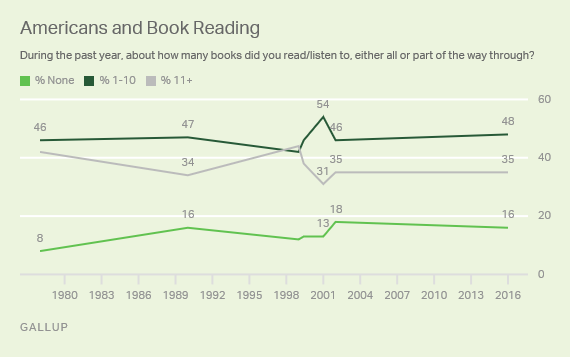
35% say they read more than 11 books in the past year
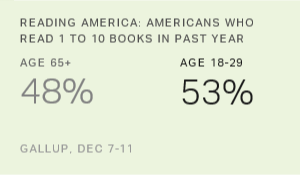
53% of young adults read between one and 10 books in the past year
73% prefer printed books to e-readers or audio books

WASHINGTON, D.C. -- Despite the abundance of digital diversions vying for their time and attention, most Americans are still reading books. In fact, they are consuming books at nearly the same rate that they were when Gallup last asked this question in 2002 -- before smartphones, Facebook or Twitter became ubiquitous. More than one in three (35%) appear to be heavy readers, reading 11 or more books in the past year, while close to half (48%) read between one and 10 and just 16% read none.


Rumors of the Demise of Books Greatly Exaggerated | Gallup: Rumors of the Demise of Books Greatly Exaggerated

Internet Truth Debunked: INTERNET LISTS DEBUNKED - Surprising Book Facts | Saturday, 25 October 2014

Reading habits | Infographics | Literacy

Internet Truth Debunked: INTERNET LISTS DEBUNKED - Surprising Book Facts:A pretty infographic showing with statistics to remind you how society is just getting stupider will always get a lot of reshares.  Maybe people are getting stupider, because they accept statistics on pretty infographics as true...


The infographic was created by Rob Brewer in in 2012, later realising the errors in the original he created a new one:


Since the new one are far less surprising and far less emotive than the original, guess which one still gets shared around?

Rob Brewer notes where the original statistics come from and why he now thinks they're dubious on the page above.  Here's an more detailed look at it from a link on his page.

The stats come from a speech given by Jenkins in 2003, so wherever possible, 2002 statistics are used below.  It's important to note that however accurate the statistics in the speech, the speech was to industry people about the industry. Read more...