Academic cybrarian, bibliophile & culturista. Mentor to library school (LIS) students and graduates. Advocate for all libraries and their users. [Fmr. Organizer, NY Librarians Meetup]
Wednesday, May 27, 2015
Recommendations to Improve Your Reading Life
Being a reader is a life-long project, and we all want to do it well.
Sometimes, it’s easy to get caught up in the parts of a reader’s life
that feel insurmountable — the TBR list you’ll never complete; the
library hold list you’ll never catch up on; all the amazing books you’ll
never hear about, let alone find and own!
But there are little ways we can enrich our reading lives every day:
small changes we can make or ideas we can try to change up our reading
patterns and find new books to love. Here are forty places to start. Add
your own in the comments below, or try a couple first and then come
tell me how they go. Read more...
Wednesday, May 20, 2015
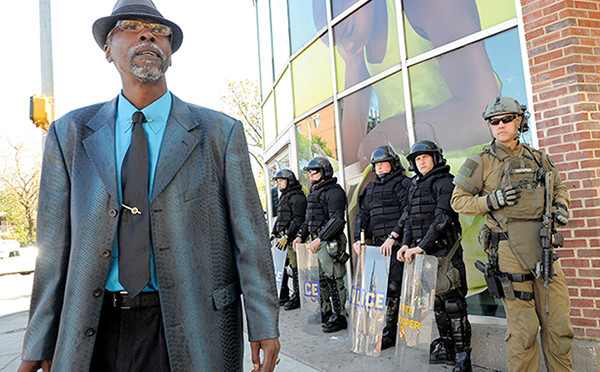
Pratt Library Gets Grant After Staying Open Despite Riots « CBS Baltimore
BALTIMORE (WJZ) — Throughout the riots and looting that overtook our city during the Freddie Gray protests, several businesses
stayed open despite the danger. The PNC Foundation is now recognizing one of those businesses located in the hardest hit area.
Tracey Leong explains why they chose the Enoch Pratt Free Library.
The PNC Foundation isn’t the only one to recognize the library as a
beacon of hope. Students from out of state sent letters to show their
support.
Read more...
Tracey Leong explains why they chose the Enoch Pratt Free Library.
The PNC Foundation isn’t the only one to recognize the library as a
beacon of hope. Students from out of state sent letters to show their
support.
Read more...
Related articles
Libraries Respond to Community Needs in Times of Crisis | American Libraries Magazine
A patron stopped librarian Melanie Townsend Diggs on
Wednesday afternoon with good news: He had used a library computer to
apply for some jobs Tuesday morning, and before he even got home that
day, he had gotten a call for an interview.
Wednesday afternoon with good news: He had used a library computer to
apply for some jobs Tuesday morning, and before he even got home that
day, he had gotten a call for an interview.
Tuesday morning, April 28, was no typical day. Just 12 hours before,
rioting had erupted across the street from the Pennsylvania Avenue
branch of the Enoch Pratt Free Library, when protests against the
high-profile death of Baltimore resident Freddie Gray turned violent. As
a CVS drugstore burned and the turmoil played out, Diggs kept her
patrons safe, quietly locking the doors and letting them out later when
the violence subsided. Read more...
Wednesday, May 13, 2015
Do We Really Need Libraries? | New York NOW
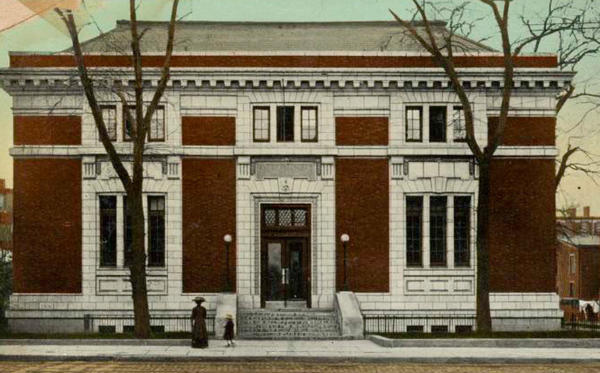
Bedford Branch of the Brooklyn Public Library — a gift from Andrew Carnegie, 1905.
New York Public Library
Originally published on May 5, 2015 2:02 pm
In New York City, supporters of public libraries say that respect for — and repair of — the libraries is long, well, overdue.
A new campaign, Invest in Libraries,
puts forth that in the past 10 years, the city government has reduced
funding for public libraries by nearly 20 percent and 1,000 workers or
so have been trimmed from the payroll. The campaign calls on the city to
increase its support in various ways, such as restoring $65 million in
operating funds.
The New York Times reports
that "the city's three public library systems — the New York Public
Library, the Brooklyn Public Library and the Queens Library — are
seeking $1.4 billion in city funds over the next decade to bring all 217
public library branches up to modern building standards."
Related articles
Local public library going to shit? Some people are starting their own | Grist
Libraries, guys. I love ’em. They provide a community gathering space and, of course, the best-ever entertainment —
all for free. In some cities, though, public libraries are crumbling
from financial woes, overcrowding, and architectural damage. So a
few New Yorkers are starting libraries their own.
Here’s a little background on NYC’s public library system: More
people visit New York City’s libraries than all of the city’s major
sports games, zoos, museums, and performing arts combined, according to the New York Times.
Despite their popularity, they are underfunded, and as a result,
structures are crumbling, demand is high, space is tight, and they don’t
have the budget to cater to all of their visitors’ needs, according to a
statement from a group of NYC libraries. Here’s Vice with more: Read more....
Do We Need Libraries? - Forbes
Libraries everywhere are under threat. After all, who needs a library
today, when it is possible, without even getting out of bed, to find
and read almost any book or article that has ever been published? One is
tempted to recall the reaction by some to the recent news that Radio
Shack had gone bankrupt: “Radio Shack bankrupt? I didn’t know Radio
Shack still existed!”
I was asked to give the opening keynote at a combined meeting of the Library Leaders Summit and the Computers in Libraries
conference this week in Washington, D.C. In discussing the future of
libraries, the conference continues a long tradition of forward-looking
libraries exploring emerging technologies, hearing from bleeding edge
practitioners and sharing case studies of innovative libraries. My
thoughts on the future of libraries are equally applicable to many other
sectors that are facing the threat of extinction from massive
disruption to their businesses.

The scale and pervasiveness of the disruption that sectors like libraries face is amazing.
The disruption begins with products. The smartphone, as Larry Downes and Paul Nunes explain in their book, Big Bang Disruption, is resulting in a huge array of products becoming obsolete:
But the disruption isn’t limited to products. Whole sectors of commerce are under threat. Read more...
today, when it is possible, without even getting out of bed, to find
and read almost any book or article that has ever been published? One is
tempted to recall the reaction by some to the recent news that Radio
Shack had gone bankrupt: “Radio Shack bankrupt? I didn’t know Radio
Shack still existed!”
I was asked to give the opening keynote at a combined meeting of the Library Leaders Summit and the Computers in Libraries
conference this week in Washington, D.C. In discussing the future of
libraries, the conference continues a long tradition of forward-looking
libraries exploring emerging technologies, hearing from bleeding edge
practitioners and sharing case studies of innovative libraries. My
thoughts on the future of libraries are equally applicable to many other
sectors that are facing the threat of extinction from massive
disruption to their businesses.
Library of Congress in Washington, DC, (Jim Watson/AFP/Getty Images)
The disruption begins with products. The smartphone, as Larry Downes and Paul Nunes explain in their book, Big Bang Disruption, is resulting in a huge array of products becoming obsolete:
Address books, video cameras, pagers,
wristwatches, maps, books, travel games, flashlights, home telephones,
dictation recorders, cash registers, Walkmen, Day-Timers, alarm clocks,
answering machines, yellow pages, wallets, keys, phrase books,
transistor radios, personal digital assistants, dashboard navigation
systems, remote controls, airline ticket counters, newspapers and
magazines, directory assistance, travel and insurance agents, restaurant
guides and pocket calculators.
wristwatches, maps, books, travel games, flashlights, home telephones,
dictation recorders, cash registers, Walkmen, Day-Timers, alarm clocks,
answering machines, yellow pages, wallets, keys, phrase books,
transistor radios, personal digital assistants, dashboard navigation
systems, remote controls, airline ticket counters, newspapers and
magazines, directory assistance, travel and insurance agents, restaurant
guides and pocket calculators.
Related articles
- Patient Experience: Is It Real Or Imagined? (healthcareitstrategy.com)
Thursday, May 7, 2015
7 Smart Questions To Ask At The End Of Job Interviews Read more: http://www.businessinsider.com/excellent-resume-for-mid-level-employee-2014-8#ixzz3ZTK3Zxxd
http://www.businessinsider.com/follow-up-questions-end-job-interview-2015-1#ooid=B4ODhobjqemZPKhZS_YxGsIknwbquGn9
Millennials don't know how to use Google - Business Insider
Growing up with personalised technology has made some things easy for today's young adults.
Many of these so-called digital natives are adept at communicating
via social media and texting. Apps such as Uber are customised for users
and let them complete complicated tasks (like navigating from A to B in
a strange city) by pushing a single button.
But that means programmes like Outlook and Excel — the workhorses of
modern corporate life — feel primitive, alien, and complicated to them, according to Chris Pope, senior director of strategy at the technology services company ServiceNow.
Read more: http://www.businessinsider.com/millennials-dont-know-how-to-use-google-2015-5#ixzz3ZSSzrrhr
Related articles
Oh Great - Millennials Lack The Skills For Most Office Jobs
STUDY: Most millennials have no idea how to use Google properly
This Is Millennials' Most Embarrassing Secret
How to Survive Life After Microsoft Office: A Quick Introduction
Gmail calendar won't synch with Outlook
UKEdMag: Google in the Classroom by @hrh_rjhamilton
Is It OK for Employers to Seek Out 'Digital Natives'?
This is the latest way employers mask age bias, lawyers say
Tuesday, May 5, 2015
New York Public Library opens Andrew Carnegie exhibit - NY Daily News
He gave a gift and it has kept on giving.
Philanthropist Andrew Carnegie donated $5.2 million to the New York
Public Library in 1901 to expand its services through branches around
the city.
Calling it a “rare privilege” to provide the funds that would build the
modern library system beloved by New Yorkers today, Carnegie wrote his
massive check without a hint of misgiving.
Last week, the NYPL opened a new free display celebrating Carnegie's vision and generosity.
“Celebrating Carnegie's Gift to New Yorkers” will run through May 10 in
the McGraw Rotunda on the third floor of NYPL’s iconic Stephen A.
Schwarzman Building on Fifth Avenue and 42nd Street in Manhattan. Read more..
Philanthropist Andrew Carnegie donated $5.2 million to the New York
Public Library in 1901 to expand its services through branches around
the city.
Calling it a “rare privilege” to provide the funds that would build the
modern library system beloved by New Yorkers today, Carnegie wrote his
massive check without a hint of misgiving.
Last week, the NYPL opened a new free display celebrating Carnegie's vision and generosity.
“Celebrating Carnegie's Gift to New Yorkers” will run through May 10 in
the McGraw Rotunda on the third floor of NYPL’s iconic Stephen A.
Schwarzman Building on Fifth Avenue and 42nd Street in Manhattan. Read more..
Related articles
- Head of Digital Preservation at New York Public Library (digital-scholarship.org)
- The Wrap: New Yorkers are using library as office, Brooklyn housing project still waits for supermarket ... and more (therealdeal.com)
- Judy Blume makes plea to New York mayor for library funds (theguardian.com)
- 12 Gorgeous Sites New Yorkers Rarely Visit (& How To Get In) (refinery29.com)
- New York Libraries, Citing Dire Need for Renovation, Seek $1.4 Billion From City (nytimes.com)
Wednesday, April 29, 2015
Baltimore Libraries Stay Open Through Riots, Because 'The Community Needs Us' - MTV
All library locations, including those at the epicenter of the riots, are welcoming patrons today.
by Kat Rosenfield
4/28/2015You can find more than books at the Baltimore public library today,
as all branches remain open and fully staffed in the wake of protests
and riots that have rocked the city.
With a state of emergency declared and schools closed citywide
Tuesday morning, the Enoch Pratt Free Library has chosen to stay open,
providing a hub of comfort and community to all Baltimore neighborhoods,
including the ones most affected by the mayhem.
“It’s at times like this that the community needs us,” library
Director of Communications Roswell Encina told MTV News. “That’s what
the library has always been there for, from crises like this to a
recession to the aftermath of severe weather. The library has been
there. It happened in Ferguson; it’s happening here.”
Reports of violence, looting, and coordinated gang activity have been
coming out of Baltimore since Monday night, erupting within hours of
the funeral of Freddie Gray. Gray died late last week from injuries he
apparently sustained while in police custody, resulting in an outpouring
of anger from protesters who point to his death as the latest in a
nationwide epidemic of police violence against unarmed black men. Read more....
Friday, April 24, 2015
Denying New York Libraries the Fuel They Need - NYTimes.com
Hsia Jian Li of Queens browsed at the Bayside library branch in 2011.
Credit
Kirsten Luce for The New York Times
Suppose you guess where people spend at least some of their time in the city.
For instance, what attractions draw the most visitors?
A.
Major museums, like the Metropolitan Museum of Art, Museum of Modern
Art, American Museum of Natural History, Brooklyn Museum or Museum of
the City of New York.
Major museums, like the Metropolitan Museum of Art, Museum of Modern
Art, American Museum of Natural History, Brooklyn Museum or Museum of
the City of New York.
B. Libraries, including the neighborhood branches and research centers.
C. Performing arts, like those at Lincoln Center, Carnegie Hall, City Center and Snug Harbor.
D. Sports teams like the Yankees, Mets, Knicks, Nets, Rangers, Jets and Giants.
E. Natural-world attractions: the botanical gardens, Wave Hill, the zoos and aquariums.
Monday, April 20, 2015
In This Digital Age, Book Collecting Is Still Going Strong - WSJ
Peter Miller’s Freebird Books in Brooklyn, N.Y., focuses on used and rare books about New York.
Photo: Jonathan Cramer
By
Steven Rosenbush
alive and well, sustained in part by the very same people who are
driving adoption of smartphones, tablets, e-readers and the like.
Take JT Bachman,
a 28-year-old architect with Rockwell Group in New York. He gets his
news from digital sources but prefers printed material when reading for
pleasure and says he has become a recent convert to book collecting. Mr.
Bachman says he has about 100 new, used and out-of-print titles on his
shelves, including the architectural tome “Herzog & de Meuron:
Natural History” by Pierre de Meuron and Jacques Herzog, and plans on
buying more.
“I started collecting books because it is a way to catalog time,” Mr. Bachman says. “I want to keep them for the longer term.” Read more....
Metro Money: Growing Number of New Yorkers Are Using the Library for Office Space - WSJ
By
Anne Kadet
App designer Jay Collins loves his free office space. The building
features fireplaces, hardwood floors, oversize windows and oak
bookcases. The Wi-Fi is excellent. The research facilities, superb.
The location? Staten Island’s Port Richmond Library.
“I usually find myself in the teen room, because no one’s ever in there,” says Mr. Collins.
The
32-year-old, who schleps his laptop and iPad to the library four days a
week, says he has tried other options, “but once I found the library, I
didn’t have to stay home being lazy, or at Starbucks getting fat.”
The
library may lack the cachet of a rented desk at a pricey co-working
space, but as Mr. Collins discovered, the stacks even offer networking
opportunities. He has landed side jobs designing logos for fellow
entrepreneurs, not to mention a gig designing a clown suit for a
professional jester. read more...
Related articles
- Is it safe to use public Wi-Fi networks? (pcadvisor.co.uk)
- How to Reverse Tether an iPhone or iPad to Your PC or Mac (howtogeek.com)
Thursday, April 16, 2015
Workforce Literacy: Supporting Job Seekers in Your Community
MAY
6
6
Workforce Literacy: Supporting Job Seekers in Your Community
A webinar exploring ways libraries of all sizes can provide services and support for job seekers in their communities.
resources and support, libraries continue to find new ways to respond to
this essential community need. Workforce literacy impacts a variety of
patrons, including ex-offenders reentering the workforce, small
businesses looking to grow, young first time job seekers, military
personnel and veterans, and older adults seeking new skills to stay in
the workforce. Work SC brings a
comprehensive, yet accessible, set of tools to South Carolina residents
through the State Library, and Jason played no small part in making it
happen. Find out how your library, large or small, can adapt
these service models and partnerships to provide the resources and
support your local community needs to thrive in today’s workforce.
Presented by: Jason Broughton, Outreach Coordinator, South Carolina State Library, and 2015 Library Journal Mover & Shaker
Tweet: #wjwebinar
Read more....
Tuesday, April 14, 2015
7 Classrooms: library as pedagogical incubator - The Ubiquitous Librarian - The Chronicle of Higher Education
Three years ago we had two classrooms in our library. They looked like this:
These were suitable for training-based instruction but our program
has evolved. Librarians wanted to be able to reach more students (larger
class sizes) as well as utilize many different teaching methods.
We’re
upgrading both rooms this summer.
read more...
These were suitable for training-based instruction but our program
has evolved. Librarians wanted to be able to reach more students (larger
class sizes) as well as utilize many different teaching methods.
We’re
upgrading both rooms this summer.
read more...
Monday, April 13, 2015
April 2015 Former Lives of Libraries
Jefferson Market Branch of New York Public Library
Originally a courthouse, the Jefferson Market Library has served the Greenwich Village community for over forty years. The building, a New York Citywas designed by architects Frederick Clark Withers and Calvert Vaux
(who also assisted in the design of Central Park) in a Victorian Gothic
style. It was erected—along with an adjacent prison and market—between
1875 and 1877 and cost the city almost $360,000.
What the city got for its money, in addition to an architectural
gem—voted one of the ten most beautiful buildings in America by a poll
of ahitects in the 1880s—was a civil court on the second floor, now the
Adult Reading Room, and a police court, now the first-floor Children's
Room. The beautiful brick-arched basement, now the Reference Room, was
used as a holding area for prisoners on their way to jail or trial.
Scattered about the building were offices and chambers, and looming a
hundred feet above ground was the firewatcher's tower. The tower, still
intact, commands an uninterrupted view of Greenwich Village, and houses
the bell that would summon volunteer firemen.
The courthouse was the center of national attention in 1906, when
Harry K. Thaw was formally charged with homicide in the first degree -
willful murder - and committed to prison without bail for the murder of
architect Stanford White (the infamous Girl in the Red Velvet Swing
case). White's firm, McKim, Mead and White had, coincidentally,
designed 11 branch library buildings for The New York Public Library.
White's affair with chorus girl/model Evelyn Nesbit before her marriage
to Thaw was the motive in this crime of passion. Thaw was eventually
judged to be insane and was sent to an asylum until his release in 1915.
This story was later immortalized by E. L. Doctorow in his book Ragtime.
testified in the courthouse on behalf of a woman he felt was unjustly
arrested for prostitution. Crane related that he was "studying human
nature" in the dicey Tenderloin area of the city, when the alleged
solicitation occurred. Front page headlines the next day praised Crane's
"chivalry and courage" for speaking out on behalf of the wrongly
accused woman.
In 1909, Triangle Shirtwaist Company workers were taken to the
Jefferson Market Courthouse and tried in night court: a tactic meant to
intimidate the female strikers arrested while protesting unfair labor
practices, as prositution cases generally filled the court's dockets at
that time. As one arrested shirtwaist maker said, "No nice girls go
there." These intimidation tactics did not succeed. The striking women's
spirits were not broken and great strides were achieved in their
working conditions.
Unfortunately, not enough changed for the better.
The factory was the site of a tragic fire in 1911, when 125 garment
workers, most very young girls, died or were killed jumping from the
factory windows to the pavement below. read more...
Related articles
Tuesday, April 7, 2015
Book Discussion History Reading | Video | C-SPAN.org
Book Discussion on A History of Reading
Mr. Manguel spoke about his recent book, A History of Reading. It
traces the history of written communication from 4000 B.C. to the
present through stylistic, material and other changes. He also took
questions from the audience.
traces the history of written communication from 4000 B.C. to the
present through stylistic, material and other changes. He also took
questions from the audience.
Thursday, April 2, 2015
University libraries face uncertain future in a crowded information marketplace | University Affairs
For the record, Ken Haycock believes the future of libraries
“can be very bright.” The long-time consultant and expert in library and
information management said he’s “very optimistic,” adding for
emphasis, “I am a critical friend of libraries.”
But those who heard his presentation at the Ontario Library Association annual conference
in Toronto at the end of January may not have felt reassured. Dr.
Haycock spent the next hour outlining serious challenges facing both
public and academic libraries.
There are some “very basic questions we need to ask ourselves in
order to figure out our future and our place in the information
marketplace,” he said. Top among these questions: “What exactly is our
mission?”
Dr. Haycock offered this rhetorical response: “to organize the
world’s information and make it universally accessible and useful” –
except that is already the mission statement of Google. His point was
that “the information marketplace is a very crowded place to be, and we
can’t distinguish ourselves very well there. So, if we’re going to play
in that marketplace we have to have a unique value proposition or we
have to redefine what that playground is going to be.” Read more...
“can be very bright.” The long-time consultant and expert in library and
information management said he’s “very optimistic,” adding for
emphasis, “I am a critical friend of libraries.”
But those who heard his presentation at the Ontario Library Association annual conference
in Toronto at the end of January may not have felt reassured. Dr.
Haycock spent the next hour outlining serious challenges facing both
public and academic libraries.
There are some “very basic questions we need to ask ourselves in
order to figure out our future and our place in the information
marketplace,” he said. Top among these questions: “What exactly is our
mission?”
Dr. Haycock offered this rhetorical response: “to organize the
world’s information and make it universally accessible and useful” –
except that is already the mission statement of Google. His point was
that “the information marketplace is a very crowded place to be, and we
can’t distinguish ourselves very well there. So, if we’re going to play
in that marketplace we have to have a unique value proposition or we
have to redefine what that playground is going to be.” Read more...
Wednesday, April 1, 2015
The 1709 Blog: The London Manifesto: time for reform?
Wednesday, 1 April 2015
The London Manifesto: time for reform?
archives and charities" is the title of a media release that went live
the moment this blogpost did, at one minute past midnight on 1 April.
Issued by the Chartered Institute of Library & Information
Professionals (CILIP), it reads as follows:
In a bid for fair copyright laws that will benefit citizens and
researchers across Europe organisations including the Wellcome Trust,
the National Library of Scotland, the National Library of Wales, the
Chartered Institute of Library & Information Professionals, Royal
Museums Greenwich and the Open Rights Group have called for much needed
reforms.
The London Manifesto calls for fair copyright for libraries and archives
across Europe. The manifesto outlines needed reforms that will better
support research, innovation and growth and will help create a digital
single market. It focuses on the important role of libraries and
archives.
The reforms would bolster the rights of disabled people by supporting
equal access to knowledge. They would mean that libraries can acquire
and lend commercially available digital materials and, with archives,
can continue to underpin knowledgeable societies in the digital age. The
reforms would allow libraries and archives to better support research
through modern text and data mining techniques. They would also create a
more manageable system of harmonised copyright laws across EU member
states.
Non standardised copyright laws across Europe are failing to support the
vision of a digital single market because they currently prevent fair
access and use of digital content. This means that researchers and
citizens in one country can be subject to a completely different
copyright regime than in another country. For example this creates
significant problems for researchers who are working collaboratively
across Europe. ... .”
Organisations will be able to show their support for fair copyright
across Europe by signing in support of the London Manifesto at www.cilip.org.uk/londonmanifesto
Read more...
Monday, March 30, 2015
Photographer documents İstanbul’s little-known treasures: libraries
Seeing this fact, photographer Ümit Oğuz Göksel embarked on a quest
to document İstanbul's libraries, and the results of his endeavor will
go on display on Monday at the Cemal ReÅŸit Rey Concert Hall's foyer.
Göksel's collection “FotoÄŸraflarla İstanbul Kütüphaneleri”
(İstanbul's Libraries in Photographs) features snapshots from 12
libraries of the city, ranging from those built during the Ottoman era
to the most modern examples that are housed in universities.
The exhibition will run for seven days, throughout this week's 51st National Library
Week in Turkey, alongside a host of events put together by the İstanbul
branch of the Turkish Librarians Association (TKD). The March 30-April 5
program is held under the main theme “Intercultural Dialogue and
Libraries” in Turkey, while the İstanbul leg of activities will be held
under the theme “Libraries of the Future, the Future of Libraries.”
Göksel's project initially started as an ordinary commission: The
İstanbul Metropolitan Municipality asked him to take photographs of 12
libraries in the city for the 2015 Library Week. His job would be done
once he gave the municipal officials the photos they've requested. But
it turned out to be a much more detailed expedition: To take the photos,
Göksel started regularly visiting the 12 libraries, several days a week
for five months, and even made friends with veteran librarians,
establishing close ties with people who live among books.
And when his friends and relatives asked him such skeptical questions
as “Do libraries like these really exist in Turkey?” upon seeing
Göksel's photos, he decided to take matters in his own hands. Read more....
Related articles
Subscribe to:
Posts (Atom)